Lit Hum: Jorie Graham on Caravaggio’s Supper at Emmaus. Gonna go right ahead and do a mega-quote here:

I often teach a painting of Caravaggio’s, Supper at Emmaus. Christ is sitting before us in an alcove against the “back wall” of the painting. We face into a dinner table covered with things for the meal. We are quite sure that the edge of this table is identical with the absolute front of the canvas. But then one undergoes a troubling sensation. The basket of fruit, the edge of the wicker basket, sticks out into our “actual” space, our here and now. The host suddenly recognizes the stranger at his table as Christ and throws open his arms, like this. [Gestures.] His left hand comes out, beyond the border—further than the sacramental grapes in their wicker—out here into the same air that you (and I) are breathing in the National Gallery. At the same time, his right hand penetrates the crucial illusionistic space, the alcove in which Christ sits. What he does, by going like this, is enact what it is to be “taken” by surprise, to be, suddenly, in that spiritual place where the otherness of the world, of possibility, “turns” one’s soul—taking one off the path of mere “ongoingness” onto the other path of “journey.” At any rate, the host’s gesture connects that immortal-because-imaginary space Christ occupies, with the mortal one of the gallery in which I am standing breathing my minutes—and you suddenly realize Caravaggio has activated what I call the “sensation of real time”: the time of the painting’s represented action has crossed over into the time in which my only days are taking place. So you cannot read the painting without being inside the terms of the painting, which are these graduating degrees of temporality: mortal time, immortal time, represented time, actual time, the “time” of process. The activity of the painting is to do that. The host is crucified in this position—a position the artist is also in—saying, You reader and you subject (God, Christ), I have put you two together. It’s my job. That’s what the meal is. That’s what we eat.

Boom. Art, man.
Haywire’s Body Talk | cléo.

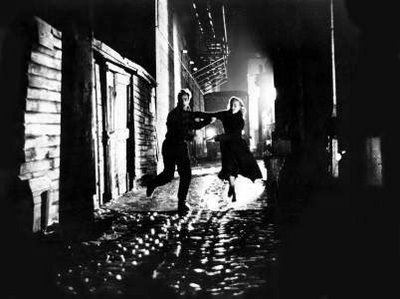
From 2009 to 2012 Soderbergh directed seven films, three of which may be called his unofficial trilogy of “body films”: The Girlfriend Experience (2009), Haywire (2011), and Magic Mike (2012). While star-studded, arguably even stunt, casting has always been important to his work—from Jennifer Lopez in Out Of Sight (1998) to the comically high-caliber cast of the Oceans franchise (2001, 2004, 2007)—in these three films, the bodies of the stars were integral to what each film explored. Moreover, each stars’ bodies represented a Hollywood outsider crossing over into the mainstream.

Soderbergh! Out of all his movies I’ve seen, the body trilogy and Out of Sight hold the top four spots.

The Ecology of Obesity | Newgeography.com

Part of what makes obesity a wicked problem is how existing solutions — farmers markets, anti-corporate marketing — led advocates to frame the problem in particular ways. “The picture painted by advocates of grocery stores and gardens in the inner city was compelling to so many in no small part because it combined an established way of thinking about poor neighborhoods as materially deprived along with rising cultural support from middle-class Americans for eating healthier, locally grown foods,” Lee writes.

So we’re debunking “food deserts” now. More from Jacob Geller, I thought this was a useful way to think about it:

What I think is going on in America is that if someone really does want to eat healthy — and they know how to — then they will eat healthy, but huge numbers of Americans “choose” not to.  The cost and the distance don’t much matter.  And I put “choose” in air quotes, because people are not “choosing” per se, rather they are hooked.  They buy sugar instead of broccoli, because sugar tastes awesome and goes with everything, whereas broccoli is gross.  The deck is physiologically stacked in favor of sugar.  The cost and the distance are virtual non-factors for most Americans, outliers notwithstanding, and obesity really does need to be tackled aggressively on the demand side, if at all possible, precisely because distance and cost are virtual non-factors.

The economist’s way of saying the same thing is that unhealthy foods (like sugar) tend to be sort of addictive, or habit-forming, or are at least advantaged by our physiology or biology, so our demand for that food tends to be pretty insensitive to price (or “inelastic”).  And because our demand is insensitive to price, shifting the supply curve one way or the other isn’t going to change the quantity consumed all that much.  You can fiddle with the supply curve all you like, but the problem is ultimately that this inelastic demand curve is keeping quantity consumed stuck more or less in the same place.  So from a public policy and public health standpoint, it’s better to just tackle the demand curve, by shifting it leftward or making it less inelastic, through solid health education curricula or forming good eating habits during childhood, or whatever, if possible.

The Ecology of Obesity | Newgeography.com

On the Waterfront

On the Waterfront. Second viewing, this time on the big screen. Knowing the right thing isn’t always enough. Like Edie says, “Was there ever a saint who hid in the Church?” Can’t have it both ways. But sometimes it takes some hectoring and cajoling to get your courage up. Finally Terry gets on the good side, and switches his wardrobe along with it. He moves from the (conflicted) buffalo plaid jacket to the dark solid jacket formerly owned by Joey (Edie’s universally beloved, upstanding brother). Terry rejects his genetic brother in favor of the broader brotherhood of his community. And you gotta love that Bernstein soundtrack. It’s not just supportive, it barges in and demands your attention every now and then.

I married young. What are the rest of you waiting for? – Slate Magazine

Marriage these days signals that you’ve figured out how to be a grown up. You’ve played the field, backpacked Europe, and held a bartending gig to supplement an unpaid internship. You’ve “arrived,” having finished school, settled into a career path, bought a condo, figured out who you are, and found your soul mate. The fairytale wedding is your gateway into adult life. But in my experience, this idea about marriage as the end of the road is pretty misguided and means couples are missing out on a lot of the fun.

I married young. What are the rest of you waiting for? – Slate Magazine

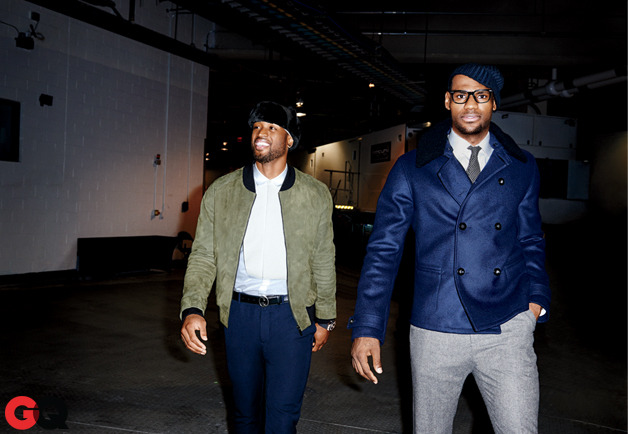
The NBA’s Most Stylish Players: GQ.

Even Westbrook has his limits, of course—Kanye’s infamous leather kilt, for instance. Though in his next breath Russ allows that he’d “be open to it if it were a slimmer fit.”

The NBA has had fashion moments before—Clyde Frazier wearing his wide-brimmed Borsalino on the cover of Esquire, the introduction of the Air Jordan in the mid-‘80s, Allen Iverson bringing cornrows, baggy jeans, and garish jewelry from the hood to the hardwood in the late ’90s—but the sine waves of high fashion and locker-room style have never synced up quite like they do right now.

A Point of View: Chess and 18th Century artificial intelligence – BBC News

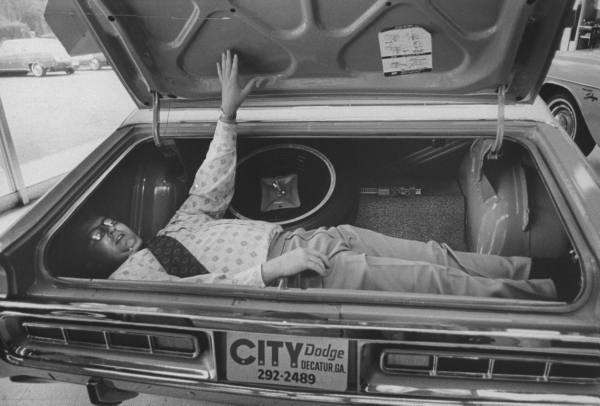
The inventor’s real genius was not to build a chess-playing machine. It was to be the first to notice that, in the modern world, there is more mastery available than you might think; that exceptional talent is usually available, and will often work cheap.

And there lies what I think of now as the asymmetry of mastery – the mystery of mastery, a truth that is for some reason extremely hard for us to grasp. We over-rate masters and under-rate mastery. That simplest solution was the hardest, partly because they underestimated the space inside the cabinet, but also because they overestimated just how good the chess player had to be.

A Point of View: Chess and 18th Century artificial intelligence – BBC News

Tyler, the Creator Talks Directing Movies, Being Rejected by Justin Bieber | Billboard

Tyler and the Clancys’ 4 Strike management group recently started a new creative agency called Camp Flog Gnaw, which aims to lend Tyler’s brain to companies that want to engage the youth demographic. The first fruit of the new enterprise is a partnership with Mountain Dew, for whom Tyler has directed four left-of-center TV commercials starring a talking goat named Felicia. “The agency is a way to stay true to Tyler and not do endorsements, but to allow companies to use his creative energy,” Clancy says. “There’s a demographic out there that corporate America has lost, but Tyler has managed to build a brand around it.”

This strikes me as a bit more savvy and way more interesting than becoming creative director of Blackberry or Intel or something…

Tyler, the Creator Talks Directing Movies, Being Rejected by Justin Bieber | Billboard

If the world were merely seductive, that would be easy. If it were merely challenging, that would be no problem. But I arise in the morning torn between a desire to improve (or save) the world and a desire to enjoy (or savor) the world. This makes it hard to plan the day.

libraryjournal:

jerumebrunneng:

An image of a page from The Hitchhiker’s Guide To The Galaxy, describing The Hitchhiker’s Guide To The Galaxy, on an e-reader that resembles The Hitchhiker’s Guide To The Galaxy.

This is the future, guys.

Human Intervention as a Competitive Advantage | Derek Sivers

When everyone else is trying to automate everything, using a little human intervention can be a competitive advantage. The problem is when business owners see it as a cost, instead of an opportunity. Trying to minimize costs, instead of maximize income, quality, loyalty, happiness, connection, and all those other wonderful things that come from real human attention.

Human Intervention as a Competitive Advantage | Derek Sivers