(via sarahbelfort)
(via sarahbelfort)
Larry Bird: Greatest Passer of All Time. And part two. (via) A lot of these passes don’t seem strictly necessary to me, but 1) I’m not Larry Bird and 2) if you can, why not?
I’m a typical American. Half of me is dying to give myself away, and the other half is continually rebelling.
I’ve been matching my drinks to my movies for at least 15 years. I’ve done it with my wife, in groups, or (and I’m not ashamed to say this) alone. It adds a new dimension — Alc-O-Vision? — to the plot, the photography and, especially, the sense of immersion if the film takes place in the same country from which the drink in my hand originated.
Yes and yes. The article also includes a shout-out to Out of the Past, which I rewatched the other night, and which might be my favorite movie of all time. OF ALL TIME!
For Movie Watching, Pairing a DVD and a Drink Takes Care – NYTimes.com
Things won are done; joy’s soul lies in the doing.

Alex Webb, people playing volleyball using the border fence between Arizona and Mexico as the net, 1979
via claytoncubitt
It seems that when we talk to ourselves or others forcefully about the future, we create an expectation that we now feel that we have to live up to. If we fail to live up to our expectations, then we will feel guilty. So, the forceful “I will” statement motivates use out of guilt. When we ask ourselves a question about the future, “Will I,” then the activity itself becomes the focus. As we commit to this future activity, it becomes intrinsically interesting, and so we are more likely to want to do it.
Very interesting article. One good bit:
The typical Harvard undergraduate is someone who: (a) is very good at school; (b) has been very successful by conventional standards for his entire life; © has little or no experience of the “real world” outside of school or school-like settings; (d) feels either the ambition or the duty to have a positive impact on the world (not well defined); and (e) is driven more by fear of not being a success than by a concrete desire to do anything in particular. (Yes, I know this is a stereotype; that’s why I said “typical.”) Their (our) decisions are motivated by two main decision rules: (1) close down as few options as possible; and (2) only do things that increase the possibility of future overachievement.
And another one:
You internalize the rationalizations for the work you are doing. It’s easier to think that underwriting new debt offerings really is saving the world than to think that you are underwriting new debt offerings, because of the money, instead of saving the world. And this goes for many walks of life. It’s easier for college professors to think that, by training the next generation of young minds (or, even more improbably, writing papers on esoteric subjects), they are changing the world than to think that they are teaching and researching instead of changing the world.
Why Do Harvard Kids Head to Wall Street? « The Baseline Scenario
“Food has become an elite preoccupation in the West, ironically, just as the most effective ways to address hunger in poor countries have fallen out of fashion.”
Attention Whole Foods Shoppers – By Robert Paarlberg | Foreign Policy

The Hurt Locker. I’m happy to say that the good parts were very, very, very good. Overall? Just okay.
“You can hold onto the clothes, and even the heartbeats of many, many people. But you can’t keep anybody.”
Christian Boltanski Has a Show at the Park Avenue Armory – NYTimes.com
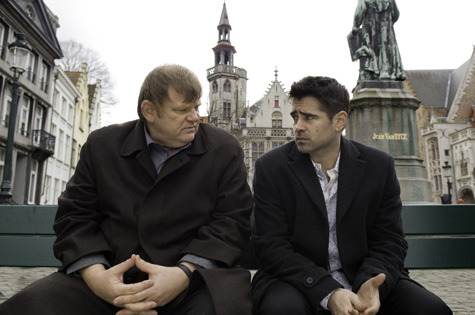
In Bruges. Plenty of dark humor presented in a carefree manner. You’re never too far from a laugh, but the pace isn’t manic. There’s a willingness to draw a scene out, let a situation linger. I liked it a lot.
Money is like gasoline during a road trip. You don’t want to run out of gas on your trip, but you’re not doing a tour of gas stations. You have to pay attention to money, but it shouldn’t be about the money.
It seems to me that making escapist films might be a better service to people than making intellectual ones and making films that deal with issues. It might be better to just make escapist comedies that don’t touch on any issues. The people just get a cool lemonade, and then they go out refreshed, they enjoy themselves, they forget how awful things are and it helps them—it strengthens them to get through the day. So I feel humor is important for those two reasons: that it is a little bit of refreshment like music, and that women have told me over the years that it is very, very important to them.
<param name="movie" value="http://www.youtube.com/watch?v=J_bqAq6GVWQ
Tim & Eric, Paul Rudd’s Computer. I love Paul Rudd. (via)

AllHipHop.com: With “Shooters,” did you hear the original version by Robin Thicke and just wanted to redo it?
Lil’ Wayne: Yeah, hell yeah. I heard it years ago, on his album.
AllHipHop.com: Do you think that would surprise people, like, “Weezy listens to Thicke?”
Lil’ Wayne: Fuck people.(via Leon)
Though it’s unlikely you’ll write something nobody has ever heard of, the way you have a chance to compete is in the way you say it.


 Mark Larson