jomc.links: This mesmerizing image contains all of LeBron James’ scores in Game 7…

jomc:

image

This mesmerizing image contains all of LeBron James’ scores in Game 7 of the NBA Finals. It lasts only four seconds, but one could gaze at it for quite some time. It almost seems to contain the entire history of the game, evoking a sense of data, like a visual stats card. It has information inside of it, but we can only understand the data by repetition. By definition, you have to watch The Loop again and again to understand its depth.

Loops are not short films. Loops are more like spreadsheets: data, but with a fourth dimension, time. Without the repetition, you would not see the data.

http://tribecafilm.com/future-of-film/trapped-in-the-loop-edward-snowden-gifs-vine-instagram

jomc.links: This mesmerizing image contains all of LeBron James’ scores in Game 7…

One of the things I love about sports is that they let you spend time communing with trepidation and panic without making you face any consequences.

Surface Tension

As the different court surfaces are modified to play more similarly, players whose game is well-suited to those physics will dominate more and more. I’d never thought about this before.

Maybe relevant here: The same four players have won every major and Olympic gold medal except one in the past eight years. That’s 34 big titles for Federer, Nadal, Djokovic, and Andy Murray, and one for every other tennis player on earth.

Surface Tension

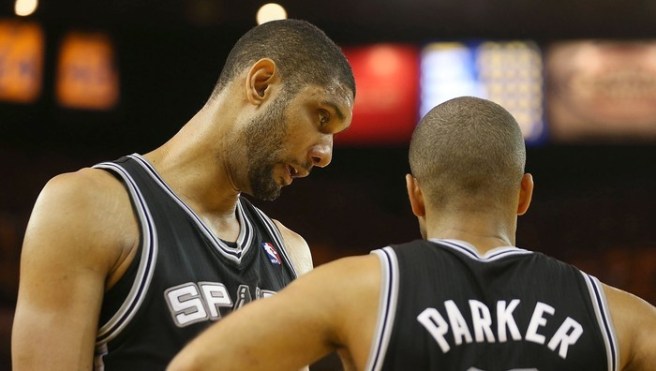
Tim Duncan Encourages Teammates To Be Fathers First, Basketball Players Second | The Onion.

“What you do on this court is nothing compared to what you do at home for your children,” said Duncan, adding that what this country lacks most is not basketball players but mature men. “The playoffs end in June, but the responsibilities of fatherhood? Those are year-round. Guys, it doesn’t matter if you score 10,000 points or win three NBA championships—spending time with your kids: that’s the championship.”

The Onion and Tim Duncan go way back.

Tim Brando, Chris Broussard, and giving credit where credit is due – SBNation.com

Debate whether [Jason Collins] is a hero or not in your world, but he’s leading by example for a small subset of people who need examples, and doing so positively: with love, and work, and still more work. The two are ultimately indistinguishable when done right, and what they leave behind is the capacity to pass that work forward.

Tim Brando, Chris Broussard, and giving credit where credit is due – SBNation.com

College vs. Pros: madness vs. superiority – TrueHoop Blog – ESPN

It’s become a cliché to announce a preference for NBA basketball because the level of play is superior. Every reasonable person knows that games are played better in the pros, so college fans tout the “exciting” aspects of upsets. Yes, the tourney is exciting. Yes, it’s fun to follow your bracket through a maze of unpredictability. But what makes the NBA a superior product, from my perspective, isn’t just that its play is superior – it’s that its system rewards superiority. In the NBA, great basketball is ultimately validated – not conspired against. Because of this, the results matter in a deeper way.

College vs. Pros: madness vs. superiority – TrueHoop Blog – ESPN

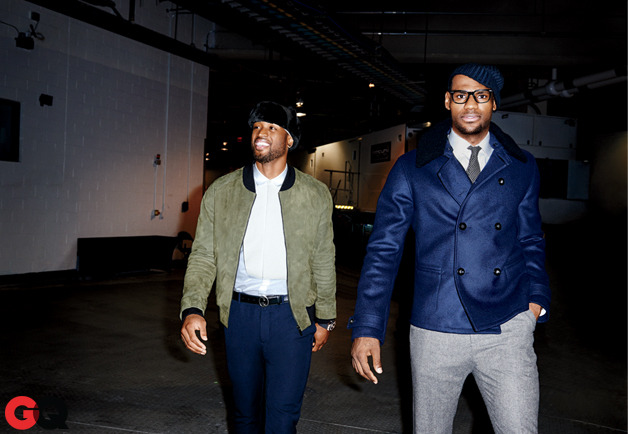
The NBA’s Most Stylish Players: GQ.

Even Westbrook has his limits, of course—Kanye’s infamous leather kilt, for instance. Though in his next breath Russ allows that he’d “be open to it if it were a slimmer fit.”

The NBA has had fashion moments before—Clyde Frazier wearing his wide-brimmed Borsalino on the cover of Esquire, the introduction of the Air Jordan in the mid-‘80s, Allen Iverson bringing cornrows, baggy jeans, and garish jewelry from the hood to the hardwood in the late ’90s—but the sine waves of high fashion and locker-room style have never synced up quite like they do right now.

Warrior

Warrior. I’ve raved about this movie before. A few things I appreciate on third viewing… 1. The efficiency of the startup. A few bits of dialogue, usually barbs hinting at old wounds. Some are too vague to be effective (“That shit you pulled”), but some are so wincingly perfect for character and delivery (“Must be tough to find a girl who could take a punch nowadays.”) 2. Shot, reverse-shot. Sports movies have to deliver on dialogue when you’re not at the relevant events. This is why you care about Rocky or Rudy. Style-wise, these shots reminds me of Michael Mann, peering over the shoulder. 3. Obstructing the shots. I’m thinking of the husband-wife conversation in the bathroom and the father-son scene in the hotel room. Doorways and bodies block the view, so you instinctively want to tilt your head a bit. It also works in the fight scenes cage, where you’re trying to peek through the fence to get closer to the action. In a way, those shots feel more like you’re “there” in the arena than when you get the clean close-ups. 4. This movie is now 3-for-3.

Understanding a fan’s relationship with management in sports – Grantland

You hit 30, 35, 40, and the life of a professional athlete seems more and more remote. It’s one of a million pasts that never happened rather than a future you can dream about. And the experience of the coach is simply much more accessible to almost every grown-up fan than the experience of any high-level player. And not just because so many fans go on to coach their kid’s T-ball team or whatever; think of it as a lifestyle question. The coach doesn’t have to be able to score from an overhead kick or throw a football 80 yards; he has to run meetings, make plans, juggle lists, and justify himself, same as anybody. He does paperwork. Maybe hops on the treadmill when he can. He’s still connected to the magic of sports, but with him it takes the form of inspired halftime speeches and brilliant late-game stratagems — basically work e-mail lifted to a spiritual plane. More than anything, he has to watch a ton of games: obsess about what’s not working, get mad at players who screw up, praise players who do well.

Understanding a fan’s relationship with management in sports – Grantland