Solaris

I read Stanisław Lem’s Solaris (the new Bill Johnston translation, grade-A uncut straight from the Polish), and enjoyed it for the most part. Not available in paper, so I finally used this Kindle gadget thing.

This is a book for ideas. The writing isn’t too special on its own, on a sentence and paragraph level. I could have done with less of the spinning off into academic/history tangents, but I suppose they have their purpose. Reminds me of Borges a bit, that spirit of developing gobs and gobs of history and references. I think the spirit is more ironic here, underscoring how the knowledge of Solaris that humans gathered and theorized for generations really amounts to so little.

Now I really want to watch both movies again. I read a lot of this while listening to the soundtrack for The Fountain, which makes a good pairing.

Another Lem book I really, really liked was Imaginary Magnitude, which, as a collection of… stories?… offers a lot more variety and more opportunities to have your mind blown.

Edge of Tomorrow

Edge of Tomorrow. THIS. This is the kind of genre action film we need. Superheroes can suck it. The best Cruise performance in a good while, and his character has a great arc from coward to competence (always likeable, though). I love the film’s learning curve, too. Just enough to string you along, while not weighing you down with unnecessary repetition. For 2014 releases, I have to put this up there with The Lego Movie and The Grand Budapest Hotel.

Her

Her. I expected to love it, I did, and I still was pleasantly surprised with some of the mordant humans-are-screwed humor and the science-fiction-y, speculative thoughtfulness. It’s pretty wonderful. Shout-out to movies that rely on conversation and subtle music. Also neat to see a movie set in the comfortable future – nothing crazy here, just a few plausible tweaks that have had some time to settle in. Some of the writing and face-acting didn’t work for me, but for ideas and smarts, I will forgive many things. Also, seeing Joaquin Phoenix and Amy Adams on screen together again made me want to re-watch The Master.

Oblivion

Oblivion. If you have seen and enjoyed a science fiction movie, you will probably find something to like here, where they’re all mixed and mashed into a movie that’s far from perfect, but more than good enough. Easy to find plotlines and moods from movies like Moon, Solaris, the new Solaris, 2001, The Matrix, WALL·E, Star Wars, Star Trek. (I particularly like the space-captain-retiring-to-California parallels with Star Trek V: The Final Frontier and Star Trek: Generations). I would have been okay with more time exploring the love/memory/identity stuff and less generic action, but no biggie. Outside of the plot, a few areas I was impressed by: camerawork with a smart sense of space and geography; world/technology design and general gorgeousness; and a good soundtrack by M83, et al.

Star Trek Into Darkness

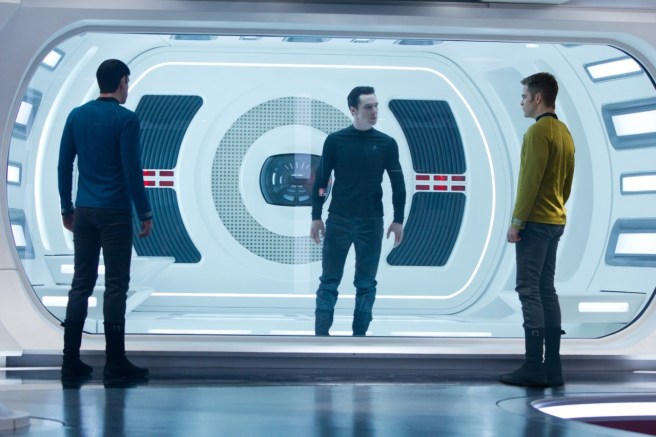
Star Trek Into Darkness. This one does not compare well to the other Star Trek movies. Fun, maybe, kinda, but there’s all kinds of narrative whiplash, and the non-Kirk, non-Spock characters aren’t quite there for me. Slapdash effort. Oh, well. I’ve still got my top 5 or 6 in the series to fall back on:

  1. Star Trek VI: The Undiscovered Country
  2. Star Trek II: The Wrath of Khan
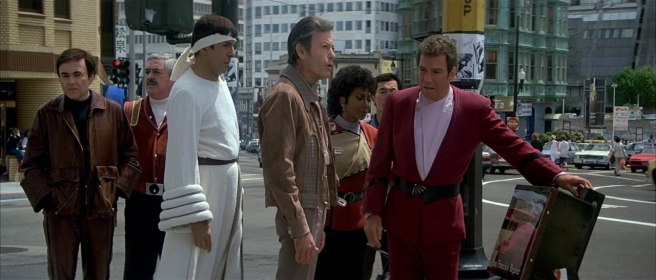
  3. Star Trek IV: The Voyage Home
  4. Star Trek: The Motion Picture
  5. Star Trek: First Contact
  6. Star Trek
  7. Star Trek: Nemesis
  8. Star Trek V: The Final Frontier
  9. Star Trek III: The Search for Spock
  10. Star Trek: Generations
  11. Star Trek Into Darkness
  12. Star Trek: Insurrection

Gravity

Gravity. It’s definitely worth seeing. Very stressful in an entertaining way. Gotta respect a movie with moments where just grabbing a rail feels like the most important thing in the universe. It’s a steady sequence of disasters and new problems. The special effects are just tremendous. I love the way Cuarón plays with the sound, changing with the environment or how the camera or the viewpoint would experience it. The score is omnipresent, for better or worse, depending on how you feel about that sort of thing, but I liked its spacy abstraction.

The writing is a real weakness I was willing to ignore in the moment, but made me sour a little bit when thinking back. The plotsplaining was a bit tedious at times (“But now we have to do X, but we have to look out for Y.”, or “It’s getting really hot in here!”), and there’s some backstory and associated melodrama that probably could have been excised, but it’s a popcorn genre film, sooooo whatever. Deal.

Primer

Primer. It was early on in the film when I stopped trying to understand the technical details. Just let it ride for now and watch it again soon. Very cool movie. There’s a fine line in (many genres but especially in) science fiction where budgets force decisions about how you show crazy things. I love seeing the conservative work-arounds. You reduce the spectacle so you can preserve the speculative heart of the thing. This not all science fiction, though. There’s a good human core about invention, entrepreneurship, risk, paranoia, trust, etc. Looking forward to seeing Shane Carruth’s Upstream Color this week.

libraryjournal:

jerumebrunneng:

An image of a page from The Hitchhiker’s Guide To The Galaxy, describing The Hitchhiker’s Guide To The Galaxy, on an e-reader that resembles The Hitchhiker’s Guide To The Galaxy.

This is the future, guys.

Star Trek: Nemesis

Star Trek: Nemesis. I can see why they put the brakes on the movies for a while. This one might be too blockbuster for it’s own good. It lost some Trekkiness. A very safe film. Definitely better than Insurrection, though, and I think the better production values are a big part of it. As you might suspect from the title, there’s some identity issues explored here. The Picard/Shinzon relationship feels a bit portentous (although one of the saving graces is that young Tom Hardy shows he’s had that incredible screen presence all along, even though his villain is one we’ve seen before: smart, pale, bald, leather.); it’s the relationship between Data and B4 that’s really cool. It’s sort of a Ship of Theseus problem–if you give a physically identical android the same memories, is it the same android? Brent Spiner is a life-saver for all the TNG movies, which seem like they give their supporting cast a lot more screen time. I admit that I enjoyed the dune buggies.

And that’s that. I’ve seen every Star Trek film. Here’s how I rank them:

  1. Star Trek VI: The Undiscovered Country
  2. Star Trek II: The Wrath of Khan
  3. Star Trek IV: The Voyage Home
  4. Star Trek: The Motion Picture
  5. Star Trek: First Contact
  6. Star Trek
  7. Star Trek: Nemesis
  8. Star Trek V: The Final Frontier
  9. Star Trek III: The Search for Spock
  10. Star Trek: Generations
  11. Star Trek: Insurrection

Star Trek: Insurrection

Star Trek: Insurrection. There are a couple of main themes here that I really like. One, aging and youth. And two, the forced relocation/Lebensraum/irredentist refugee thing, with the Federation getting involved in some less obviously noble politics. But these themes come up in a pretty ho-hum story that never breaks the TV feel like First Contact does. Even the opening titles are kind of cheap. Add in some truly stupid moments (the beaded headdress; the Gilbert & Sullivan; the life raft), and some good drama that starts and ends too abruptly (Geordi and the sunrise; the slow-time moments). Missed opportunity. Riker kicks ass on the bridge, though. One more to go!

Star Trek: First Contact

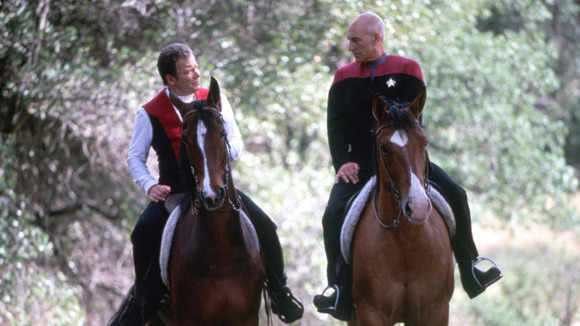
Star Trek: First Contact. I hear this is the best of the TNG cast, and it is good, but doesn’t measure up to the best of the original cast. Definitely darker. Some of that innocence and optimism is gone (which makes some of the humor and goofiness just… awkward), though thankfully the special effects are finally worthy of the setting. Highlights? I loved the editing and cuts between the scenes on Earth and the various ship scenes–so fluid. Patrick Stewart breaks out of Shatner’s shadow at last. The scenes with Data and the Borg are really good. The spacewalk scene is one of the most typically movie-theater-type fun set pieces in the whole series. There’s also a thematically appropriate opera reference in the solid soundtrack. I liked it.

Star Trek VI: The Undiscovered Country

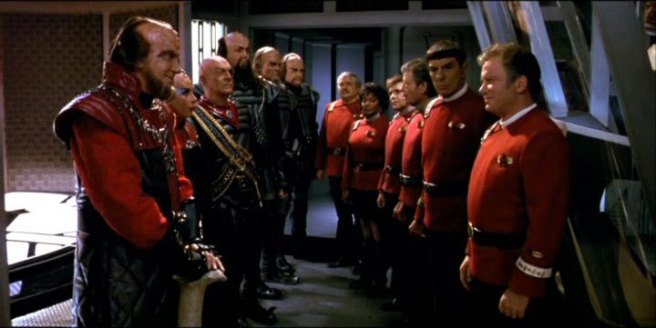
Star Trek VI: The Undiscovered Country. This one is intense! Such a good way to close out with the original stars. It seems to have the most traditional blockbuster feel: political intrigue, betrayal, blatant emotionalism, heroes in peril, a mad dash to prevent calamity, last-minute rescues, one-liners and philosophical banter. I think this one also built up the biggest sense of dread and risk out of the series. Also a nice thematic change, rather than exploring the frontiers of space and encounters with strange beings or energy forms or whatever, they’re easing into universal civics, basically, and trying not to let their baggage screw it all up. Same director as the excellent Star Trek II… and I think this one gives it strong competition.

Star Trek V: The Final Frontier

Star Trek V: The Final Frontier. The star trio is reunited! Kirk is also more bad-ass than usual. Director’s privilege? A good bit of the humor attempts fall flat, but I think the story is decent overall. The camera in this one is definitely more fluid than the previous entries in the series. Lots more long, arcing movements and mobile in-your-face stuff. I think the soundtrack was influenced by Scheherazade. If I had to describe the Star Trek films in one word, it would be idiosyncratic. The changes in tone, the weird plotlines, the ambivalence toward traditional villains… there’s a lot you don’t see in other movies. Star Trek rankings so far? Tough call, but maybe:

  1. Star Trek II: The Wrath of Khan
  2. Star Trek IV: The Voyage Home
  3. Star Trek: The Motion Picture
  4. Star Trek
  5. Star Trek V: The Final Frontier
  6. Star Trek III: The Search for Spock