Flush

I read Virginia Woolf’s Flush, a biography of Elizabeth Barrett Browning’s cocker spaniel. We grew up with two cocker spaniels (first Nugget, then Rusty, and I still take pride in choosing such good names), so I was rooting for this one from the start. It’s short and breezy and completely charming.

The true philosopher is he who has lost his coat but is free from fleas.

Manhunts: A Philosophical History

I read Grégoire Chamayou’s Manhunts. I may not have given it a fair shake – it has a way more academic bent than what I was in the mood for – but there are some neat ideas here. The most useful:

Every hunt is accompanied by a theory of its prey that explains why, by virtue of what difference, of what distinction, some men can be hunted and others not.

One of the better parts of reading this wasn’t the book itself, but how it related to other things I’ve come across. Manhunter, clearly, and how pursuit puts one’s soul at peril. Njál’s Saga frequently deals with banishment and outlaws, vengeance and vulnerability. Also the book Columbine and other events like the OKC bombing and Isla Vista, and how theories of exclusion always follow closely behind. Zero Dark Thirty, too.

Solaris

I read Stanisław Lem’s Solaris (the new Bill Johnston translation, grade-A uncut straight from the Polish), and enjoyed it for the most part. Not available in paper, so I finally used this Kindle gadget thing.

This is a book for ideas. The writing isn’t too special on its own, on a sentence and paragraph level. I could have done with less of the spinning off into academic/history tangents, but I suppose they have their purpose. Reminds me of Borges a bit, that spirit of developing gobs and gobs of history and references. I think the spirit is more ironic here, underscoring how the knowledge of Solaris that humans gathered and theorized for generations really amounts to so little.

Now I really want to watch both movies again. I read a lot of this while listening to the soundtrack for The Fountain, which makes a good pairing.

Another Lem book I really, really liked was Imaginary Magnitude, which, as a collection of… stories?… offers a lot more variety and more opportunities to have your mind blown.

The Golden Spruce

I read John Vaillant’s book The Golden Spruce: A True Story of Myth, Madness, and Greed on Ryan Holiday’s recommendation. The writing was a bit too overstuffed/awestruck for my tastes sometimes, but there’s some good material in there about the history of the Pacific Northwest and the rise of the modern logging industry.

An even better book about man vs. nature: Vaillant’s The Tiger, which is absolutely incredible. I tumbled a couple good excerpts a few years ago.

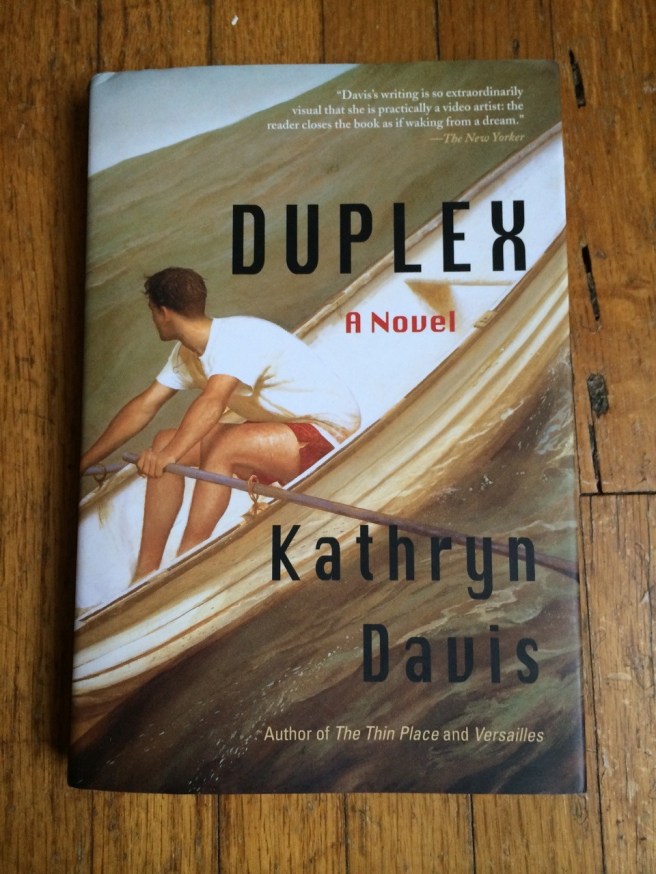
Duplex

I read Kathryn Davis’ Duplex, but I didn’t finish. There’s some neat stuff in here – robots! sorcerers! – but the writing was a bit opaque for me this go-round. Readers with a bit more patience who are willing to re-read will probably be rewarded. (More recent reading.)

The Obstacle Is the Way

I read Ryan Holiday’s The Obstacle Is the Way, at least to the point that I realized it’d be better to peck at it here and there, else the pile-on of stories and reminders would become tedious just chugging straight through. If you’ve been paying attention to Holiday’s must-subscribe reading newsletters, you’ll see many of those works and people and themes resurface here. I’ll keep it nearby to knock off a few more chapters as needed.

The Left Hand of Darkness

I read Ursula Le Guin’s The Left Hand of Darkness because it’s regarded as one of those high points in the scifi canon. It’s about an envoy on an ambisextrous planet, which is a great start. I wish the political intrigue hadn’t been derailed by a particular journey toward the end, but still enjoyed most of it.

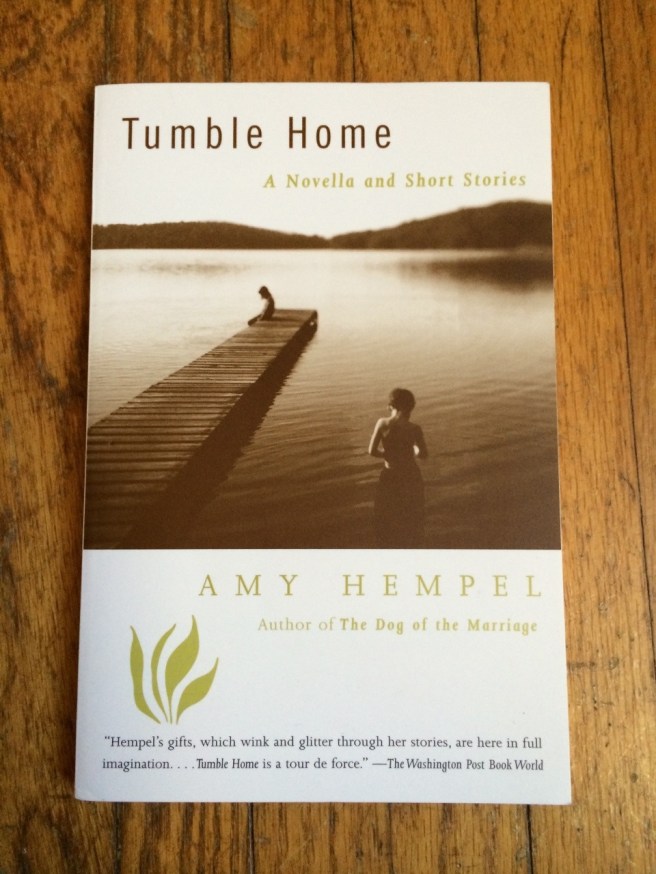
Tumble Home

I read Amy Hempel’s Tumble Home. The title novella didn’t do much for me, but the short stories were so crisp and weird and vivid. From page 21, one of my favorite images of the year: “the halved-apple faces of owls”. Short and sweet.

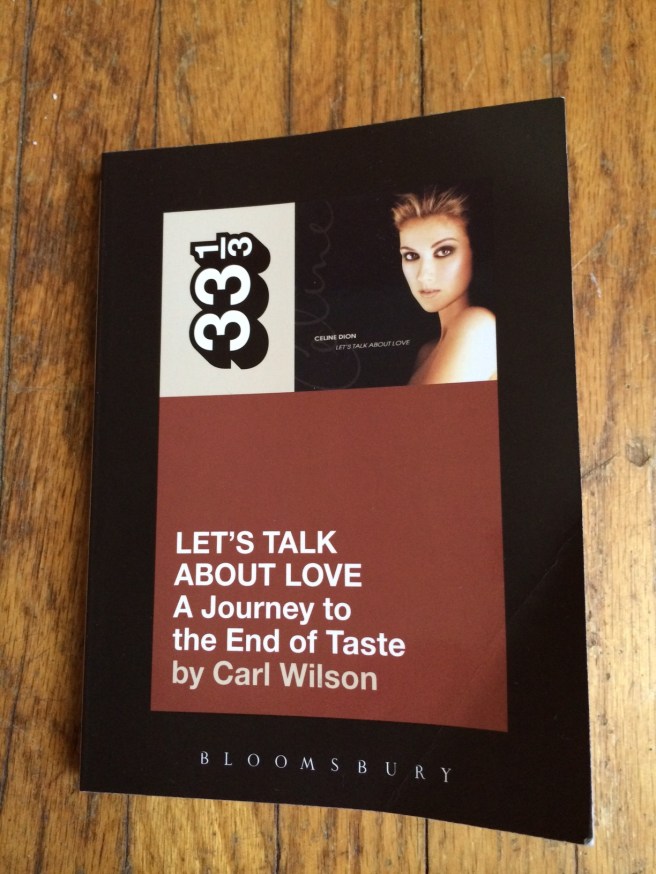
Let’s Talk About Love: A Journey to the End of Taste

I read Carl Wilson’s Let’s Talk About Love: A Journey to the End of Taste, and it’s probably my favorite book of the year so far. Like Wilson, I never cared that much for Céline Dion’s music, and hadn’t tried to care, but I came away with a new appreciation for where she came from and some of her shrewd business moves. But it’s not just about the music and industry angle, the good stuff is how he uses Dion as the pivot to talk about taste, and all the baggage that informs our opinions.

Much of this book is about reasonable people carting around cultural assumptions that make them assholes to millions of strangers.

So this is right in my wheelhouse, as taste and opinions are two of my favorite tags here. Some favorite parts…

On pop criticism and critical reevaluation:

If critics were so wrong about disco in the 1970s, why not about Britney Spears now? Why did pop music have to get old before getting a fair shake?

And later, trying to fight your instincts and keep an open mind:

If guilty pleasures are out of date, perhaps the time has come to conceive of a guilty displeasure. This is not like the nagging regret I have about, say, never learning to like opera. My aversion to Dion more closely resembles how put off I feel when someone says they’re pro-life or a Republican: intellectually I’m aware how personal and complicated such affiliations can be, but my gut reactions are more crudely tribal.

On the acknowledged fakeness of shows like American Idol:

For all the show’s concentration on character and achievement, it is not about the kind of self-expression critics tend to praise as real. It celebrates […] “authentic inauthenticity”, the sense of showbiz known and enjoyed as a genuine fake, in a time when audiences are savvy enough to realize image-construction is an inevitability and just want it to be fun. “Authentic inauthenticity” is really just another way of saying “art”, but people caught up in romantic ideals still bristle to admit how much of creativity is being able to manipulate artifice.

On conformity of opinion:

The bias that “conformity” is a pejorative has led, I think, to underestimating the part mimesis – imitation – plays in taste. It’s always other people following crowds, whereas my own taste reflects my specialness.

On middlebrow:

Middle brow is the new lowbrow – mainstream taste the only taste for which you still have you say you’re sorry. And there, taste seems less an aesthetic question than, again, a social one: among the thousands of varieties of aesthetes and geeks and hobbyists, each with their special-ordered cultural diet, the abiding mystery of mainstream culture is, “Who the hell are those people?”

In a section that ties in the work of Pierre Bourdieu, a bit on class and the varieties of capital:

One of Bourdieu’s most striking notions is that there’s also an inherent antagonism between people in fields structured mainly by cultural capital and those in fields where there is primarily economic capital: while high-ranking artists and intellectuals are part of the dominant class in society thanks to their education and influence, they are a dominated segment of that class compared to actual rich people. This helps explain why so many artists, journalists and academics can see themselves as anti-establishment subversives while most of the public sees them as smug elitists.

I love this section on the double-standards about the emotional content of music, especially when it comes to things like sentimentality, tenderness, etc.

Cliché certainly might be an aesthetic flaw, but it’s not what sets sentimentality apart in pop music, or there wouldn’t be a primitive band every two years that’s hailed for bringing rock “back to basics”. Such double-standards arise everywhere for sentimental music: excess, formulaism, two-dimensionality can all be positives for music that is not gentle and conciliatory, but infuriated and rebellious. You could say punk rock is anger’s schmaltz.

In a section talking about all the ways we can love a song, a reminder:

You can only feel all these sorts of love if you’re uncowed by the questions of whether a song will stand the “test of time”, which implies that to pass away, to die, is to fail (and that taste is about making predictions). You can’t feel them if you’re looking for the one record you would take to a desert island, a scenario designed to strip the conviviality from the aesthetic imagination.

And another one:

When we do make judgements, though, the trick would be to remember that they are contingent, hailing from one small point in time and in society. It’s only a rough draft of art history: it always could be otherwise, and usually will be. The thrill is that as a rough draft, it is always up for revision, so we are constantly at risk of our minds being changed – the promise that lured us all to art in the first place.

While I’m wrapping up, I should mention two things those excerpts don’t capture well: 1) the long, smooth, winding essay feel, as it all snaps into place so nicely, and 2) a lot of fascinating detail on Céline Dion herself. She’s a pro.

This book would pair really nicely with two other books I’ve loved: Highbrow/Lowbrow: The Emergence of Cultural Hierarchy in America, a sort of historical/sociological exploration of class and taste, and The Age of the Infovore, which runs with the idea of open-mindedness and how we’re all so damn lucky to have so much culture at our fingertips.

The Interrogative Mood

I read Padgett Powell’s The Interrogative Mood: A Novel?, which is one-of-a-kind. Easy to pick up and chew a few lines at a time, or just surf along the steady waves of questions. Here’s an idea of what you’re in for:

Is there enough time left? Does it matter that I did not specify for what? Was there ever enough time? Does the notion of “enough time” actually make any sense?

Or maybe this:

Have you ever watched bats come out of a wall? How the soft, friendly things keep pouring silently out of the brick? How they have focus, and mission, and you do not?

Not the most representative sample, but I’m not sure there is one. Good stuff. Thanks to Austin Kleon for the glowing recommendation.

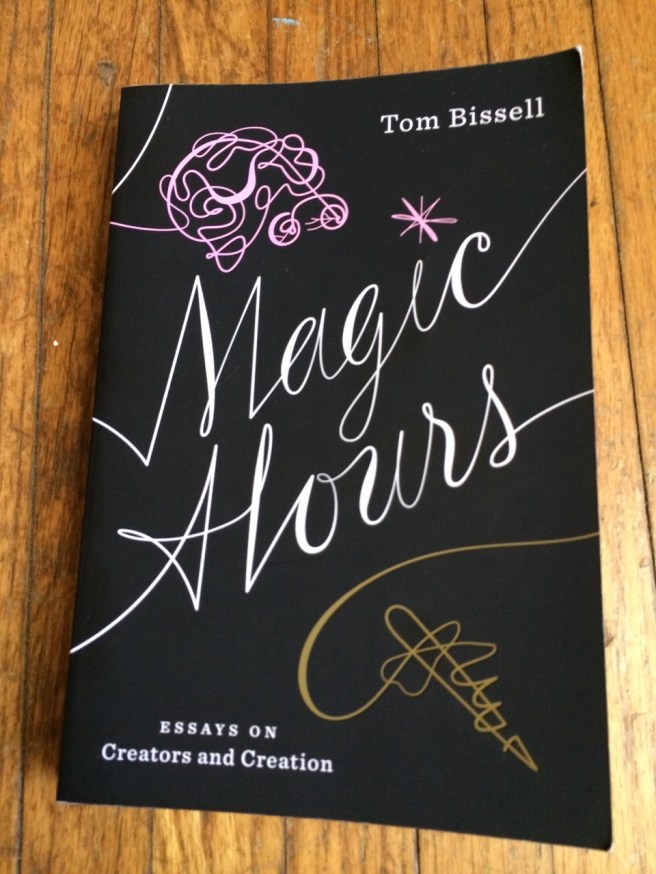
Magic Hours

I read Tom Bissell’s Magic Hours, a good collection of nonfiction. Just gonna pull out a few parts I really liked. On small towns:

In a small town, success is the simplest arithmetic there is. To achieve it, you leave – then subsequently bore your new big-city friends with accounts of your narrow escape.

Thinking about Stories We Tell last night reminded me of this, on documentaries:

Explanatory impotence is not unique to the documentary but in some ways is abetted by the form. Inimitably vivid yet brutally compressed, documentaries often treasure image over information, proffer complications instead of conclusions, and touch on rather than explore. When a documentary film […] charts the mysteries of human behavior, an inconclusive effect can be electrifying.

Along the same lines, later, on nonfiction…

In the end, great nonfiction writing does not necessarily require any accuracy greater than that of an honest and vividly rendered confusion.

Overall, I enjoyed most of it, but not nearly as much as I liked his more focused, and somewhat more personal book Extra Lives.

An Impossible Number of Books: Matthew L. Jockers’s “Macroanalysis” –

An Impossible Number of Books: Matthew L. Jockers’s “Macroanalysis” –

Does reading have a future? A noted Canadian philosopher gazes into the future

Via Alan Jacobs, who rightly encourages you to read the whole thing.

It’s not technophobic or Luddite to recognize that the techie questions are largely beside the point. The scope of their effects lies on a time scale that none of us can foresee, thus creating not genuine questions but opportunities for self-serving predictions.

Ha! Also:

The specific concern for the future of the bound-page book should be seen for what it is: a form of fond special pleading whereby a particular (how I like to read) masquerades as a universal (reading!).

His essay is more thoughtful and substantial than those quotes, by the way. I just thought they were funny.

Does reading have a future? A noted Canadian philosopher gazes into the future

Why it’s ok to buy books and not read them

I used to feel guilty about books I own but haven’t read. They’d sit in piles making me feel unworthy as a writer, and reader. And no matter how many books I’d read in a year, I’d always find myself buying more. I couldn’t win. It was a destructive cycle and it drove me mad. One day I realized there was another way to frame my behavior. The goal should not be efficiency because efficiency makes you conservative. As a writer I need an ambitious curiosity, not a safe one. It’s good to take bets on books at the limits of my comfort zone.

Why it’s ok to buy books and not read them

I am not a scholar and the majority of my references have been culled from my personal library, allowing me to check them without difficulty. But I read in zigzags, I travel from one book to the next, and this is not without risks. It is quite possible that here and there, certain interpretations or comparisons are stretched or simply gratuitous. However, this book is a journey—and travelers should be aware that paths leading nowhere are also part of the trip.

Raul Ruiz, from the introduction to Poetics of Cinema. I read in zigzags, too. Michelle Orange mentioned this excerpt in an interview with the Paris Review. Her book This Is Running for Your Life is pretty awesome.