Key Largo

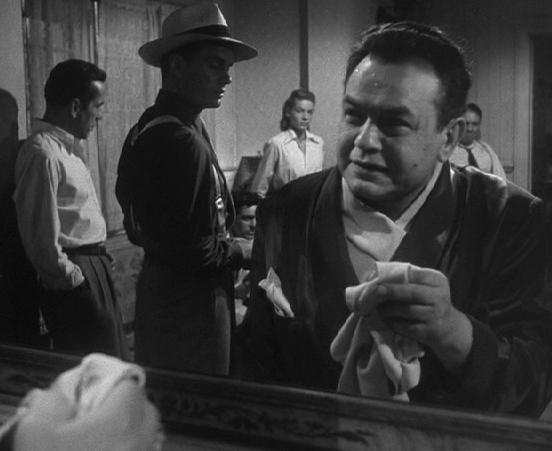
Key Largo. “Your head says one thing and your whole life says another. Your head always loses.” This was a drawing-room crime/suspense film with relatively low stakes. It turned out to be pretty good, but could use some trimming. Edward G. Robinson really carries it.

Bottle Rocket

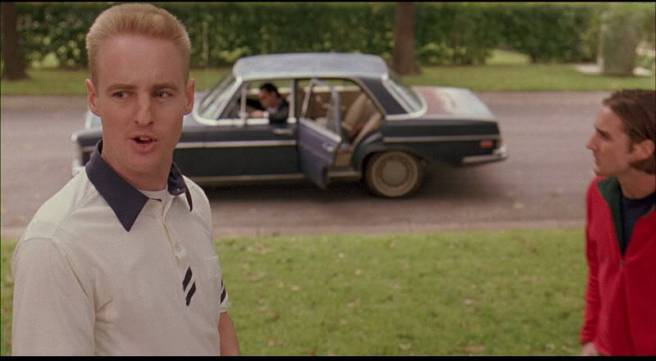
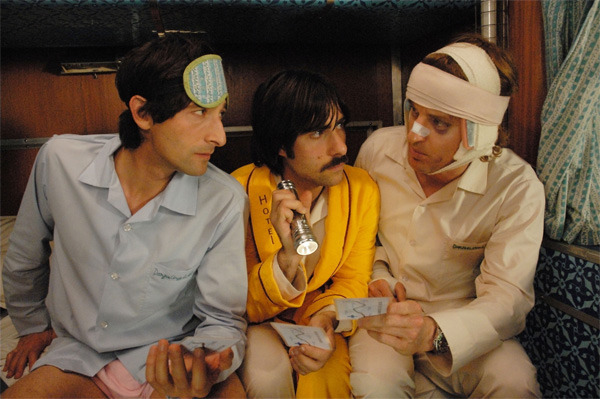
Bottle Rocket. Eh. I’d like to see the short film that was the germ of this full-length one. My current Wes Anderson rankings: 1. The Darjeeling Limited 2. The Royal Tenenbaums 3. Bottle Rocket 4. Rushmore. I wonder if I’d like his movies more if I’d seen them as serials? Seems like a more forgiving format for these somewhat aimless stories, but still have some interesting moments sprinkled around.

The September Issue

The September Issue. This was mostly interesting for the visual spectacle. As a “story” it falls flat. It’s more a series of snapshots. The goal is to produce the Biggest Magazine Ever in the history of anything, but there’s no strong sense of beginnings, endings, middles, challenges. Perhaps there’s no proper place to begin watching a process that happens 12 times a year every year, but you still want some kind of narrative handhold. As for the people… of Vogue editor-in-chief Anna Wintour, you don’t learn much directly, but watch her meet and quietly decree. It is pretty amazing how everyone just folds around her. Well, almost everyone. The magazine’s creative director, Grace Coddington is presented as the warmer, romantic foil to Wintour’s frosty business demeanor. Perhaps the most interesting bit of process was seeing the storyboarding of the magazine. There’s a separate room where they’d lay out potential photoshoots on a table, then select and sort the miniature 2-page spreads on a big wall, shuffling and reshuffling pages until press time.

Rashomon

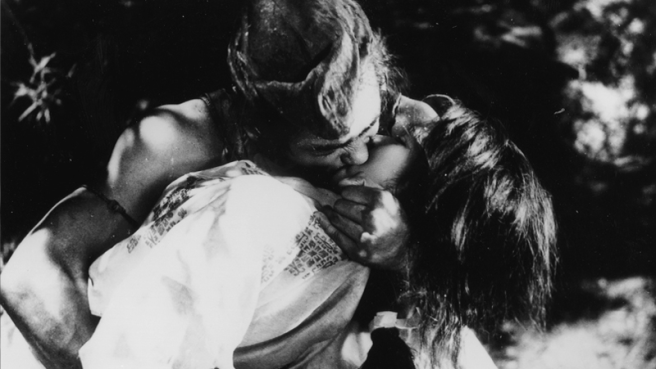
Rashomon. This is my second Kurosawa flick. Throne of Blood was first. This one I didn’t like as much. Dialogue seemed a bit low on subtlety, but maybe that’s partially a translation thing? And multi-perspective flashback to previous events seems so familiar now–I wonder how I’d react if I saw it with fresh eyes. A couple characters, with their shifts from stonefaced to tears to cackling laughter, got a bit exausting. The first moments of the first swordfight seemed tense with possibility, but then subsequent fights just seem like bumbling. You can’t swing swords that much and not cut someone, can you? Nice framing here and there, interesting use of light filtering through trees, obscuring and revealing. And a mostly good soundtrack, though the section during the victim’s testimony seemed to borrow heavily from Ravel’s Boléro. I’ll be glad to see what else Kurosawa has to offer.

The Royal Tenenbaums

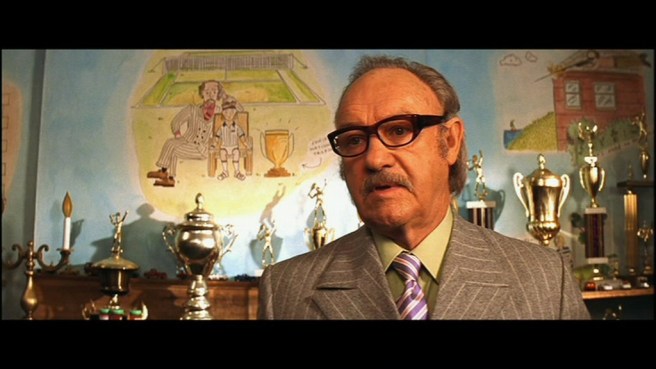
The Royal Tenenbaums. Film #3 in my Wes Anderson self-education program. I’d rank this one below The Darjeeling Limited, above Rushmore. Anderson can start a movie with the best of them, but I’m not sure he’s a good finisher. But I can appreciate how he rides the edge between comedy and tragedy. I’m not sure I understand the soundtracks, though. I don’t think it’s simply a bald move for hip points – “Hey, listen to how cool my music collection is. Pretty good taste, eh?” – but I can’t help but find it somewhat annoying.

Moon

Moon. I really liked this one in the end. Good score, too, aside from a couple piano interludes. I was expecting a psycho-mind-bender kind of thing where we watch Sam Rockwell lose it for an hour. That does happen, for a bit. At first I was skeptical about the twist and the HAL-esque computer friend and the token evil corporation. But then, it turns into a surprisingly effective little deliberation on identity and memory and ethics and such. Recommended!

Rushmore

Rushmore. This is my second Wes Anderson film (previously). I knew next to nothing about it before I started, maybe some prepping would have helped. In the end I say, “not worth it”. I almost didn’t finish. Next up, Royal Tenenbaums.

Tyson

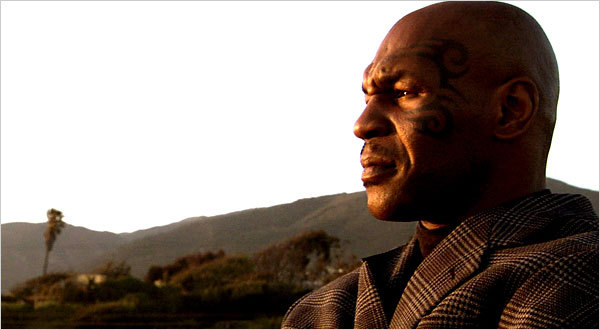
Tyson. It’s a great movie. Tyson narrates the whole thing, which is interspersed with footage from his entire career. What could be boring talking head scenes are somewhat enlivened with multiple camera angles, split screens, cuts, etc. You can’t help but feel some sympathy for the guy.

This Gun for Hire

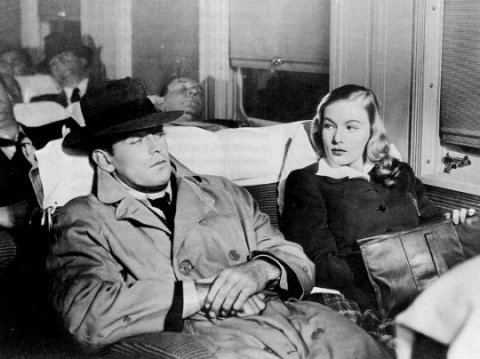
This Gun for Hire. This is a very average movie. But it does have Veronica Lake. It’s also fun to see some of the cliches we still use 70 years later: evil paraplegic businessman; tense stand-off in a chemical plant; escaping from police pursuit via jumping on a train from a bridge; poorly aimed gunfire piercing barrels, which then leak; etc.

Blue Velvet

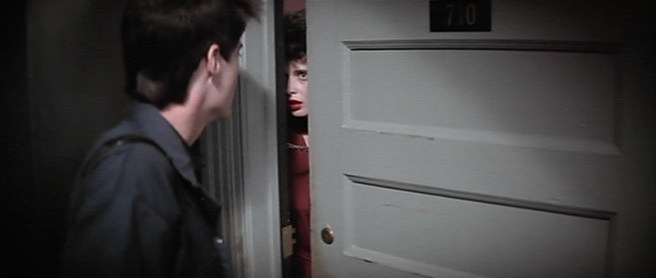
Blue Velvet. Really disappointed with this one. I love the way that David Lynch framed his shots, used color, and put together some incredibly intense scenes. But, wow, he surrounded them with 1.5 hours of slight, incredibly tedious storyline.

The Maltese Falcon

The Maltese Falcon. This movie is really, really good. Sydney Greenstreet is hilarious. Peter Lorre does the usual vaguely-creepy foreigner bit. Mary Astor is a tricky little devil. Bogart is Bogartian. None of the characters are entirely likeable, or hateable. Thumbs-up.

Man on Wire

Man on Wire. Fantastic movie. Wow. I’m glad the participants had to the foresight to document while they prepared. One thing I love about achievements like this is seeing that they really are projects, a dream-made-real that took years of work and preparation. A one-off, maybe, but not simply a lucky break. Props to Kottke for sharing it.

Tulpan

Tulpan. I liked it. I appreciate patient film-making. Lots of long takes, some room to breathe. It doesn’t take you by the hand and carry you along, but it sticks with you afterward.