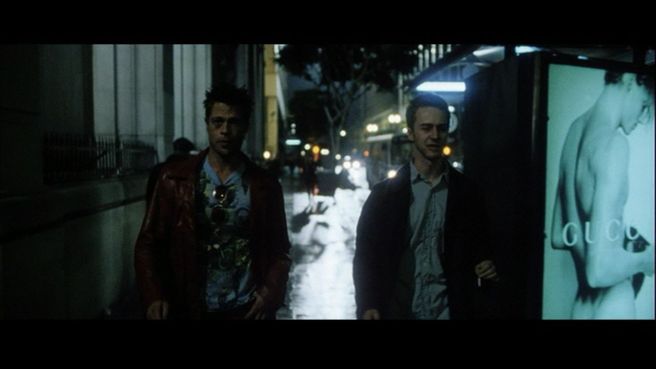
Fight Club. This was kind of boring. (Zodiac is by far the best of the three David Fincher films I’ve seen. Seven was worthwhile, but hasn’t aged well. I wonder where The Social Network will rank when I see it.)
Fight Club. This was kind of boring. (Zodiac is by far the best of the three David Fincher films I’ve seen. Seven was worthwhile, but hasn’t aged well. I wonder where The Social Network will rank when I see it.)
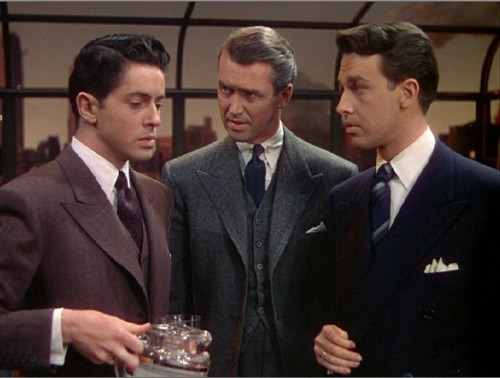
Rope. This was pretty good, but not quite high enough suspense levels with all the dinnertime distractions. There are some great side characters, though. I like the novelty of having the movie run in real-time with one camera tracking around the room. It’s based on a play of the same name, which leads to a big downside for me: walking standing talking walking standing talking walking standing talking. That’s one of the reasons I’ve never gotten into theater that much. Only so many things you can do when you’re trapped in a room, and this is no Rear Window. My updated Hitchcock rankings:
James Stewart has a pretty good track record for me. I’ll need to see some more of his movies. And I think I’ve had my fill of Hitchcock for a while, unless there’s something really awesome I still haven’t seen…?
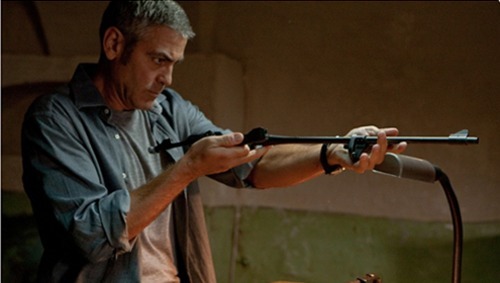
The American. It seems that critics are a bit mixed, but I’m with Ebert: I loved this one. It got billed as a semi-action-thriller. Yeah, there’s some killin’, but this is really more of a slow-burning mood piece like Le Samouraï. Or, say, a Sergio Leone western – there’s even a scene with the Once Upon a Time in the West McBain massacre playing in the background. This is not (just) about assassins doing jobs, but about an existential crisis–I detect some parallels in In Bruges, and in film noir like Blast of Silence and my beloved Out of the Past. Except this is set in sunny Italy. Great photography, absolute minimal soundtrack.
Some obvious detractions are the heavy-handed dialogue with the priest and also the–yep–hooker with a heart of gold. But still. Master craftsmanship from Anton Corbijn. I’ll probably watch it again soon. Coincidentally, the only movie I watched twice last year was Clooney’s Michael Clayton. The guy’s got great taste.
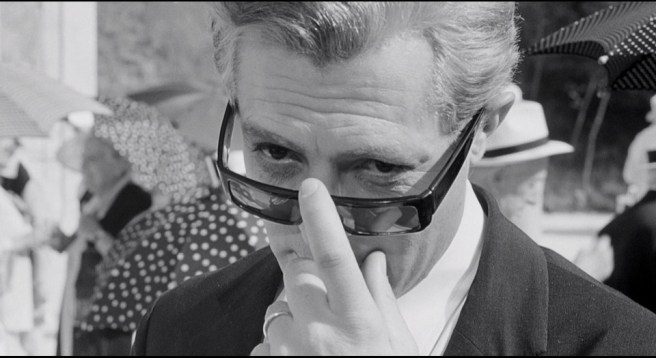
8½. My first Fellini. Features a nice blend of reality and the daydreams of the protagonist. I also appreciate how the protagonist-director’s anxiety and creative listlessness are undercut by the mastery of the actual director’s work. A film about being lost by someone totally in control. It is a quite beautiful film. They say it’s one of the greats
.

Der Siebente Continent (The Seventh Continent). DNF. Bailed at the halfway mark.

La Ventana (The Window). Antonio is an ailing old man whose estranged son is coming to visit. He gets a haircut, retrieves the special bottle of champagne, goes for a walk, has the piano tuned. Movies like this are proof that you don’t need dramatic twists, revelations, surprises or other antics to make a worthwhile film. Even predictable is fine if you’ve got a premise you’re willing to follow for a few minutes and a world with a few characters you’re willing to care about. This one was really nicely done.

Sabotage. I’ll give Hitchcock credit for starting off in a snappy manner without much preamble, but my attention drifted a good bit here and there. Especially after the heartless, classic package delivery scene, which is both an impossible-to-beat mid-story climax and a colossal waste of time. It’s also really effective, even if you know what’s coming. I kind of resent Hitchcock’s skill at jerking my emotional chain for a few minutes, and then leaving me not caring very much when the moment passes. To his credit, he came to regret the scene later in his career as he developed as a storyteller.
My updated Hitchcock rankings:
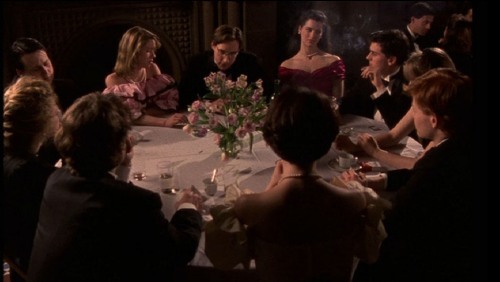
Metropolitan. I loved it. What we have is a modern-day drawing room film/comedy of manners, with upper-crusty Manhattanite teens inviting a misfit into their fold. They go back and forth from debutante balls to house parties, gossiping and verbally jousting all the while. It’s very dialogue-heavy (they almost all speak in long, precise sentences, processing their emotions and ideals and the failings of society) and very funny. I think you could compare it favorably to Annie Hall or Manhattan, but with a younger cast. Ebert says. Criterion essay.

Crazy Heart. A through and through enjoyable movie. There’s no good reason not to watch it. One good reason to watch it, besides Jeff Bridges, Maggie Gyllenhaal, and Robert Duvall being awesome, is to see Colin Farrell as a country star. Yes! I’ll be interested to see what else director Scott Cooper comes up with.

Black Swan. This was ultimately a bit disappointing. Great performances from Portman, Cassel, et al. Once I got used to it, I liked the use of the up-close, claustrophobic, over-the-shoulder stalker cam. A lot of the camerawork struck me as pretty impressive. Great moments in cramped interiors and the rhapsodic, choreographed dances. There’s also the nice bonus that the movie draws from a kickass soundtrack that’s long been one of my favorites.
The trouble with this movie is that once you go the fantasy/hallucination/supernatural route, it’s very, very hard to do it in a fresh way. This is how we end up repeating clichés like mysterious bleeding, reflections in the mirror moving without the character moving, painted portraits coming to life, mysterious whispers of sound, the epileptic-ecstatic flashing lights drugged-up dance club scene, sightings of people who look like certain people but actually aren’t when you get up close, etc. I loved seeing the strain of dancers seeking physical perfection; the consumptive effects of artistic striving; and the psycho-sexual power games among family, rivals, mentors. That was mostly excellent. My groans started with how these things were visually manifested on-screen–it seems like a pile-on. I think it would have been a more engaging film without the fantasy.

Three Kings. The setting is Iraq at the end of the Gulf War, when bored/greedy soldiers go in search of stolen Kuwaiti gold and get in over their heads. It veers from buddy-movie hijinks to touching moments to graphic battle scenes and never rests, never goes wrong. Very highly recommended. Ebert says.

Le Samouraï. When I came across this I was thinking something along the lines of “Alain Delon as assassin ≈ Cary Grant as Treadstone asset”. Count me in. Four minutes into the movie we get a bit of pulsing ostinato organ riff and somehow I knew I’d love it. (There’s also some great diegetic jazz later in the film.) Early on, Delon goes out to do a job BUT he screws up pretty big. He gets arrested, we get a long, fascinating ensemble interrogation scene (François Périer is great) and the rest of the movie unfolds in a taut but not frenzied way. Great movie. David Thomson’s Criterion essay.

A Single Man. It’s okay. Heavily art-directed in a Wes Anderson kind of way that’s both really sharp and a little bit dead. It sometimes feels like a product shoot. Ponderous. Never funny. Both of these things could be conscious choices tied to the main character’s public facade of neat, refined detachment that hides his inner chaos. His lover is dead. I like how Ford plays with the colors and hues in this one. Most of Colin Firth’s daily life is in a muted, greyish-brownish palette. In moments of clarity or lust or novelty, the palette becomes richer, warmer, shades of red and gold. Not at all subtle, but it’s a neat trick.
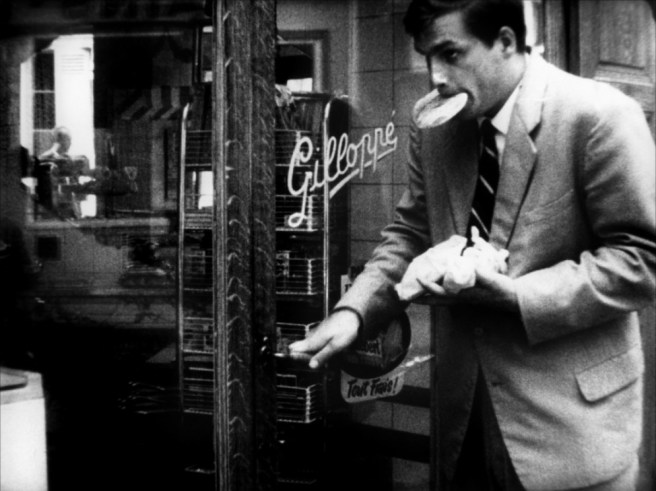
La Boulangère de Monceau (The Bakery Girl of Monceau). Another Éric Rohmer film (previously), the first of his Six Moral Tales. This is a worthy short one, only 23 minutes. The focus is an everyday occurrence: a guy sees an attractive gal on the street, doesn’t say anything, regrets it, then toys with a bakery girl as a substitute as he tries to find the first. The man’s narration is an out-loud self-analysis, full of his internal churning, hedges and rationalizations about his choices. Here’s a Criterion essay.

Notorious. Highly recommended. We’re back in quality Hitchcock territory after that last fiasco. Grant recruits the scandalous socialite Bergman as a fellow spy. They go down to Rio and struggle with how far to take their work and their love. The highlight for me was the party/wine cellar scene (which starts with a famous shot). The ingenious tension in this comes from the simple issue of whether there is enough champagne, and thus, is there time/cover to sneak into the wine cellar? And there’s the clever screenwriting where Bergman excuses herself to request that the band play Brazilian music instead of waltzes, which also refreshes the soundtrack for the subsequent cellar snooping.
And I tell you what: Bergman is an incredible actress–maybe my favorite female film star? I like Grant in this one, too. I’ve long been ambivalent about him on screen, but I like that this role seems to have a touch of menace underneath, and a little less confidence. Great movie. Ebert says.

North by Northwest. Sorry, folks. I found this pretty boring. There are, however, good reasons to disagree.
My current Hitchcock rankings:
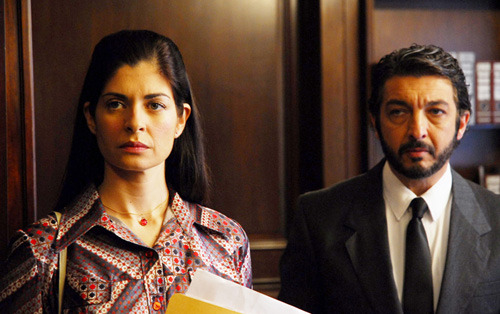
El Secreto de Sus Ojos (The Secret in Their Eyes). A retired detective-cum-novelist pursues a cold case and a lost love, and it’s pretty damn good. A few parts here and there feel a bit telenovela, but on the whole it’s a steady, confident story with some really solid side characters–especially Guillermo Francella. Also includes a ridiculously good chase and one of the most electric elevator scenes on film. You just feel your stomach drop. Ebert says ★★★★.
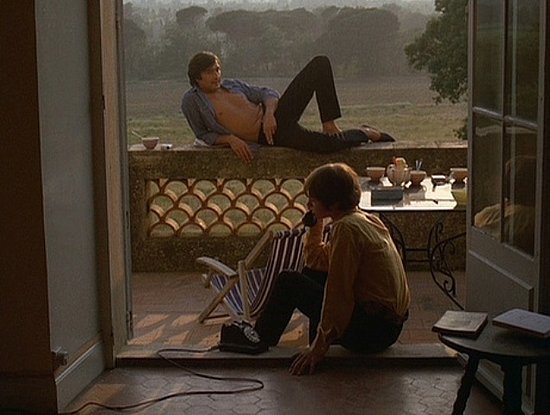
La Collectionneuse. One of Éric Rohmer’s Six Moral Tales. Like Roman Holiday, this one centers on a question that doesn’t get answered until the last minute. It wasn’t as much pure fun, but I still respect a patient movie. From Phillip Lopate’s Criterion essay:
Here we see one of Rohmer’s most original tropes: the tepid attraction. It flies in the face of all cinematic convention, which dictates that the encounter of a good-looking man and a good-looking woman must lead to grand narrative passion. […] Rohmer views the problems of indolent, potential-laden, prolonged youth in this film from the perspective of the middle-aged artist, who knows that the clock is ticking.

Et Dieu… créa la femme (And God Created Woman). This is the film where Brigitte Bardot first got attention for the sex kitten thing. It’s an okay story, nothing special. I did appreciate many of the shots, lighting, and sets, especially the interiors. Definitely skippable, though. A funny coincidence: both this movie and the one I watched right before it, Blast of Silence, feature scenes where the emotional tension is heightened by quick cuts to musicians playing Latin music on hand drums. I assume this is a cliché that appears in other films of the era. See also: mad scene.

Blast of Silence. A Criterion essay cleverly calls it “the best movie ever made about a common, important, and unjustly neglected American experience: the really bad business trip”. It’s a great film noir that will only take 77 minutes of your time. It came out near the tail end of the genre’s peak, but in some ways it feels prototypical. Distilled. Lovely shots of New York City as he wanders in a sort of malaise. The hard-boiled voiceover really drives the misery home. Gangsters, dames, old friends-who-aren’t. Loneliness and disaffection. You know the clock is ticking on this guy from the very first moments. Nice appreciation at Bright Lights.
 Mark Larson