L’Inhumaine

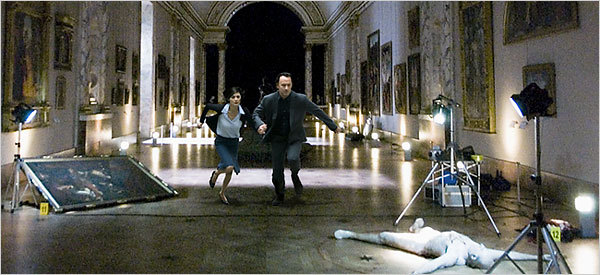
L’Inhumaine. Marcel L’Herbier’s old French 1924 silent film. I saw this one at Ebertfest, along with Darius Milhaud’s original score played live by the Alloy Orchestra. It… messed with my head.

It starts at this awesome crazy-designed mansion of wealthy singer. You see, she’s a babe and there are men competing for her attention. One is jilted and attempts/fakes suicide. People mourn. There’s a big scene at a Paris theatre with a big rabble-rousing crowd. (That scene also features some awesome cameos from real-life friends from the art world – Proust, Joyce, Pound, etc.). The singer feels guilt. The suicide guy returns. One of the other suitors, a Maharaja, seeks revenge for his jilting by posing as a taxi driver and planting a poisonous snake in her cab. She dies. A mad scientist revives her. Etc. That’s not even the half of it. The final trippy hallucinatory sequence is NUTS. There’s montage, translucencies, overlapping images, swapping color filters, flashes of bold color, accelerating cuts. Don’t sleep on the old stuff.

The Third Man (1949)

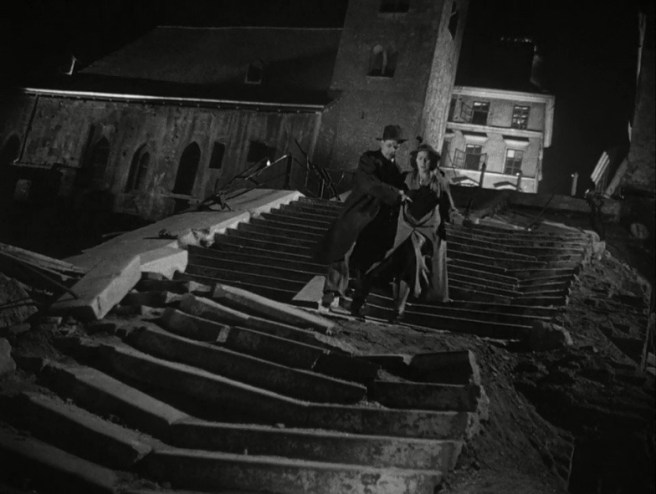
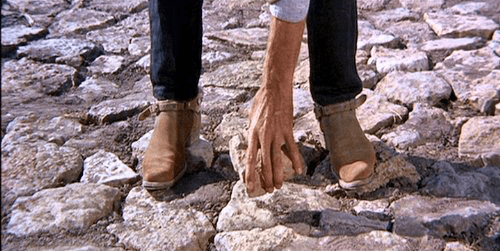
The Third Man (1949). Number four from Ebertfest. I dug it, and I remember basically nothing about the plot. Post-war Vienna light-and-shadow mystery stuff, cock-eyed angles. Orwell’s reveal, emerging from the shadows, is so good. Nice sewer chase at the end, though I wish they’d tightened it up a bit. I wonder how they managed the sound down there. And basics like navigating around. Apparently that persistent zither soundtrack was a local, on-the-spot hire, some dude they found on location at a cafe during the filming of the movie.

Northfork

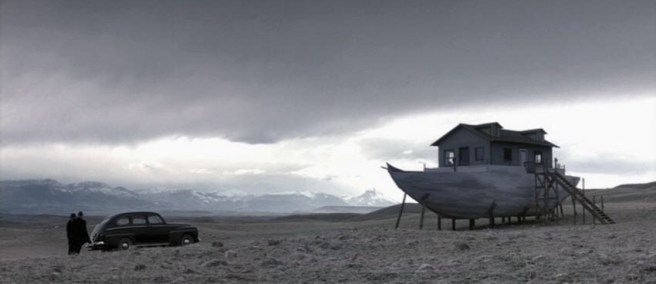
Northfork. Third movie I saw at Ebertfest. It’s really bizarre and I really liked it. In this one, there’s a small town that’s about to be flooded as a new lake is constructed. Some G-men types are hired to evacuate people (a pair of lovers; a guy who nailed himself to his front porch, waiting gun in hand; a man who built an ark for himself and his two wives). There’s also a storyline with a small dying orphan boy who has dreams with imagery that draw from the knick-knacks on his bedside table: a cup of tea, a model plane, a Bible, pillow and its feathers, a model hand, a music box. So, a story of transitions and leave-takings. But for all that, it has its light moments like some really droll, straightfaced wordplay delivered without a hint of knowingness (“fowl play”, “What are you talking about Willis?”), a quartet of angels looking for a chosen one, and some weird gags like the guessing game at the diner. There’s a blend of Catholic, Mormon, and Amish local influence along with some magical realism. So, a really, really odd one. Some of the drama is a little flat, but I love the imagination.

Grandma

Grandma. Another one from Ebertfest, one of my least favorite of the weekend, but it’s not bad by any means. In short, a granddaughter goes to her grandmother’s house to get money for money for an abortion, and we go from there.

This grandma… has anger issues. She’s gruff, flaky, independent. It’s weird having a central character who’s so angry all the time. Takes something special to keep her worth watching. She’s her own worst enemy for sure. She also drives a classic car that’s near breaking down. She doesn’t take care of it – metaphor! Themes of motherhood, parental influence, experiencing and anticipating loss, grieving, etc. All female cast except for an excellent Sam Elliott cameo and the guy at dinner.

Crimson Peak

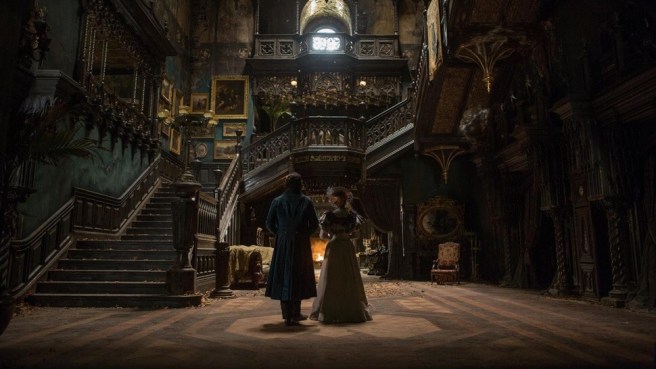
Crimson Peak. This was the opener at Ebertfest when I went a couple months ago. I loved it the first time and it was even better with an enthusiastic crowd in an old theater. Felt like an event. The anticipation helps a lot, and having the director on hand to talk about his movie does, too. One of my favorite lines from Guillermo Del Toro’s awesome Q&A that night:

I don’t make eye candy. I make eye protein.

He shared background on the influences, comparisons and similarities to Jane Eyre and Frankenstein, which have a similar sense of loss and abandonment, and to a few Hitchcock movies – Rebecca, Suspicion, Notorious – as more recent gothic romances where love ends in conflagration. In this one the heroine’s experience of love goes hand-in-hand with the experience of death.

He also talked a lot about the unity of construction through the whole thing. How the story is told in architecture (different architectural styles through the house and each floor, the differing levels of moral order and corruption), in costume (Chastain’s blue dress borrows architectural elements from the house; another draws influence from her association with moth vs. Wasikowska’s butterfly; she’s the only person to wear red, etc.), and in sets (oversized chairs when our heroine takes ill).

Aside from the movie itself, I also enjoyed hearing Del Toro talk about two approaches to evaluating a movie. One, as a viewer, does it do its job? Like, did you feel like you wasted your time? And another way is to approach it as a piece of art – taking into account the context, influences, intentions – did it meet its goals?

Citizenfour

Citizenfour. There’s this interesting tension where a guy has done something earth-shaking, and he knows it… but he’s watching the effects while hidden in a hotel room far from home. Very cool to see all the planning and diligence they took to keep things mum until they were ready to reveal. So glad they took the time to document this while it was happening.

I’m probably on a watchlist now.

Meru

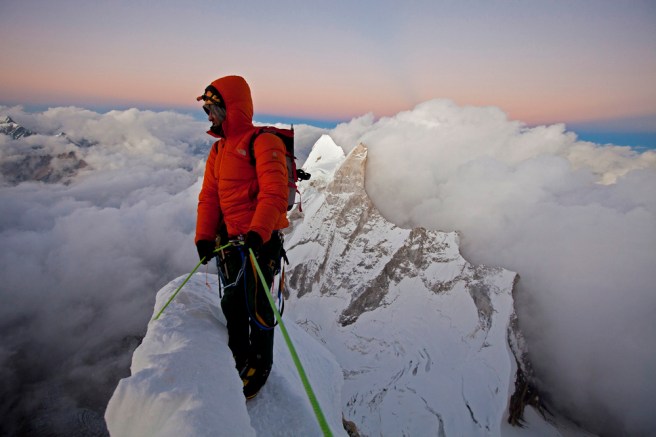
Meru. I liked it most when they were showing the footage that makes you squirm and makes your palms get sweaty. Wish they’d geeked out on the nitty-gritty climbing details more, and/or cut back on the talking heads. Sometimes the people who were there aren’t the best ones to tell the story?

Tangerine

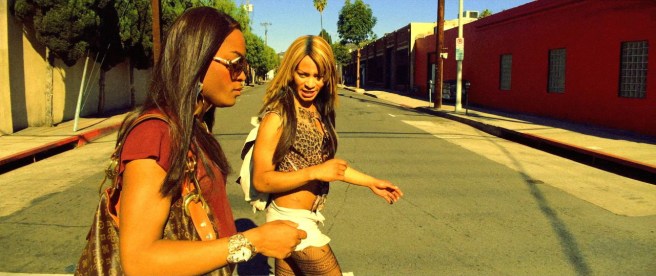
Tangerine. It kicks your feet out from under you with all this zany energy. I wish it could have sustained it all the way through. The scene at the end where all the threads come together is a bit of a too-long jumble. And some parts are, ah, problematic because the tone feels a bit off. But man, such a fresh and fiery start. I love how they work in the soundtrack, and let the visuals and the music guide you every now and then.

The Assassin

The Assassin. Not going to pretend that I understood the plot in its finest details, but it’s pretty great. We have a heroine who’s had her life planned for her, and now she is wrestling with a choice. Love how the soundtrack often sticks to almost silence, except for a slow drum strike every few seconds. There’s one long scene that’s we watch – just barely, sometimes – through these gauzy curtains that drift back and forth as the camera pans from A to B and back. It’s one of those moments that gets me fired up about what you can do with movies with a little patience. Rare to see something so reflective yet so lively.

The Revenant

The Revenant. I still hold to my first reaction:

I wish THE REVENANT were wilder, of all things. Camera makes you feel not like you’re there, but like you’re on an Arctic ride on rails. Or a videogame cut scene? I liked it though. Looked like the most miserable filming experience one could ask for. Also, Tom Hardy has never lost a staring contest.

A bit of a slog. Doesn’t seem to be a whole lot of meat on those bones. Birdman also felt a bit stifling for me. Amazing that this thing got made, though. I wonder if all the PR talk about the filming conditions was sort of an admission/cover that they didn’t quite get what they wanted out of this one.

See also: The Grey and Grizzly Man.

Carol

Carol. I feel like there’s enough there for me to like it more than I do, but it wasn’t for me. I don’t regret watching Blanchett and Mara for a couple hours, though.

Spotlight

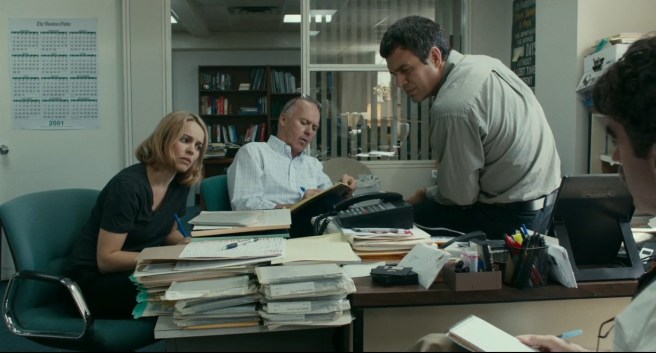
Spotlight. I loved it. Great writing and acting. Teamwork, thinking, putting pieces together. There is some conflict here and there, and most of it doesn’t seem too drummed up for drama, but just real people navigating messy institutions and practical realities. Love the costume design, too. Doesn’t just capture the era but the personalities, too. One of my faves of last year.

Star Wars: The Force Awakens

Star Wars: The Force Awakens. I had fun, and quickly forgot it. It mostly felt good to be watching a Star Wars movie again. If you’re pretty sure you don’t care about Star Wars in general, this movie will not convince you otherwise. If you do, you will probably leave feeling satisfied, depending on how you like your ratio of pandering nostalgia vs. breaking new ground. The hat-tips and references to previous movies wore thin pretty quickly and for me slowed down what otherwise has some nice momentum. Definitely some groaners, though (for example, the snowy mountain Nazi castle…). I really like Ridley and Chiyoga as the new faces. Isaac is always reliable. I feel like in a few months or maybe not until VIII we’ll look back and admit “Hey, VII is pretty thin but it’s not a total trainwreck and that’s okay”. Ranking the best episode 7’s in 2015:

  1. Creed, by a landslide.
  2. Furious 7
  3. The Force Awakens

Star Wars Episode III: Revenge of the Sith

Star Wars Episode III: Revenge of the Sith. I don’t know how you could watch the prequels and pick anyone other than Obi-Wan Kenobi as the coolest guy in the galaxy. I also appreciate that it undercuts the Jedi a bit. They are powerful and try to do some good, but they mess up a lot. I really dig the psychological battles and manipulation in this one. Great stuff. While Christensen is not a good actor, I buy into his tortured melodrama because I believe in Darth Vader’s arc. You’ll forgive a lot if the story is worth believing in. Would have loved more of that. Meanwhile, who the hell is General Grievous? (Know what’s cooler than two light sabers? Four light sabers!) Yeesh. Better than the other two prequels, I think, and a good way to close things out.

Star Wars Episode II: Attack of the Clones

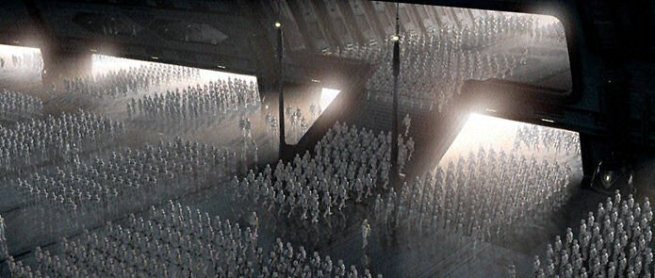
Star Wars Episode II: Attack of the Clones. One of my major complaints of the prequels is that everything looks so nice, and nothing really feels lived in. Very true in this one. I like that we get to hang out with Obi-Wan so much, doing private eye stuff, chasing down assassins. Overstuffed and scattered, though, and there’s just no way that Anakin & Padme fall in love. Teen Anakin is a nightmare. While I don’t see him in that relationship, I can start to feel for him here, just tragicomically buffeted by his emotions, absolutely at their mercy. The soundtrack is in peak form here, too.

Star Wars Episode I: The Phantom Menace

Star Wars Episode I: The Phantom Menace. Maybe it’s just that time has washed away the hurt and shattered expectations of 1999, but my thoughts after a second viewing:

If I learned anything from STAR WARS it’s to let go of hate and stuff and I realized episode 1 is kinda campy and charming on second watch?

The story is blah, the writing and acting is blah. But yet, I don’t regret watching it again. I love how every setting is packed with goofy species and local details, every cityscape is full of air traffic. If there is any saving grace, it is the soundtrack – the best part of all of the prequels.