We expect too much from January and not enough from February.
@mlarson, aka me. I think I’m on to something here.
We expect too much from January and not enough from February.

Hacking the Used Car Purchase « carsabi.
Hack #3: Buy Luxury Later. If you’re broke like us but still really like performance and leather interiors, consider getting a luxury car that’s 5-6 years old. More luxury owners want newer models than older ones leading to a pretty steep depreciation for the first few years; the average new E320 loses about $12k per year no matter the mileage (112 datapoints). Compare this to the depreciation curve for a Camry: the car holds value like people *want* to drive it into the ground. Crazy! (1,523 datapoints).
Don’t be dour about it. Straight gay black white young old–it’s not going to kill you or let you live.
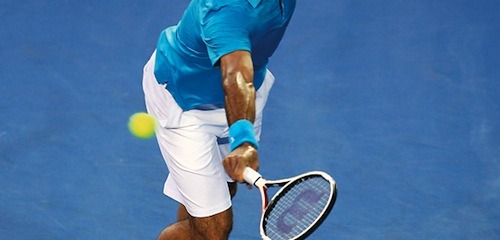
(Image via Prospect Magazine)
The Joy of Tennis
With the Australian Open coming to a record-breaking, excessively long climax this weekend, what better to fill the tennis void than some great writing on the subject?
- The correct way to begin a tour of tennis writing is with David Foster Wallace. In his 1996 essay for Esquire, he uses a profile of Michael Joyce as a cover for an obsessive and effortlessly insightful consideration of tennis. Quite likely the best tennis nonfiction written to date. He revisits tennis ten years later for the New York Times and lets his inner fanboy loose with an equally epic and insightful profile of Roger Federer.
- Three years later, Cynthia Gorney gives us a fantastic, sprawling profile of Rafael Nadal.
- Rounding out the profiles of today’s top tennis players is S.L. Price with a profile of Novak Djokovic and Sarah Corbett on Venus Williams.
- For profiles of yesterday’s best, Julian Rubenstein’s award-winning profile of John McEnroe and Frank Deford’s 1978 profile of Jimmy Connors are required reading.
- One of the great pleasures of tennis is the personalities and the rivalries, and as Gerald Marzorati pointed out last year, “rivalries in tennis are like no others in sports.” In recent years, we’ve seen the same three — four or five if you’re generous — players constantly jockeying for the top spots in the rankings, always climaxing in thrilling, suspenseful, and often record-breaking semi-final and final matches in the year’s tournaments. “To be a great tennis player is to need a rival.”
- Although you wouldn’t call them rivals, John Isner and Nicolas Mahut found themselves locked in a seemingly neverending first round match-up at last year’s Wimbledon. Most tennis matches end long before the 11 hours this one took to end, usually because a player loses concentration, but neither Mahut or Isner blinked for 3 days of play, and Ed Caesar explains why in his GQ piece following the match.
- In “The most beautful game,” Geoff Dyer considers the beauty of tennis. It’s not enough that the players are simply good at tennis — everything you see on Centre Court at Wimbledon can be “replicated by an average player in a park.” The draw for the viewing public, he thinks, is wrapped up in the mechanics of the game: the most effective way to play is gracefully, as best exempified by Federer’s memorable single-handed backhand.
Read these and then read John McPhee’s Levels of the Game (part II) [$], and you’ll have just about covered all of the best writing on tennis.

Mean Streets. Didn’t enjoy this very much. I appreciate how Scorsese mixes up the camerawork and the musical interludes, but otherwise it seemed a bit of a drag.
We know the cruelest of fanatics by their exceptionally clear consciences.
When the world decided that Lana totally bombed on Saturday Night Life, we could see Lana telling us nothing other than what we already tell ourselves about women in music. We already assume that the feminine is inauthentic. So, I mean, why does everyone care so much if she has had plastic surgery, or if her management company created an image for her? What’s the big deal with being deceived? Some of our most respected musical icons (Bob Dylan, anyone?) used music to continually invent and re-invent possible selves.
See also Nitsuh Abebe:
Making pop music— more than almost any other art— sits right at the intersection between being yourself and finding something better than yourself to be. This, in the end, is what we’re looking for: Someone who can devise some fantastically compelling version of herself to act out, while still seeming as if she’s… being herself. Musicians are expected to write a great part and convincingly act the role at the same time. And even after that, we’re not really judging them on how compelling the identity they’re offering us is— we judge them based on which types of identities we personally need or aspire to at the moment. There is no identity politics quite as nuanced or complicated as people arguing about music.
Amy Rebecca Klein: The Last Thing I’ll Ever Write About Lana Del Rey
He took the burden of history, carefully placed it in the garbage, and lit the garbage on fire.
I just thought that was a nice turn of phrase.
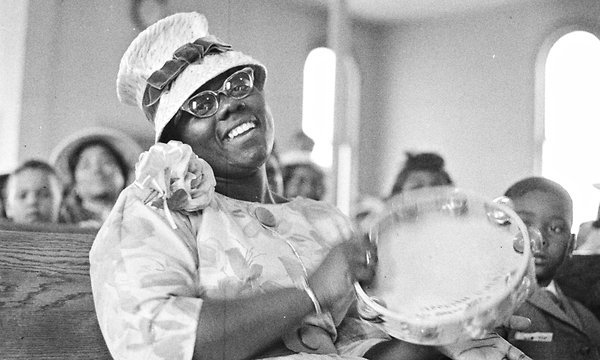
Alan Lomax’s dream of a “global jukebox” comes true with 17,000 music tracks being made available for free streaming.
Folklorist’s Global Jukebox Goes Digital. Oh hell yes.
Patricia Marx nailed it.
Me, Reading: In the Mind of a Subway Reader – The New Yorker
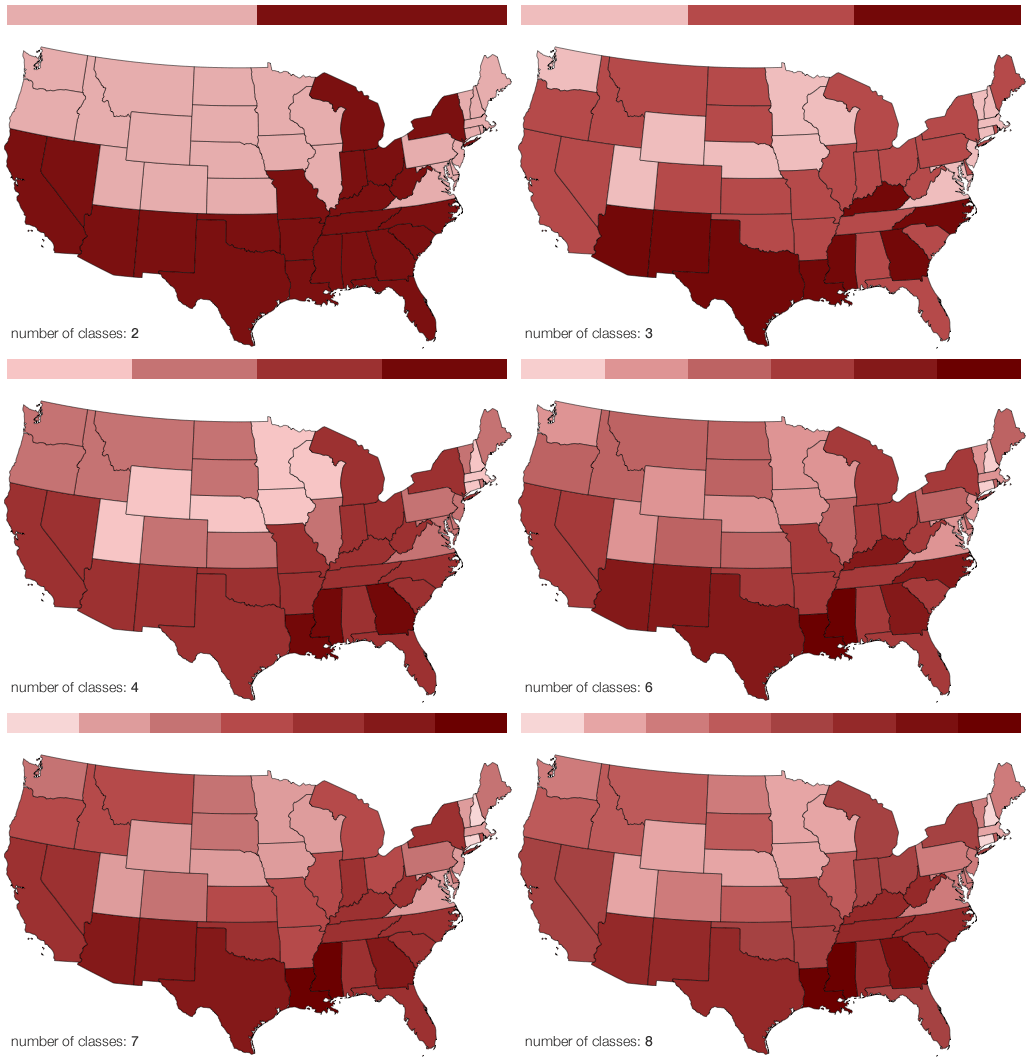
Take Care of Your Choropleth Maps. Great overview of how some seemingly simple tweaks in the data limits, colors, etc. can result in a different story.
I owe my livelihood to technology and I love the raw capability it offers us as a tool, but I fear it a bit more than most people do. It’s a tool, but it’s not quite a hammer, because a hammer doesn’t seduce you into sitting around lonely in your underwear for 6 hours at a stretch.

Are There Fundamental Laws of Cooking? | Wired.
They found that [the food pairing hypothesis] was true, at least when it came to Western cooking. North American and Western European cuisines, which share many of the same ingredients, both adhere to the food pairing hypothesis: Foods in the same recipe often have the same underlying molecular components. However, once we stray from these cuisines, the food pairing hypothesis breaks down. East Asian and Southern European recipes use ingredients that do not overlap in their flavor compounds, implying that these styles of cooking are in fact quantitatively distinct.

Red-Green & Blue-Yellow: The Stunning Colors You Can’t See.
Red-green and yellow-blue are the so-called “forbidden colors.” Composed of pairs of hues whose light frequencies automatically cancel each other out in the human eye, they’re supposed to be impossible to see simultaneously.
I had no idea.

It’s a stretch to call this a review, because I mainly just wanted to purge some quotes that I’ve had lying around that I kept being lazy about sharing because they were a bit too long or needed more context than I wanted to bother with on my tumblr. Anyway. Great book, especially the first five chapters on modernity, business, art, self, etc.
On bullshit, and where to find it:
It is hardly surprising to find that the two areas of human enterprise most concerned with sincerity as opposed to truth—namely, politics and advertising—are also the two areas most steeped in bullshit. Or would it be better to say that politics and advertising are the two areas most concerned with the appearance of authenticity? This might be a distinction without a difference.
Validating the suburbs:
The people who move to the suburbs aren’t nearly as stupid or careless or brainwashed as the urbanites seem to think. They know they’re going to get a lawn, a garage, and a backyard. They know they will be miles from a store or cafe, and that they’ll have to drive everywhere. Most people move to the suburbs with eyes wide open, fully aware of the tradeoffs they are making. They are not looking for some pastoral idyll, but for more privacy, space, quiet, and parking.
On meaning in a modern world:
The search for authenticity is about the search for meaning in a world where all the traditional sources-—religion and successor ideals such as aristocracy, community, and nationalism-—have been dissolved in the acid of science, technology, capitalism, and liberal democracy. We are looking to replace the God concept with something more acceptable in a world that is not just disenchanted, but also socially flattened, cosmopolitan, individualistic, and egalitarian.
A good example of his cantankerous sarcasm. He likes jabbing at liberals:
The exact mechanism of the apocalypse is unknown, but if you troll around the Internet you can find any number of speculative scenarios. Most of them presume that there’ll be a sort of massive ecological collapse and extinction event caused by a combination of global warming, deforestation, peak oil production, overfishing, overpopulation, suburbia, megacities, bird flu, swine flu, consumer electronics, hedge funds, credit default swaps, and fast food.
With regard to recent developments in art (specifically pivoting off of Alec Duffy and his Sufjan Stevens recording):
Can you see what is happening here? It is the return of the aura, of the unique and irreproducible artistic work. Across the artistic spectrum, we are starting to see a turn toward forms of aesthetic experience and production that by their nature can’t be digitized and thrown into the maw of the freeconomy. One aspect of this is the cultivation of deliberate scarcity, which is what Alec Duffy is doing with his listening sessions. Another is the recent hipster trend to treat the city as a playground—involving staged pillow fights in the financial district, silent raves on subways, or games of kick the can that span entire neighborhoods. This fascination with works that are transient, ephemeral, participatory, and site-specific is part of the ongoing rehabilitation of the old idea of the unique, authentic work having an aura that makes it worthy of our profound respect. But in a reversal of Walter Benjamin’s analysis, the gain in deep artistic appreciation is balanced by a loss in egalitarian principle.
On consumption gravitas:
Conspicuous authenticity raises the stakes by turning the search for the authentic into a matter of utmost gravity: not only does it provide me with a meaningful life, but it is also good for society, the environment, even the entire planet. This basic fusion of the two ideals of the privately beneficial and the morally praiseworthy is the bait-and-switch at the heart of the authenticity hoax. This desire for the personal and the public to align explains why so much of what passes for authentic living has a do-gooder spin to it. Yet the essentially status-oriented nature of the activity always reveals itself eventually.
I’m almost annoyed when something I’ve been interested in becomes valuable. Then it becomes trouble. I have to take care of it.

The Iron Giant. The greatest anti-war film ever made. I LOLed a lot. So good.
I was always somebody. I was famous at the Chevron. I’ve had some trials that would have made the average motherfucker jump out a window a long time ago, but if you wake up one morning and say, ‘I can’t do it no more,’ then it’s all over. That’s why I wake up every morning and say, let’s do this shit. Let’s get it.
Young Jeezy on staying optimistic. (via howtotalktogirlsatparties). And don’t forget:
I don’t give a fuck if you’re doin’ petty shit or big shit. […] Get your motherfuckin’ money and make other people’s lives better.
I have saved the world so many times in video games that lately I have felt a kind of resentful Republicanism creep into my game-playing mind: Can’t these fucking people take care of themselves?

The Crowd. It took a while for the talkies to catch up with the camerawork in this 1928 film. Nicely done. And as I find with many silent films, it was much funnier than I expected. The work scenes anticipate Il Posto (one of my favorite movies) in some ways. Technically, it’s supposed to be one of the pinnacles of silent film. One early long zoom moment reminded me of Hitchcock’s famous zoom-in in Notorious, 20 years later. Themes include changing social mores in relationships, expectations about masculinity, the arrival of modernity, self-realization, practicality. Probably hard to find on DVD, I lucked out with a live screening and piano accompaniment. Looking forward to the rest of Emory Film Department’s spring 2012 series.
 Mark Larson