With a bit of cartoonish violence, Quentin Tarantino was able to do what a thousand reasonable op-eds and preachy biopics have been unable to do: reverse white people’s affinity for the South. I see Django as a white revenge fantasy – whites, whose ancestors (like Tarantino’s) had no part in the institution of slavery, saying “No. The South does not get to represent my racial group. If I was alive in the 1800s, I would have shot those assholes right in the head!”
Why You Never Truly Leave High School — New York Magazine
It was a really small study. I wouldn’t necessarily read too much into it. But its results sum up the entire high-school experience, in my view: mistaking people’s fear for something else.
Reminds me of Mark Oppenheimer on running:
Like adolescents, distance runners have rivalries only with themselves.
I got through high school relatively unscathed, I think, but I think it was probably dumb luck.
Nieman Reports | ‘Writing is all about rewriting, which means you’ve got to get something down.’
Steps for Managing Your Stories
- Lower your standards.
- Get something down.
- Swallow the bile that rises in your throat when you write a first draft.
- Print out early.
- Read aloud.
- Apply very critical standards.
Nieman Reports | ‘Writing is all about rewriting, which means you’ve got to get something down.’
Making culture for the internets—all of them — The Sea of Fog — Medium
People ridiculed George W. Bush when he called them “the internets” but he had it right. Technically, the internet is one huge interconnected network. Linguistically and socially, it is many networks, and they are very distinct. For example: There are 40 million Brazilians on Twitter. Do you follow any Brazilians?* This is a significant fraction of a service that many of us consider our internet front porch—and yet, unless you speak Portuguese, it’s invisible. It might as well be a different service entirely.
Making culture for the internets—all of them — The Sea of Fog — Medium


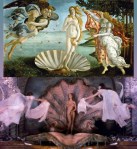

When Film Imitates Art
Edward Hopper’s Nighthawks and Herbert Ross’ Pennies from Heaven
Leonardo da Vinci’s The Last Supper and Robert Altman’s MASH
Edgar Degas’ Dancers Lace Their Shoes and George Cukor’s A Star is Born
Sandro Botticelli’s The Birth of Venus and Terry Gilliam’s The Adventures of Baron Munchausen
Henry Fuseli’s The Nightmare and Ken Russell’s Gothic

On disclosures, Instagram photos of your kids, and the “artist as genius” myth
“That’s all any of us are: amateurs. We don’t live long enough to be anything else.”
—Charlie Chaplin, LimelightMy wife and I have been talking so much lately about “authenticity” and “honesty” online — this insane idea that you can really tell who or what someone is and how they are doing just by what they show you of themselves on the internet. That social media is somehow a more “authentic,” or more “human” way of presenting yourself, warts and all, to the world. (As if it weren’t, in fact, making it easier to invent more perfect, alter egos — as if we aren’t all carefully selecting and choosing the bits and pieces of our life to show each other — and as if, “IRL,” we didn’t already choose what bits and pieces to show our friends when they came over to dinner [“Sweep that mess into the closet! Do the dishes! Put away the embarrassing records!”]) And how, inevitably, you start measuring your own life against what you see of the lives of others. (cf. “Keeping Up With The Joneses” and “The Referendum” and my friend Paige’s “Why Facebook Makes Us Miserable.”)
This used to happen to me with other artist friends of mine who I follow online, but actually, it was a positive thing. I would see that so-and-so had been on a drawing tear, posting tons of really interesting drawings, and some of them would be really good, and it would get me wanting to draw. Only later, when talking to them in person, would it turn out that they were just as lazy and uninspired sometimes as I was. The myth contained in the images, in a way, did me good, because it made me push myself. But I wondered, for other aspiring artists who aren’t as driven or delusional as me, if the opposite wouldn’t be true, and they would feel discouraged.
This quandery got ratcheted up a bit more after our son was born. I started thinking about how fundamentally unprepared I was for the experience of caring for a newborn. It was simultaneously the best and worst thing that ever happened to me. (As I like to say, even the best baby in the world can still be a complete fucking monster.) I remembered how people told me it was tough, but nobody told me how fucking distressed and insane sleep deprivation would make me, how absolutely full of despair I would feel for that first month, how it would dredge up feelings I hadn’t felt in years, etc.
And yet, there I was, feeling pretty fucking dark, Instagramming perfect photos of my cute kid sleeping, my wife looking like an angel, etc. And there were my friends doing the same, even though I knew, after a drink at the bar, their struggles were mostly the same as mine.
I was talking about this with my friend Steven, and I suggested that there should be a kind of “shadow gallery” on Instagram — a place where you post pictures of your kid at his worst. He said I absolutely had to do this. (He had a friend whose first move after giving birth was to call all of her girlfriends who were moms and swear them out for not being honest with her.)
And then, of course, I thought of a “shadow gallery” for artists — places where they post their work at their worst, where they acknowledge, that they are, in fact, not natural-born geniuses. A blank Microsoft Word screen. A terrible, sloppy drawing. Their Google search histories…
(You’d think someplace like Dribbble would accomplish this — but every work-in-progress I’ve ever seen a designer post there has been borderline perfect. Things organized neatly…)
Then last night my wife sent me this post my a mommyblogger, acknowledging that the reason she seemed so productive is that she has a nanny.
Why are we, as women, so reluctant to talk about the people we hire to help us so that we can do what we do? What are we afraid of? People thinking we CAN’T do it all?
Well, duh.
We fucking can’t.
So what’s this big secret we’re trying to keep and who do we think we’re fooling?
And what is it doing to people who read our blogs and books and pin our how-tos and think that all of these projects are being finished while children sit quietly on the sidelines with their hands in their laps.
What is it doing to you?
We write disclosure copy on posts that are sponsored, giveaways that are donated. We are contractually obligated to label and link but where is the disclosure copy stating how we work from home with small children? How we shoot videos and meet deadlines and go to meetings and travel around the country attending conventions and conferences.
We have help, that’s how!
People have asked me, over the years, how I’m able to do so much. (My first thought is always, “So much? Boy, do I have you fooled.”) Now, I’m thinking of this idea of an Artist’s Disclosure. (Brian Eno had one in his Diary: “one of the reasons I am capable of running three careers in parallel is because I married my manager.”) I’m thinking about what my disclosure might look like, and whether I have the guts to share it, and whether it’d really do anyone any good, including me.
Reminds me: one hiker I met on the Appalachian Trail made sure to take pictures of himself during the worst days on the trail. Tired, cold, rain-soaked, heat exhaustion, dehydrated, muddy, cranky, whatever. It’s a way to remind yourself of the price of admission, and a reminder that you did, in fact, keep doing this cool thing despite the occasional suckiness.
On disclosures, Instagram photos of your kids, and the “artist as genius” myth
The Fountain

The Fountain. The score is such a big part of the emotional impact here that it almost hurts the movie’s case. In other words, I found it distracting. Absolutely beautiful to look at, though. I like Aronofsky’s restrained sepia/golden/silver palettes, and smart use of the macro lenses. I wonder how it would have turned out if the first, fully-budgeted version had gone to completion. I liked Black Swan just a bit more. Pi and Requiem for a Dream are also good, but The Wrestler is the best. I think it’s fair to say I respect his work more than I enjoy it. But he makes movies you should watch. Can’t say that about many.
The Queen of Versailles

The Queen of Versailles. Change is hard. I was ready to settle in for some good, smug hate-watching, but this family won me over, all of them. Yeah, they’re ridiculous, but still. They couldn’t have cast it better with auditions.
Resonant Frequency: “Happy Birthday, Kurt” | Features | Pitchfork
We think he was a good guy but we really have no idea; we know he was a drug addict and that he abandoned his family, but many of us overlook that because we think we understand his pain, and who are we to judge. But of course, we can’t do the same for people in our own lives. Forgiveness in real life is much harder and more complicated, which is another alluring thing about interfacing to an iconic image: We get to practice feelings when the stakes are low.
@_markrichardson also has a great tumblr you should be following.
Resonant Frequency: “Happy Birthday, Kurt” | Features | Pitchfork
The Talented Mr. Ripley

The Talented Mr. Ripley. I had to re-watch after reading the appreciation in Bright Lights. Like Drive, this is one of those movies where I go in thinking, “I’ll just watch the opening 20 minutes or so, then skip around a bit”, and then an hour later I haven’t moved… Tom is even more pitiful than I remembered. Dickie is even more of an asshole. I can’t help but find Marge adorable–such a sunny, blank foil to the other two. Freddie is one of those characters you root for and also find kind of insufferable (Hoffman!). I still think Plein Soleil is a bit better.

Healing hoops: Sea otter plays basketball to ease arthritis – Animal Tracks. He should do a summer session with Hakeem.

Aggregating! (via @gwynnstu).

Before having children, and provided we’ve moved on a little from the maelstrom of adolescence, it is possible to think of ourselves as good people: patient, kind, loving, tolerant. A few years of parenthood strips us of these illusions and we see ourselves in the raw: capable of fury, rage, pettiness, jealousy — you name it. For children confront us with the infantile aspects of our own personalities, the parts of ourselves we’d most like to deny, and we can hate them for it. Worse still, they can thwart our wish, even our need, to feel loving and effective.
That’s Edward Marriott on ambivalent parenting. Cf. Megan McArdle:
I wonder if we ought to re-examine our commitment to happiness. It seems to me that there’s possibly some merit – if we persevere and have the sense to learn from it – in the other-orientation that is (good) parenting. It’s fine to go through life happy, in other words, but I suspect we also want to go through life without becoming big fat self-absorbed jackasses. Children really help in that regard.
To be sure, there are too many parents who, despite their children, remain narcissistic nimrods. But the nature of parenting is to beat that out of you. There’s just no time to spend on ourselves, at least not like we would if we didn’t have babies to wash and toys to clean up, usually in the middle of the night, after impaling our feet on them.
People are inherently self-centered, and especially in a peaceful, prosperous society, this easily leads to self-indulgence that in turn can make us weak and ignoble. There’s something to be said for ordeals – like parenting, or marriage, or tending the weak and broken – which push us into an other-orientation. When we have to care for someone, we get better at, well, caring for people. It actually takes practice, after all.
Star Trek: Nemesis

Star Trek: Nemesis. I can see why they put the brakes on the movies for a while. This one might be too blockbuster for it’s own good. It lost some Trekkiness. A very safe film. Definitely better than Insurrection, though, and I think the better production values are a big part of it. As you might suspect from the title, there’s some identity issues explored here. The Picard/Shinzon relationship feels a bit portentous (although one of the saving graces is that young Tom Hardy shows he’s had that incredible screen presence all along, even though his villain is one we’ve seen before: smart, pale, bald, leather.); it’s the relationship between Data and B4 that’s really cool. It’s sort of a Ship of Theseus problem–if you give a physically identical android the same memories, is it the same android? Brent Spiner is a life-saver for all the TNG movies, which seem like they give their supporting cast a lot more screen time. I admit that I enjoyed the dune buggies.
And that’s that. I’ve seen every Star Trek film. Here’s how I rank them:
Understanding a fan’s relationship with management in sports – Grantland
You hit 30, 35, 40, and the life of a professional athlete seems more and more remote. It’s one of a million pasts that never happened rather than a future you can dream about. And the experience of the coach is simply much more accessible to almost every grown-up fan than the experience of any high-level player. And not just because so many fans go on to coach their kid’s T-ball team or whatever; think of it as a lifestyle question. The coach doesn’t have to be able to score from an overhead kick or throw a football 80 yards; he has to run meetings, make plans, juggle lists, and justify himself, same as anybody. He does paperwork. Maybe hops on the treadmill when he can. He’s still connected to the magic of sports, but with him it takes the form of inspired halftime speeches and brilliant late-game stratagems — basically work e-mail lifted to a spiritual plane. More than anything, he has to watch a ton of games: obsess about what’s not working, get mad at players who screw up, praise players who do well.
Understanding a fan’s relationship with management in sports – Grantland
Conspiracy is a nearly irresistible labor-saving device in the face of recalcitrant complexity.
Henry Louis Gates, quoted in The Signal and the Noise. Cf. William Gibson:
Conspiracy theories and the occult comfort us because they present models of the world that more easily make sense than the world itself, and, regardless of how dark or threatening, are inherently less frightening.

Star Trek: Insurrection
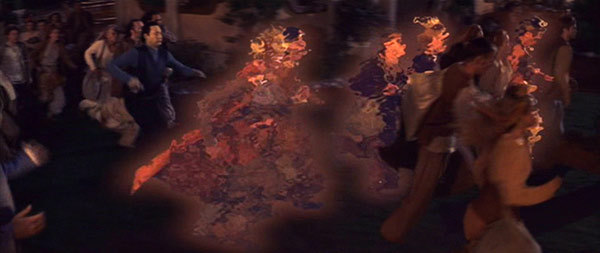
Star Trek: Insurrection. There are a couple of main themes here that I really like. One, aging and youth. And two, the forced relocation/Lebensraum/irredentist refugee thing, with the Federation getting involved in some less obviously noble politics. But these themes come up in a pretty ho-hum story that never breaks the TV feel like First Contact does. Even the opening titles are kind of cheap. Add in some truly stupid moments (the beaded headdress; the Gilbert & Sullivan; the life raft), and some good drama that starts and ends too abruptly (Geordi and the sunrise; the slow-time moments). Missed opportunity. Riker kicks ass on the bridge, though. One more to go!

Zoe’s Desk | Submitted For Your Perusal.
It’s a neat trick on Fincher’s part. It’s difficult to render knowledge work cinematically (quick, what’s the last great movie about writing you remember seeing?), as opposed to physical work which more readily lends itself to Rocky-style montages, but Fincher has figured out a way to short circuit the process. Like all good filmmakers, he knows that if he gives us the signs, we will fill in the rest.
 Mark Larson
