I am not a scholar and the majority of my references have been culled from my personal library, allowing me to check them without difficulty. But I read in zigzags, I travel from one book to the next, and this is not without risks. It is quite possible that here and there, certain interpretations or comparisons are stretched or simply gratuitous. However, this book is a journey—and travelers should be aware that paths leading nowhere are also part of the trip.

Raul Ruiz, from the introduction to Poetics of Cinema. I read in zigzags, too. Michelle Orange mentioned this excerpt in an interview with the Paris Review. Her book This Is Running for Your Life is pretty awesome.

The disruptive potential of native advertising | Felix Salmon

In that sense, TV ads are truly native; the way you consume a TV ad is the same as the way you consume a TV show. Similarly, long copy print ads are native, for the same reason. And the ultimate native ads are the glossy fashion ads in Vogue: in most cases, they’re better than the editorial, and as a result, readers spend as much time with the ads — if not more — as they do with the edit.

Fashion magazines are such a good racket. Love that junk.

The disruptive potential of native advertising | Felix Salmon

Q & A with artist Ashley Anderson | CommonCreativ ATL

I moved to Atlanta in 2007, which was pre-WonderRoot, pre-Dashboard, pre-Living Walls, pre-Glo, pre-Flux and plenty of other stuff. And then WHAM, everyone’s doing stuff. That’s in a period of five-and-a-half years. That’s insane—good insane. And we’re all still very much learning what each of us does, galleries are closing, capital is moving around, new artists are constantly showing up, communities are reacting—there’s whole lotta shakin’ goin’ on. Beats the hell out of how it was when I moved here and it’s a light years better than what little was going on in the last city I lived in. Keep going everyone, and bless the haters as you climb over them.

Q & A with artist Ashley Anderson | CommonCreativ ATL

Mean Professor Tells Student to “get your sh*t together” | Things Doanie Likes

One of the perks of the job.

xxxx, get your shit together. Getting a good job, working long hours, keeping your skills relevant, navigating the politics of an organization, finding a live/work balance…these are all really hard, xxxx. In contrast, respecting institutions, having manners, demonstrating a level of humility…these are all (relatively) easy. Get the easy stuff right xxxx. In and of themselves they will not make you successful. However, not possessing them will hold you back and you will not achieve your potential.

This is straight out of the Marcus Aurelius playbook. One of my favorite passages from Meditations comes in Book 5:

Display those virtues which are wholly in your own power–integrity, dignity, hard work, self-denial, contentment, frugality, kindness, independence, simplicity, discretion, magnanimity. Do you not see how many virtues you can already display without any excuse of lack of talent or aptitude? And yet you are still content to lag behind.

Mean Professor Tells Student to “get your sh*t together” | Things Doanie Likes

Why techies don’t buy contemporary art | Felix Salmon

This, for me, is the real reason that tech types don’t buy art: they’re busy investing in each other’s startups instead. Being an early-stage investor is in many ways just like being a contemporary art collector: you’re very unlikely to make money at it, even though the potential and anecdotal returns can be enormous; and it’s used in large part as a way of supporting your friends and being seen as being important within a very small world.

Why techies don’t buy contemporary art | Felix Salmon

billa: Philip Roth on the beauty of naps SIMON: Is there something you’re…

billa:

Philip Roth on the beauty of naps

SIMON: Is there something you’re taking more time for now that…

ROTH: Yeah, naps. Let me tell you about the nap. It’s absolutely fantastic. When I was a kid, my father was always trying to tell me how to be a man. And he said – I was maybe nine – he said, Philip, whenever you take a nap, take your clothes off and put a blanket over you and you’re going to sleep better. Well, as with everything, he was right. And so I now do that and I come back from the swimming pool I go to and I have my lunch and I read the paper and I take this glorious thing called a nap. And then the best part of it is that when you wake up, for the first 15 seconds you have no idea where you are. You’re just alive. That’s all you know and it’s bliss. It’s absolute bliss. So, I suggest – you’re still working but your time will come.

SIMON: That sounds like great advice.

ROTH: And take your clothes off.

billa: Philip Roth on the beauty of naps SIMON: Is there something you’re…

How Code-Switching Explains The World : Code Switch : NPR

You rush your mom or whomever off the phone in some less formal syntax (“Yo, I’mma holler at you later,”), hang up and get back to work. Then you look up and you see your co-workers looking at you and wondering who the hell you’d morphed into for the last few minutes. That right there? That’s what it means to code-switch.

My dad and my sister are experts at (subconsciously) stepping up the Southern accent ever so slightly when the situation calls for it. I’m pretty sure I do it, too, but it’s quite possible everyone sees right through me.

How Code-Switching Explains The World : Code Switch : NPR

Take the hard feelings away, and this is the right thing to do. Put the feelings back and it hurts like hell, but the right thing to do hasn’t changed.

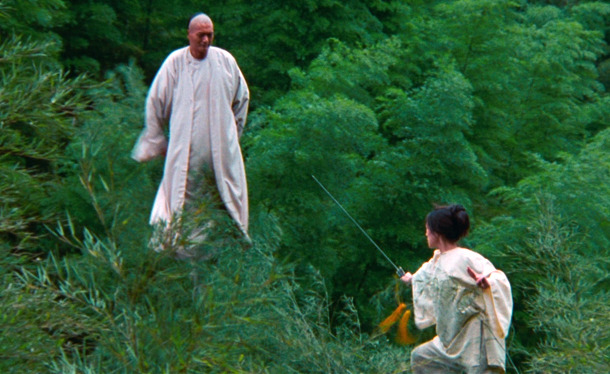
Crouching Tiger, Hidden Dragon

Crouching Tiger, Hidden Dragon. I didn’t know anything about wuxia when this came out; fun to remember my first moments seeing the wirework and acrobatics, I could feel the neurons lighting up and stretching out. There are movies that, although perhaps not Great Films, you remember because they open up a new world for you. Respect for an interesting balance here. It gave some philosophical weight to ass-kicking, and gave some visual fireworks to solemn melodrama. And what melodrama it is, so drawn out. Our two heroes’ relationship is traced in three conversations spaced out over two hours, and doesn’t culminate until the last breaths. Even the fighting deaths are delayed. And the flashback? Dang, a full half-hour? I still think Jen is an asshole.

College vs. Pros: madness vs. superiority – TrueHoop Blog – ESPN

It’s become a cliché to announce a preference for NBA basketball because the level of play is superior. Every reasonable person knows that games are played better in the pros, so college fans tout the “exciting” aspects of upsets. Yes, the tourney is exciting. Yes, it’s fun to follow your bracket through a maze of unpredictability. But what makes the NBA a superior product, from my perspective, isn’t just that its play is superior – it’s that its system rewards superiority. In the NBA, great basketball is ultimately validated – not conspired against. Because of this, the results matter in a deeper way.

College vs. Pros: madness vs. superiority – TrueHoop Blog – ESPN

Lit Hum: Jorie Graham on Caravaggio’s Supper at Emmaus. Gonna go right ahead and do a mega-quote here:

I often teach a painting of Caravaggio’s, Supper at Emmaus. Christ is sitting before us in an alcove against the “back wall” of the painting. We face into a dinner table covered with things for the meal. We are quite sure that the edge of this table is identical with the absolute front of the canvas. But then one undergoes a troubling sensation. The basket of fruit, the edge of the wicker basket, sticks out into our “actual” space, our here and now. The host suddenly recognizes the stranger at his table as Christ and throws open his arms, like this. [Gestures.] His left hand comes out, beyond the border—further than the sacramental grapes in their wicker—out here into the same air that you (and I) are breathing in the National Gallery. At the same time, his right hand penetrates the crucial illusionistic space, the alcove in which Christ sits. What he does, by going like this, is enact what it is to be “taken” by surprise, to be, suddenly, in that spiritual place where the otherness of the world, of possibility, “turns” one’s soul—taking one off the path of mere “ongoingness” onto the other path of “journey.” At any rate, the host’s gesture connects that immortal-because-imaginary space Christ occupies, with the mortal one of the gallery in which I am standing breathing my minutes—and you suddenly realize Caravaggio has activated what I call the “sensation of real time”: the time of the painting’s represented action has crossed over into the time in which my only days are taking place. So you cannot read the painting without being inside the terms of the painting, which are these graduating degrees of temporality: mortal time, immortal time, represented time, actual time, the “time” of process. The activity of the painting is to do that. The host is crucified in this position—a position the artist is also in—saying, You reader and you subject (God, Christ), I have put you two together. It’s my job. That’s what the meal is. That’s what we eat.

Boom. Art, man.