He who travels to be amused, or to get somewhat which he does not carry, travels away from himself, and grows old even in youth among old things. In Thebes, in Palmyra, his will and mind have become old and dilapidated as they. He carries ruins to ruins.

Ralph Waldo Emerson in Self Reliance. Pretty clear echoes of Seneca:

They undertake one journey after another and change spectacle for spectacle. As Lucretius says: “Thus ever from himself doth each man flee.” But what does he gain if he does not escape from himself? He ever follows himself and weighs upon himself as his own most burdensome companion.

My Struggle (review)

It wasn’t a question of keeping away from something, it was a question of something not existing; nothing about him touched me. That was how it had been, but then I had sat down to write, and the tears poured forth.

It’s been a while since I finished My Struggle – mid-September, I think – but it has stuck with me. When I finished it, I wasn’t sure if I’d read Knausgård’s second volume, to say nothing of the third, fourth, fifth and sixth. I pre-ordered the second last week.

Reading this book is a strange experience. It’s rarely fun. The book opens with a reflection on death, closes with death, and in between are all manner of musings and journalings about muddling through life and fatherhood. But it’s a great exercise in being aware, a wake-up call. Despite relying on some pretty intense memory-dredging, it doesn’t quite feel sentimental (“Nostalgia is not only shameless, it is also treacherous.”). The challenge seems to be to examine the past so closely that you can let it go – the contrast with what’s actually here and now becomes too stark to ignore.

And there’s a weird addictive quality to it, despite how dark it is sometimes. The writing is mostly functional, rather than poetic or luminous or whatever. And the boldness of his oversharing helps. But it’s the occasional big, beautiful payoff that makes the slogging really worthwhile. (And some of it is indeed pure slog – the 100-page story of a New Year’s Eve beer run is… something else.) There are delights like this description, taken from a section about his college days, when he discovered Theodor Adorno’s writing:

This heavy, intricate, detailed, precise language whose aim was to elevate thought ever higher, and where every period was set like a mountaineer’s cleat.

Such a great image! Or this, trying to capture the feeling of falling in love with a painting:

Yes, yes yes. That’s where it is. That’s where I have to go.

Been there, for sure. I suppose when you write so much without filtering or apparent embarrassment (on life as a teen: “I have never been in any doubt that this is what girls I have tried my luck with have seen in my eyes. Too much desire, too little hope.”), there’s bound to be some memorable parts. Let it all pour out, and see what works. Like this passage early on, when he, a middle-aged guy, is thinking back to what it felt like to be a kid around his father, and using his now-adult perspective to reflect on what it was like to be his father, now that time has made him his father’s peer, in a way:

While my days were jampacked with meaning, when each step opened a new opportunity, and when every opportunity filled me to the brim, in a way which now is actually incomprehensible, the meaning of his days was not concentrated in individual events but spread over such large areas that it was not possible to comprehend them in anything other than abstract terms. “Family” was one such term, “career” another.

Speaking of being a father, here he is on the birth of first child:

There has never been so much future in my life as at that time, never so much joy.

So beautiful. But as Knausgård doesn’t seem to have much of a filter, nothing remains quite that simple or tidy:

Nothing I had previously experienced warned me about the invasion into your life that having children entails. […] Your own worst sides are no longer something you can keep to yourself.

He’s not afraid to acknowledge ambivalence. (That bit, by the way, reminded me of Carolyn Hax talking about introverts having children.) Along with the mundane details – like the dozens of scenes where’s he’s hanging out with someone and making coffee, tea, etc. – there are some more philosophical asides. In a passage that mirrors the opening and the closing of the book, he talks about death and and how our language mirrors the way we don’t quite accept it:

While the person is alive the name refers to the body, to where it resides, to what it does; the name becomes detached from the body when it dies and remains with the living, who, when they use the name always mean the person he was, never the person he is now, a body which lies rotting somewhere. […] Death might be beyond the term and beyond life, but it is not beyond the world.

These little excerpts don’t quite capture it, though. It really is a book better experienced in huge chunks. Recommended.

Filed under: books I’ve reviewed. I also enjoyed this LARB review and this Bookforum interview.

Joe Jonas: My Life As a Jonas Brother

Who knows how much of this is just really good, massaged PR messaging, but still. An interesting look from the inside out.

Joe Jonas: My Life As a Jonas Brother

Kyle Korver’s Big Night, and the Day on the Ocean That Made It Possible

The point is, as we’re paddleboarding [25 miles] … there wasn’t a tree, there wasn’t a corner, there weren’t mile markers. You had to break it down even smaller. Into the stroke. So I sat there and tried to perfect my stroke each time I pull. The angles of how I’m pulling the paddle back and going forward. How long I’m going. How I’m using my wrist. All these things. You try to make the stroke perfect.

Filed under: practice.

Kyle Korver’s Big Night, and the Day on the Ocean That Made It Possible

Critical thinking #4: Daniel Mendelsohn

I always tease them at the beginning of the semester about their writing—I say, “Whenever you write me at 11 o’clock on a Thursday night begging me for an extension on the paper, the prose is always so beautiful and the email is so wonderfully structured.” It’s a joke, but it’s also not a joke—in that situation they understand the rhetoric of the form to which they’re committing themselves: They understand who they are as a writer and a beseecher, they understand who I am as the person in charge, they understand what evidence to adduce in their favour—their dog died, their computer broke or whatever. Which is why the email begging for the paper extension is always a well-written piece. But whenever they have to write three paragraphs about women in Genesis or whatever—when they have to make an argument—it’s basically “word salad,” because they’ve never read anything that presents a text, wrestles with it and comes up with some conclusions. For that reason, I think it’s better that they should be reading Pauline Kael reviews in the New Yorker than Derrida.

Filed under: Daniel Mendelsohn.

Critical thinking #4: Daniel Mendelsohn

Quick shout-out: The Cutting Class is one of my favorite tumblrs. It is a true joy to stumble on writing like this, where someone smart points out things that you’d never notice and makes you aware of a whole other world of smarts that you’d otherwise never know about.

markrichardson:

I feel like this song was, for many American children, an introduction to Deep Thinking. Even at age 8 or 9 you heard this and thought something like, “There is some essential yearning and sadness and an essential sense of loss in life that we can’t escape, though many things are also beautiful and happy and the power of love and human connection is very real,” even if your mind didn’t yet have all these words in that order.

Oblivion

Oblivion. If you have seen and enjoyed a science fiction movie, you will probably find something to like here, where they’re all mixed and mashed into a movie that’s far from perfect, but more than good enough. Easy to find plotlines and moods from movies like Moon, Solaris, the new Solaris, 2001, The Matrix, WALL·E, Star Wars, Star Trek. (I particularly like the space-captain-retiring-to-California parallels with Star Trek V: The Final Frontier and Star Trek: Generations). I would have been okay with more time exploring the love/memory/identity stuff and less generic action, but no biggie. Outside of the plot, a few areas I was impressed by: camerawork with a smart sense of space and geography; world/technology design and general gorgeousness; and a good soundtrack by M83, et al.

12 Years a Slave

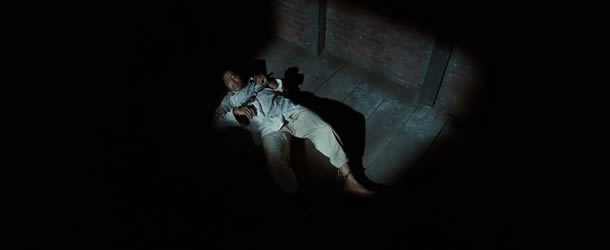
12 Years a Slave. Not sure how to talk about this one. Hard to watch. At times it is very, very on-the-nose. If you’ve seen Steve McQueen’s Shame and Hunger, this will be no surprise. But it’s strange that it doesn’t feel… dramatic. It is focused. It is facts. It also makes you feel some of the same unease (the score is a huge contributor here). The movie is all in the protagonist’s perspective, which unfortunately means everyone else can seem a little flat (despite the cast being awesome), or merely functional. But it also puts you in the center, witnessing the moral bargains and compromises, comparing and contrasting how each person manages an impossible situation, and perhaps suggesting the futility of passing judgment on how each copes. A couple more things to note. I’m not sure if it was intentional or not, but you don’t get the sense of time passing, though it’s ostensibly twelve years we see. Could definitely be by design – the monotony and sameness by design – I’m just not sure. And I gotta say, I’m not thrilled with Brad Pitt’s late appearance. He’s got too much star power to show up so late, in such a role, for so short a period. I couldn’t quite get used to him. It’s not his fault, though. Anyway, good movie. The contrast with Django Unchained could not be more stark.

Enough Said

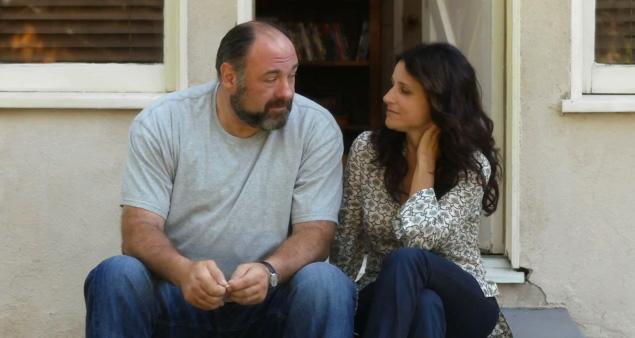
Enough Said. Sometimes we are our own worst enemy, as they say. Louis-Dreyfus is a genius. Gandolfini is instantly lovable. Keener plays a perfect flaky narcissist. Such a good heart to this movie.

In the Mood for Love

In the Mood for Love. Gorgeous, seductive movie. One of the dilemmas here is, (how) can you get what you want if you don’t want to be the kind of person that would do what it takes to get it? When you’re watching it, it’s easy to sympathize with the protagonists, but afterward… don’t they seem a little, um, weird? I love the parallels in setting and architecture. They’re so hemmed in, so much kept inside. Thematically, it pairs well with David Lean’s Brief Encounter.

Man vs. Corpse

The postapocalyptic scenario—the future in which everyone’s a corpse (except you)—must be, at this point, one of the most thoroughly imagined fictions of the age.

Man vs. Corpse