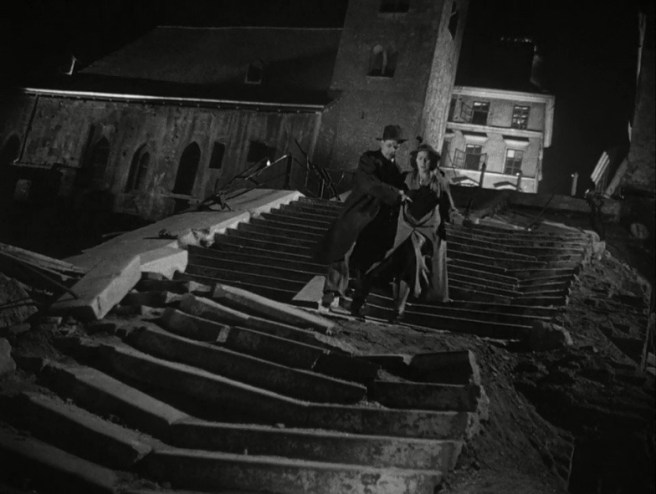
The Third Man (1949)

The Third Man (1949). Number four from Ebertfest. I dug it, and I remember basically nothing about the plot. Post-war Vienna light-and-shadow mystery stuff, cock-eyed angles. Orwell’s reveal, emerging from the shadows, is so good. Nice sewer chase at the end, though I wish they’d tightened it up a bit. I wonder how they managed the sound down there. And basics like navigating around. Apparently that persistent zither soundtrack was a local, on-the-spot hire, some dude they found on location at a cafe during the filming of the movie.

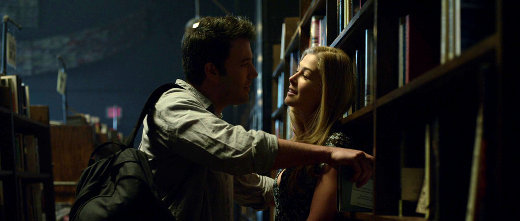
Northfork

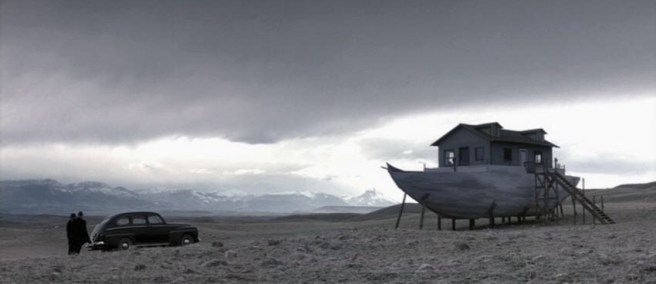
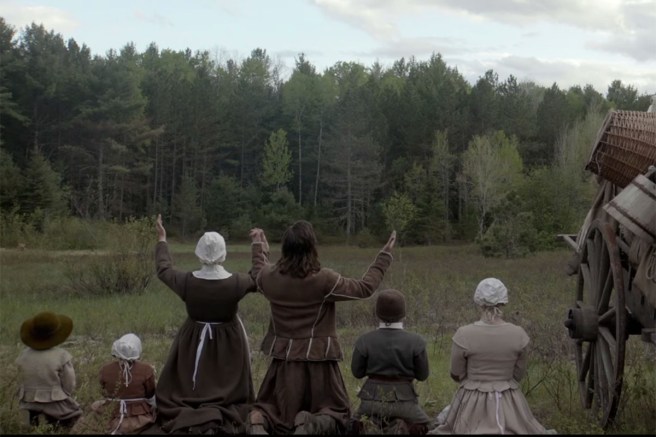
Northfork. Third movie I saw at Ebertfest. It’s really bizarre and I really liked it. In this one, there’s a small town that’s about to be flooded as a new lake is constructed. Some G-men types are hired to evacuate people (a pair of lovers; a guy who nailed himself to his front porch, waiting gun in hand; a man who built an ark for himself and his two wives). There’s also a storyline with a small dying orphan boy who has dreams with imagery that draw from the knick-knacks on his bedside table: a cup of tea, a model plane, a Bible, pillow and its feathers, a model hand, a music box. So, a story of transitions and leave-takings. But for all that, it has its light moments like some really droll, straightfaced wordplay delivered without a hint of knowingness (“fowl play”, “What are you talking about Willis?”), a quartet of angels looking for a chosen one, and some weird gags like the guessing game at the diner. There’s a blend of Catholic, Mormon, and Amish local influence along with some magical realism. So, a really, really odd one. Some of the drama is a little flat, but I love the imagination.

Grandma

Grandma. Another one from Ebertfest, one of my least favorite of the weekend, but it’s not bad by any means. In short, a granddaughter goes to her grandmother’s house to get money for money for an abortion, and we go from there.

This grandma… has anger issues. She’s gruff, flaky, independent. It’s weird having a central character who’s so angry all the time. Takes something special to keep her worth watching. She’s her own worst enemy for sure. She also drives a classic car that’s near breaking down. She doesn’t take care of it – metaphor! Themes of motherhood, parental influence, experiencing and anticipating loss, grieving, etc. All female cast except for an excellent Sam Elliott cameo and the guy at dinner.

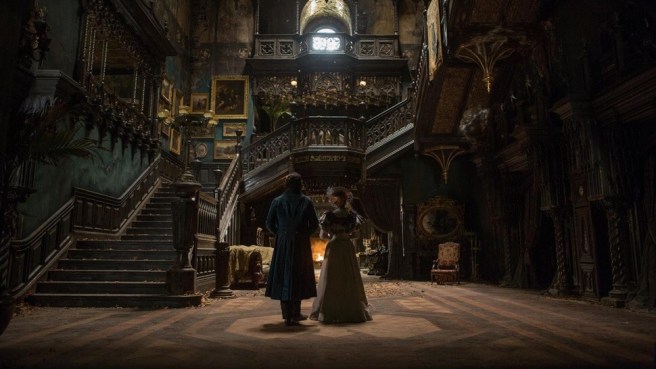
Crimson Peak

Crimson Peak. This was the opener at Ebertfest when I went a couple months ago. I loved it the first time and it was even better with an enthusiastic crowd in an old theater. Felt like an event. The anticipation helps a lot, and having the director on hand to talk about his movie does, too. One of my favorite lines from Guillermo Del Toro’s awesome Q&A that night:

I don’t make eye candy. I make eye protein.

He shared background on the influences, comparisons and similarities to Jane Eyre and Frankenstein, which have a similar sense of loss and abandonment, and to a few Hitchcock movies – Rebecca, Suspicion, Notorious – as more recent gothic romances where love ends in conflagration. In this one the heroine’s experience of love goes hand-in-hand with the experience of death.

He also talked a lot about the unity of construction through the whole thing. How the story is told in architecture (different architectural styles through the house and each floor, the differing levels of moral order and corruption), in costume (Chastain’s blue dress borrows architectural elements from the house; another draws influence from her association with moth vs. Wasikowska’s butterfly; she’s the only person to wear red, etc.), and in sets (oversized chairs when our heroine takes ill).

Aside from the movie itself, I also enjoyed hearing Del Toro talk about two approaches to evaluating a movie. One, as a viewer, does it do its job? Like, did you feel like you wasted your time? And another way is to approach it as a piece of art – taking into account the context, influences, intentions – did it meet its goals?
How Burglars Commit Crime and Take Advantage of Cities by Hacking Architecture | VICE | United States

At some point in everyone’s life, you think like a burglar. It’s when you’re trying to sneak out of the house as a teenager, or you’re trying to sneak downstairs to look at Christmas presents, or you’re doing anything where you’re trying not to get caught, sneaking in, out of, or through a building in any way.

How Burglars Commit Crime and Take Advantage of Cities by Hacking Architecture | VICE | United States

I Want You Still: Celebrating 40 Years of Marvin Gaye’s Sensual Classic | Pitchfork

Fun interview about creating one of my favorite albums. Nice bit:

Out of the 13 months we took to make the album, there was six months of partying. Seriously. We would come into the studio, and Marvin would say, “Let’s go play basketball.” And we would play basketball half the day, on studio time. There was no pressure.

I Want You Still: Celebrating 40 Years of Marvin Gaye’s Sensual Classic | Pitchfork

Citizenfour

Citizenfour. There’s this interesting tension where a guy has done something earth-shaking, and he knows it… but he’s watching the effects while hidden in a hotel room far from home. Very cool to see all the planning and diligence they took to keep things mum until they were ready to reveal. So glad they took the time to document this while it was happening.

I’m probably on a watchlist now.

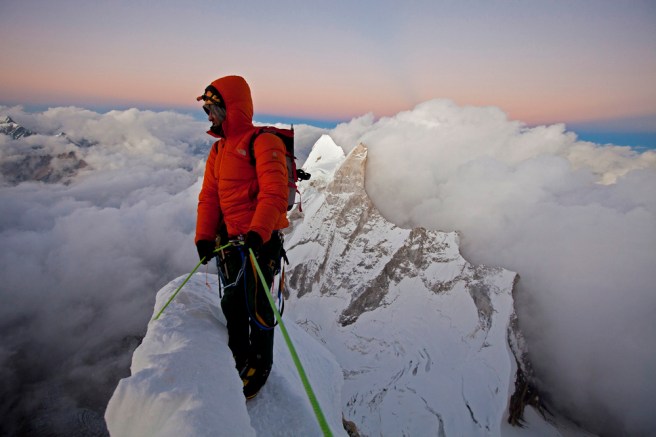
Meru

Meru. I liked it most when they were showing the footage that makes you squirm and makes your palms get sweaty. Wish they’d geeked out on the nitty-gritty climbing details more, and/or cut back on the talking heads. Sometimes the people who were there aren’t the best ones to tell the story?

The Weird Global Appeal of Heavy Metal

The explosion of local bands around the world tends to track rising living standards and Internet use. Making loud music is expensive: You need electric guitars, amplifiers, speakers, music venues and more leisure time. “When economic development happens, metal scenes appear. They’re like mushrooms after the rain,” says Roy Doron, an African history professor at Winston-Salem State University.

The Weird Global Appeal of Heavy Metal