This nice essay on dying is behind a paywall, unfortunately. It’s the best thing in this month’s issue. Interesting blend of essay/memoir/reporting.
A good death: Exit strategies – By William T. Vollmann (Harper’s Magazine)
This nice essay on dying is behind a paywall, unfortunately. It’s the best thing in this month’s issue. Interesting blend of essay/memoir/reporting.
A good death: Exit strategies – By William T. Vollmann (Harper’s Magazine)

Peanuts, March 25, 1952 by Charles Schulz. Some pieces of music require a running start! Hell yes. From Schulz’s Beethoven: Schroeder’s Muse, an awesome 150+ page web exhibit from the Charles M. Schulz Museum and the Ira F. Brilliant Center for Beethoven Studies at San José State University. Lots of strips and music samples and biographical details to peruse.

It is such a simple thing, but since I started, about three years ago, using Flickr and my top-secret notebooks to keep track of what I read, it has brought me a ridiculous amount of satisfaction.
Engineers of immersive retail must understand that we buy things when we are bored and not when we’re excited, alive, and metaphysically horny—that these feelings are just promises to get us in the door.
Sweatpants in Paradise: The Exciting World of Immersive Retail – The Believer
It’s a poor fellow who can’t take his pleasure without asking other people’s permission.
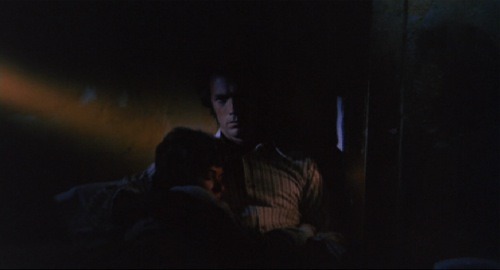
Play Misty for Me. I was trying to decide what to watch this evening when I was driving back home. Lo and behold, Misty comes on the radio. Case closed. This was Eastwood’s first film as director, and for a lead actor known for tough-guy roles, his character is surprisingly passive here. He gets steamrolled by the batshit insane Jessica Walter. (I was so glad when I finally realized why she was so familiar). This one definitely holds its own against, say, Misery, Basic Instinct, and Fatal Attraction. Ebert gives it four stars. See also psycho-biddy and bunny boiler, two of my favorite new terms.
The first of a four-part examination of zombie movies through the lens of Hobbesian political theory. Part two. Part three. Part four.
The Running of the Dead – Christian Thorne | Commonplace Book
“Humans’ tendency to describe their own behavior more charitably than the behavior of others.”
“You are invited to extrapolate this idea to all kinds of social interaction where you are being perfectly polite, reasonable, and accomodating, but he is being insensitive, abrasive, and stubborn.” (via)
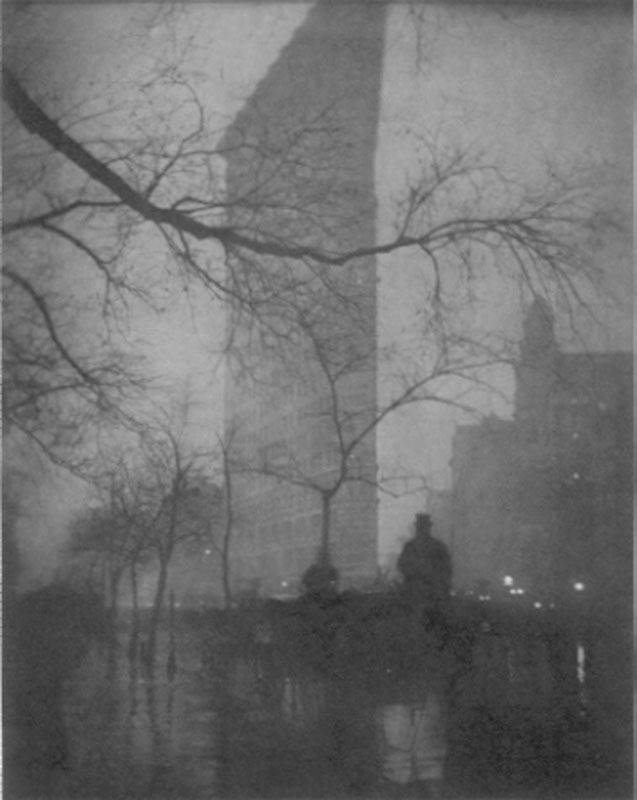
Alexis Madrigal reflects on a time when photographs resembled paintings:
Many works like Edward Steichen’s “Flatiron—Evening Camera Work 14” (above) play with fog and smoke. They hide things in the greyscale and even tend toward a hazy abstraction. Everything becomes a little harder to see and a bit more romantic. I’d long, lazily assumed that turn-of-the-century photos looked like this because of technical reasons, that this was just how cameras made photos at the time. That’s not true. These photographers were skilled enough and their techniques good enough that they could have made razor sharp portraits, but they didn’t. Instead, we have two decades where the best photographs work like memories not recordings.
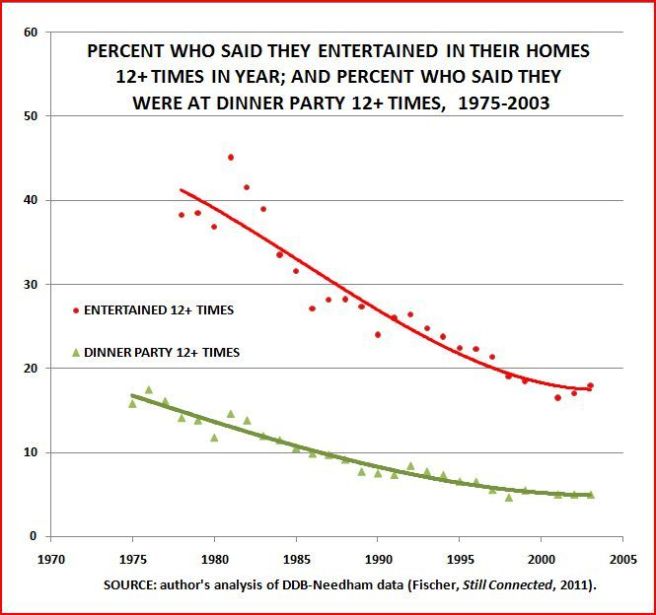
No Dinner Invitations? – Made in America. Suspected causes: both parents working, more commuting. But our socializing, in general, trends upward: more phone calls, texts, jaunts to restaurants, bars, etc.
Genius Within: The Inner Life of Glenn Gould. Coming to Atlanta in November. What a character. I loved this one book about him, A Romance on Three Legs, and a buddy at work told me that Thirty Two Short Films About Glenn Gould is also very good.
Researchers with a variety of academic and theological interests are proposing controversial theories about the Koran and Islamic history, and are striving to reinterpret Islam for the modern world. This is, as one scholar puts it, a “sensitive business”
The redemptive power of music!
T.I. helped save Midtown Atlanta jumper’s life — really | Fresh Loaf | Creative Loafing Atlanta

Ten Ragas to a Disco Beat – Charanjit Singh.
Performed on the synths that would later define Acid House, the Roland TB-303 and TR-808, the album sounds light years ahead of its time with its repetitive beats and hypnotic electronic melodies. Its maker, Bollywood session musician Charanjit Singh, set out to translate ancient Indian classical Ragas to the modern synthesizer and in doing so seems to have invented House music along the way.
More on the album and the culture of ‘80s Indian synthesizer stuff here and here.
http://www.eonline.com/videos/swf/CEGDynamicPlayer.swf
Eric Stoltz was the first Marty McFly. So weird to see the wrong actor in those scenes.
Here’s a movie idea: two 45-minute films, as identical as possible in setting, costume, lighting, framing, tone, etc. but with a different set of lead actors. Not too many, maybe 1-5 switched out. Film them as contemporaneously as possible. Screen’em back-to-back. Anyone ever done this?
Men who are very interested in their clothes are part geeky, petty academic and part creative, artistic aesthete. Everyone needs the former to drive them into reading and investigation, to be interested by the history and traditions of men’s attire. But everyone also needs the latter, to have the kind of mind that created these traditions in the first place.
Of course, this applies to more than just fashion.

Amazing. See also Chicago on the Yangtze.

 Mark Larson