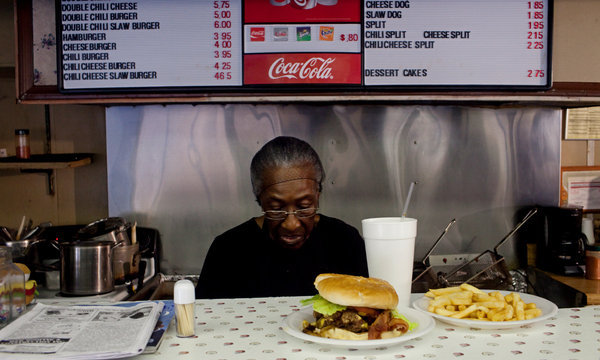
Ann’s Snack Bar in Atlanta – NYTimes.com. Home of the Ghetto Burger. Photo by David Walter Banks.
Ann’s Snack Bar in Atlanta – NYTimes.com. Home of the Ghetto Burger. Photo by David Walter Banks.
“A theory within psychology that focuses on the implicit emotional reactions of people that occur when confronted with the psychological terror of knowing we will eventually die.”
Five books about one of my favorite genres.
http://video.google.com/googleplayer.swf?docid=-429911856936674075&hl=en&fs=true
Cracked Actor, a 1974 documentary about David Bowie, filmed during the Diamond Dogs tour. There’s some really cool performance footage in there. Wikipedia. (via)
I like that there’s a field of research called “terror management theory”.
Nice photos of the isolated northeast section of Afghanistan that hasn’t been much troubled by the ongoing war. (via) It was recently covered in the NYT as well.
Many good ideas on mercenary reading here. Feel free to set aside the “rules” of front-to-back reading. Gotta participate actively and take what you need.
The work is an expression of the message, not the message itself. So forget everything but that message and how to apply it to your life. Dates, names, pronunciations–-they only matter in how they provide context for the lesson at hand.
And also:
You ought to ruin the ending–-or find out the basic assertions of the book–-because it frees you up to focus on your two most important tasks: 1) What does it mean? 2) Do you agree with it? The first 50 pages of the book shouldn’t be a discovery process for you; you shouldn’t be wasting your time figuring out what the author is trying to say. Instead, your energy needs to be spent on figuring out if he’s right and how you can benefit from it.
Read to Lead: How to Digest Books Above Your “Level” – RyanHoliday.net

A Single Man. It’s okay. Heavily art-directed in a Wes Anderson kind of way that’s both really sharp and a little bit dead. It sometimes feels like a product shoot. Ponderous. Never funny. Both of these things could be conscious choices tied to the main character’s public facade of neat, refined detachment that hides his inner chaos. His lover is dead. I like how Ford plays with the colors and hues in this one. Most of Colin Firth’s daily life is in a muted, greyish-brownish palette. In moments of clarity or lust or novelty, the palette becomes richer, warmer, shades of red and gold. Not at all subtle, but it’s a neat trick.
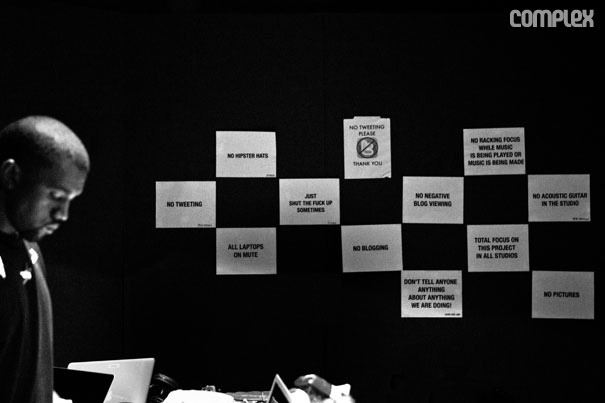
No hipster hats. No acoustic guitar in the studio.
Kanye West during the making of My Beautiful Dark Twisted Fantasy. Photo By Nabil Elderkin. (via)

Peachtree Street on a rainy night. Atlanta, 1951. Photo by Charles Kushman. I wish Loew’s Grand Theatre were still around.
http://174.132.193.190/~eiden/mp3clips/politicalspeeches/mlkmountaintop.mp3?plead=please-dont-download-this-or-our-lawyers-wont-let-us-host-audio
http://mlarson.tumblr.com/post/1659581881/audio_player_iframe/mlarson/tumblr_lccio1eZr71qzcye0?audio_file=http%3A%2F%2F174.132.193.190%2F%7Eeiden%2Fmp3clips%2Fpoliticalspeeches%2Fmlkmountaintop.mp3
Martin Luther King, Jr. – I’ve Been to the Mountaintop, 3 April 1968, Mason Temple (Church of God in Christ Headquarters) in Memphis, Tennessee. Transcript. What an amazing speaker.
I have to look them in the eye and decide whether they love the business or they love the money. It’s fine if they love the money, but they have to love the business more. Why do I come in at 7 every morning, can’t wait to get to work? It’s because I get to paint my own painting and I like applause.
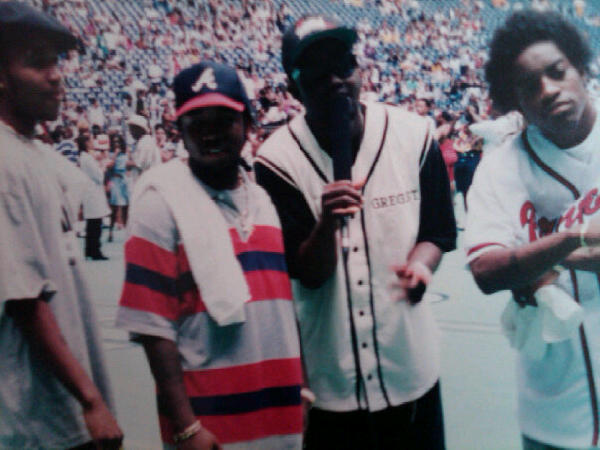
Big Boi and André 3000, 1994, with Atlanta DJ Greg Street.
Internet treasure via Alex Ross: free downloads of all of Bach’s organ pieces. I’ve listened to about 2.5 of the 18 hours’ worth. So far so good. The only reason not to get these is if you don’t like Bach or organ or music, and you’d be wrong on all three counts.
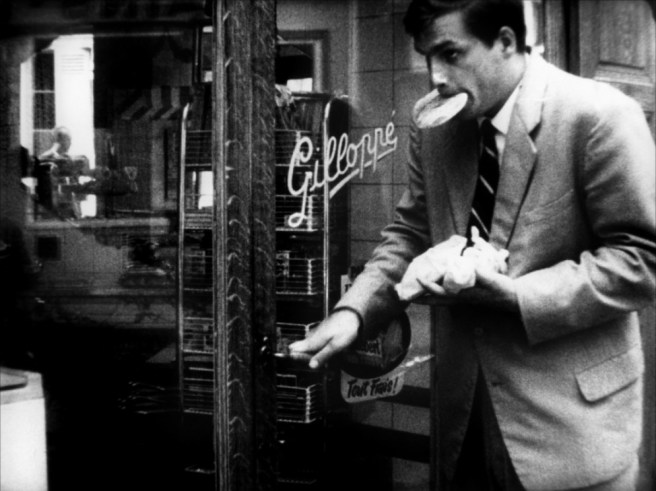
La Boulangère de Monceau (The Bakery Girl of Monceau). Another Éric Rohmer film (previously), the first of his Six Moral Tales. This is a worthy short one, only 23 minutes. The focus is an everyday occurrence: a guy sees an attractive gal on the street, doesn’t say anything, regrets it, then toys with a bakery girl as a substitute as he tries to find the first. The man’s narration is an out-loud self-analysis, full of his internal churning, hedges and rationalizations about his choices. Here’s a Criterion essay.

[If I could have lunch with one person I’ve never met] I would have to say Isaac Newton or Benjamin Franklin. I’ve met a lot of interesting people and some uninteresting ones, too. The two men had a bigger grasp of the world they lived in. But I don’t think I would pass up an opportunity with Sophia Loren.
Sophia Loren. Rome, June 1961. Photo by Alfred Eisenstaedt.
Great interview. McPhee says gathering facts and writing nonfiction (as opposed to more self-generated fiction stuff) is like going from the grocery store to the kitchen:
I always say to my classes that it’s analogous to cooking a dinner. You go to the store and you buy a lot of things. You bring them home and you put them on the kitchen counter, and that’s what you’re going to make your dinner out of. If you’ve got a red pepper over here—it’s not a tomato. You’ve got to deal with what you’ve got. You don’t have an ideal collection of material every time out. […]
Once I’ve written the lead, I read the notes and then I read them again. I read them until they’re coming out my ears. Ideas occur, but what I’m doing, basically, is looking for logical ways in which to subdivide the material. I’m looking for things that fit together, things that relate. For each of these components, I create a code—it’s like an airport code. If a topic is upstate New York, I’ll write UNY or something in the margin. When I get done, the mass of notes has some tiny code beside each note. And I write each code on an index card.
That’s laying it all out where he can look at it. It’s a technique he got from his high school writing teacher. One cool thing he found is that when you get the structure set, you can let the juxtapositions do some storytelling for you. In Encounters with the Archdruid, for example:
The whole book had thirty-six components. What I ended up with was thirty-six three-by-five cards, each with a code word. Some of these things are absolutely dictated by the story of the journey down the Colorado River. But the choices are interesting where it’s not dictated, like the facts of David Brower’s life.
I knew where I was going to start, but I didn’t know the body of the thing. I went into a seminar room here at the university, and I laid the thirty-six cards out on the table. I just looked and looked at them. After a while I was looking at two cards: Upset Rapid, which is a big-time rapid in the Colorado River, and Alpinist. In Upset Rapid, Brower doesn’t ride the rapid. Why doesn’t he ride the rapid? His answer to Floyd Dominy is, “Because I’m chicken.” That’s a pretty strong scene. What next? Well, there are more than seventy peaks in the Sierra Nevada that were first ascended by David Brower, hanging by his fingernails on some cliff. “Because I’m chicken”? This juxtaposition is just loaded with irony, and by putting the Alpinist right after Upset Rapid, in the white space between those two sections there’s a hell of a lot of stuff that I don’t have to say. It’s told by the structure. It’s all crackling along between those two things. So I put those two cards side by side. Now there are thirty-four other parts there on the table.
I think a young poet, or an old poet, for that matter, should try to produce something that pleases himself personally, not only when he’s written it but a couple of weeks later. Then he should see if it pleases anyone else, by sending it to the kind of magazine he likes reading. But if it doesn’t, he shouldn’t be discouraged. I mean, in the seventeenth century every educated man could turn a verse and play the lute. Supposing no one played tennis because they wouldn’t make Wimbledon? First and foremost, writing poems should be a pleasure. So should reading them, by God.
You’re probably better off if you can tolerate, or even enjoy, your own mediocrity as long as it takes to get something made. What’s obvious to you could be amazing to others. And fortunately, whether it’s good or bad, joy’s soul lies in the doing.
Nowadays, while literary men seem to have neglected their epic duties, the epic has been saved for us, strangely enough, by the Westerns.
I bet we all in this room live about the same. We eat about the same and sleep about the same. We pretty much drive a car for 10 years. All this stuff doesn’t make it any different. I will watch the Super Bowl on a big screen television just like you. We are living the same life. I have two luxuries: I get to do what I want to do every day and I get to travel a lot faster than you.
 Mark Larson