I think that part of my experience of growing up in the American South in the early ‘60’s was one of living in a place unevenly established in the present. You could look out one window and see the 20th century, then turn and look out another window and see the 19th.
An interview with William Gibson | The Verge
I think it’s an expression of our old hunter-gatherer module. I think that’s the module that lights up for everybody on eBay, regardless of what they’re looking for. It’s the flea-market gene. It’s hunting a bargain, sometimes. But when I went through my “watch process,” at the end of it I realized it was about information, about trying to master a body of fairly esoteric knowledge, regardless of what it was about. For somebody else it could have been hockey statistics. It wasn’t really collecting; it was about getting the knowledge.
I Don’t Understand What Anyone Is Saying Anymore – Dan Pallotta – Harvard Business Review
I was at a Hilton a few weeks ago. They had taken this absurdity to its logical end. There was a huge sign in the lobby that said, “Our goal is to exceed the customer’s expectation.” The best way to start would be to take down that bullshit sign that just reminds me, as a customer, how cosmic the gap is between what businesses say and what they do.
Filed under: bullshit.
I Don’t Understand What Anyone Is Saying Anymore – Dan Pallotta – Harvard Business Review
Beginners
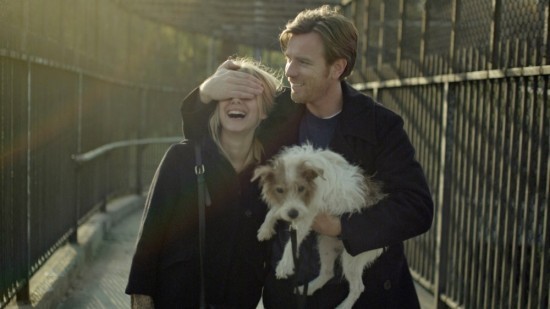
Beginners. What a good, sweet movie. If you miss and/or dismiss this you’re dumb. Excellent soundtrack with old blues and standards and, much to my delight, an arrangement of the Adagio from Marcello’s Oboe Concerto in D minor, one of my favorite tracks from one of my favorite albums of 2010. Another good movie about starting over that co-stars a charismatic dog: The Artist. The dog has the best line in the whole thing:
Tell her the darkness is about to drown us unless something drastic happens right now.
Hibbert showcasing post-up fundamentals | NBA Playbook
One of the fundamental aspects missing in today’s game is the ability for players (of any position) to work hard to get good spots on the floor (For post-up opportunities, that usually means getting at least one foot in the paint on a post catch). Contrary to popular opinion, this isn’t always derived from laziness. In fact, most times it’s because players are so used to being so much taller/stronger/more athletic than their competition, that they haven’t yet realized the value of getting prime real estate.
Do your work for six years; but in the seventh, go into solitude or among strangers, so that the memory of your friends does not hinder you from being what you have become.
Brick
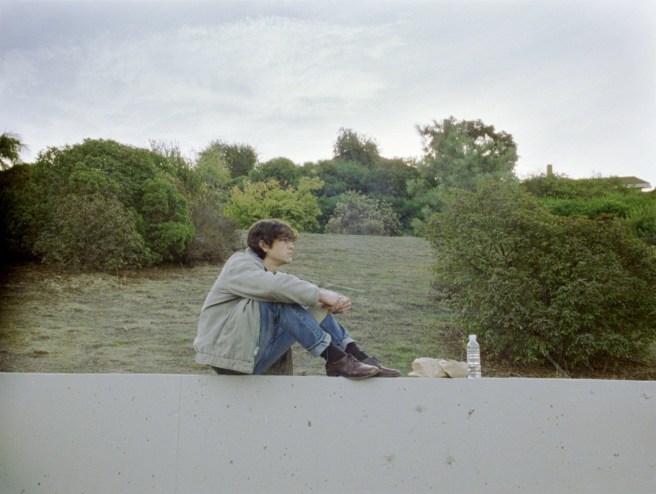
Brick. Hard-boiled film noir in modern high school suburbia. Everything was treated very carefully here, and it totally works for me. I could understand how ostensible 17- or 18-year-olds talking like Dashiell Hammett characters might not work for some, though. Some of which characters are clearly set to type (femme fatale, loyal informant, short-fused blockhead, sad-sack, etc.). Most of the movie has great, lively style but isn’t afraid to undercut itself every now and then. Solid score. I say it’s worth your time.
BrightestYoungThings: Futurenomics: The Tyler Cowen Interview
I was born in 1962 which was like the end of an era of breakthroughs. The moon walk, wow! That was exciting. Maybe it didn’t lead to anything, but we were all stunned. We saw it as a kid. I was like seven and thought “oh my god, this is awesome!” and you are like “science brought us this” and everyone was like “woah, science,” and then you have this long period of science not bringing that much and I think some of that status just went away. I can understand why.
BrightestYoungThings: Futurenomics: The Tyler Cowen Interview
The long sentence is how we begin to free ourselves from the machine-like world of bullet points and the inhumanity of ballot-box yeas or nays.
Pico Iyer. Here’s mills:
Pico Iyer, in a pleasant Los Angeles Times article noted by Schmudde, defending his use of “…longer and longer sentences as a small protest against —and attempt to rescue any readers I might have from— the bombardment of the moment.”
Iyer chooses two sorts of reduced expression as examples: bullet points, which are the prose of the business world; and the “inhuman” ballot-box, where political expression occurs. It is amusing to note that many believe that it is in precisely these spaces —the professional and the political— that their identity resides, that the substance of their life resides. If not there, after all, where?
Reminds me of an Andrew Potter quote I tumbled from The Authenticity Hoax:
It is hardly surprising to find that the two areas of human enterprise most concerned with sincerity as opposed to truth—namely, politics and advertising—are also the two areas most steeped in bullshit. Or would it be better to say that politics and advertising are the two areas most concerned with the appearance of authenticity? This might be a distinction without a difference.
And another thing I think of and repeat often:
If you write like porridge you will think like it, and the other way around.
Bill Cunningham New York
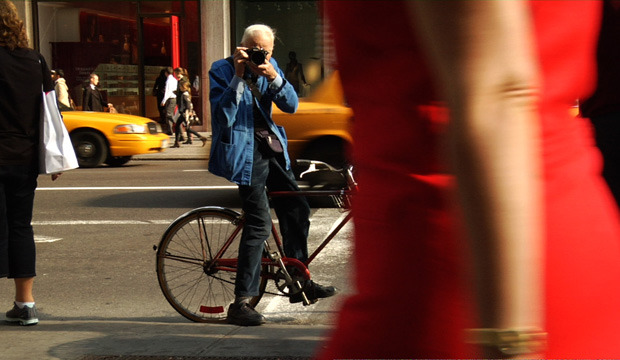
Bill Cunningham New York. Very highly recommended. What a guy.
If you don’t take money, they can’t tell you what to do. That’s the key to the whole thing.
thoughts on films: WGA 101 BEST SCREENPLAY LIST RECAP
Here are 15 things I learned from watching and writing about these 101 movies.
I loved following along with @jamesfflynn’s screenplay series.
Gary Taubes on Dieting | FiveBooks | The Browser
If you look and see who is healthier, you’ll find out that people who were mostly vegetarians tend to live longer and have less cancer and diabetes than people who get most of their fat and protein from animal products. The assumption by the researchers is that this is causal – that the only difference between mostly vegetarians and mostly meat-eaters is how many vegetables and how much meat they eat. I’ve argued that this assumption is naïve almost beyond belief. In this case, vegetarians or mostly vegetarian people are more health conscious. That’s why they’ve chosen to eat like this. They’re better educated than the mostly meat-eaters, they’re in a higher socioeconomic bracket, they have better doctors, they have better medical advice, they engage in other health conscious activities like walking, they smoke less. There’s a whole slew of things that goes with vegetarianism and leaning towards a vegetarian diet. You can’t use these observational studies to imply cause and effect. To me, it’s one of the most extreme examples of bad science in the nutrition field.
Yep.
Introspection means talking to yourself, and one of the best ways of talking to yourself is by talking to another person. One other person you can trust, one other person to whom you can unfold your soul. One other person you feel safe enough with to allow you to acknowledge things—to acknowledge things to yourself—that you otherwise can’t. Doubts you aren’t supposed to have, questions you aren’t supposed to ask.
The American Scholar: Solitude and Leadership – William Deresiewicz. First sentence.
Because You Asked About the Line Between Prose and Poetry by Howard Nemerov
Sparrows were feeding in a freezing drizzle
That while you watched turned to pieces of snow
Riding a gradient invisible
From silver aslant to random, white, and slow.There came a moment that you couldn’t tell.
And then they clearly flew instead of fell.
(via)
Because You Asked About the Line Between Prose and Poetry by Howard Nemerov
One purpose of children is to shred parental black-and-whites into gray confetti.
The New World
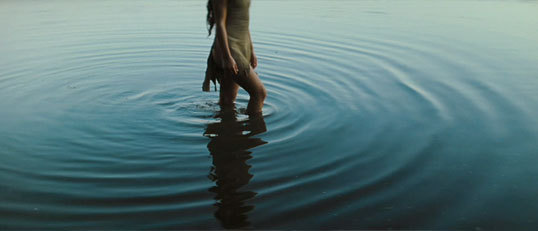
The New World. In which the title is a metaphor. Terrence Malick is a seductive director. I thought it started a little conventionally, but partway in, it turned into something special. You’re forced to set aside Disney memories and whatever historical précis you’ve got leftover from school. Interesting to see what expected bits of history and relationship development that he delays or leaves out completely, or proceeds quickly through and moves on. Lots of amazing nature scenes and life out of doors. I love the contrast of Smith’s time in the lush forests, and then the return to grey, denuded, muddy Jamestown. Malick uses narration again, which is kind of a clever cheat. You allow characters to voice their thoughts over visuals, and that keeps you from having to dialogue all the time. Couple that with the often elliptical camera–characters rarely face to face, often staggered in distance or in gentle motion, seen over-the-shoulder or trailing behind–you just get to gaze and treat your eyes and ears. I like Ebert’s observation: “The events in his film, including the tragic battles between the Indians and the settlers, seem to be happening for the first time.” Right now I think Days of Heaven is still my favorite Malick, with Badlands coming in close third.
A Prayer That Will Be Answered
Lord let me suffer much
and then dieLet me walk through silence
and leave nothing behind not even fearMake the world continue
let the ocean kiss the sand just as beforeLet the grass stay green
so that the frogs can hide in itso that someone can bury his face in it
and sob out his loveMake the day rise brightly
as if there were no more painAnd let my poem stand clear as a windowpane
bumped by a bumblebee’s head
Anna Kemienska’s poem from The Book of Luminous Things, translated from Polish by Stanislaw Baranczak and Clare Cavanagh. Via malevichsquare.
Turning words into touchdowns: Does a player’s speech predict how he’ll perform in the NFL? – Slate Magazine
Tinker Tailor Soldier Spy

Tinker Tailor Soldier Spy. I enjoyed this much more than expected, because/despite the fact that I got lost every now and then. This one shows a lot of sitting, reading, thinking, talking–a nice contrast to more action-packed spy movies. I’d gladly see it again, in the comfort of my own home.
Meditations (review)

Your mind will take on the character of your most frequent thoughts: souls are dyed by thoughts.
Funny to think how I am still very much myself. Same Mark, more detail. If you overlapped all my pattern-stereotypes I had around 1992, you’d get a pretty good picture of me today of what 2012 Mark is like.
Summer of last year, I started reading more works of and about Stoicism, and that led to tumbling a lot of stoicism quotes. This was not a new interest by any means. I remember thinking Stoics were cool back in childhood, when I first learned about them. I think my interest then was more of a tough-guy, counter-culture, I-am-a-rock/island sort of thing. Maybe a way of validating introversion, independence, self-protection.
Men seek retreats for themselves–in the country, by the sea, in the hills–and you yourself are particularly prone to this yearning. But all this is quite unphilosophic, when it is open to you, at any time you want, to retreat into yourself. No retreat offers someone more quiet and relaxation than that into his own mind, especially if he can dip into thoughts there which put him at immediate and complete ease: and by ease I simply mean a well-ordered life. (4.3)
I remember picking up Marcus Aurelius’ Meditations on at least three different occasions, but never finishing. In fact, barely starting each time. Some lessons can’t be learned early, I guess. I still like the independent-minded ideas, but I think now a lot of what gets me are the ideas of acceptance, attitude, gratitude (which is the focus of the entire amazing first chapter). And, yeah, being hard on myself….
They cannot admire you for intellect. Granted–but there are many other qualities of which you cannot say, “but that is not the way I am made”. So display those virtues which are wholly in your own power–integrity, dignity, hard work, self-denial, contentment, frugality, kindness, independence, simplicity, discretion, magnanimity. Do you not see how many virtues you can already display without any excuse of lack of talent or aptitude? And yet you are still content to lag behind. (5.5)
I bookmarked the hell out of it when I was reading and made a bunch of notes to myself (hypomnema!). I’ll probably be turning back to this one for a long time to come. All the quotes below come from Martin Hammond’s translation. The numbers refer to chapter and sub-section, should you decide to pick up this book. Which you should do.
On gossip. (3.4)
Do not waste the remaining part of your life in thoughts about other people, when you are not thinking with reference to some aspect of the common good. Why deprive yourself of the time for some other task? I mean, thinking about what so-and-so is doing, and why, what he is saying or contemplating or plotting, and all that line of thought, makes you stray from the close watch on your directing mind.
On hurt and its source, our compulsion to draw conclusions and render judgement on what has befallen us. (4.7)
Remove the judgement, and you have removed the thought “I am hurt”: removed the thought “I am hurt”, and the hurt itself is removed.
On revenge. (6.6)
The best revenge is not to be like your enemy.
On transience. There were several moments of this kind of beautiful writing that makes you slow down or rest the book and think it over. (6.15)
Some things are hurrying to come into being, others are hurrying to be gone, and part of that which is being born is already extinguished. Flows and changes are constantly renewing the world, just as the ceaseless passage of time makes eternity ever young. In this river, then, where there can be no foothold, what should anyone prize of all that races past him? It is as if he were to begin to fancy one of the little sparrows that fly past–but already it is gone from his sight.
On history repeating and our shared universal experience. (6.37)
He who sees the present has seen all things, both all that has come to pass from everlasting and all that will be for eternity: all things are related and the same.
On adapting to and embracing what is, caring. (6.39)
Fit yourself for the matters which have fallen to your lot, and love these people among whom destiny has cast you–but your love must be genuine.
On composure, comportment, grace, style. (7.60)
The body, too, should stay firmly composed, and not fling itself about either in motion or at rest. Just as the mind displays qualities in the face, keeping it intelligent and attractive, something similar should be required of the whole body. But all this should be secured without making an obvious point of it.
On vice and keeping good company. (7.71)
It is ridiculous not to escape from one’s own vices, which is possible, while trying to escape the vices of others, which is impossible.
On change, being wrong, graciousness. (8.16)
Remember that to change course or accept correction leaves you just as free as you were. The action is your own, driven by your own impulse or judgement, indeed your own intelligence.
On looking back, looking forward, being present, letting go. (8.36)
Do not let the panorama of your life oppress you, do not dwell on all the various troubles which may have occurred in the past or may occur in the future. Just ask yourself in each instance of the present: “What is there in this work which I cannot endure or support?” You will be ashamed to make any such confession. Then remind yourself that it is neither the future nor the past which weighs on you, but always the present: and the present burden reduces, if only you can isolate it and accuse your mind of weakness if it cannot hold against something thus stripped bare.
On simplicity, kindness, perseverance, virtue. Like water off a duck’s back. (8.51)
If a man were to come up to a spring of clear, sweet water and curse it–it would still continue to bubble up water good to drink. He could throw in mud or dung: in no time the spring will break it down, wash it away, and take no color from it. How then can you secure an everlasting spring and not a cistern? By keeping yourself at all times intent on freedom–and staying kind, simple, and decent.
On fame, attention, transience, obsessions, Facebook, death. (10.34)
All things are short-lived–this is their common lot–but you pursue likes and dislikes as if all was fixed for eternity. In a little while you too will close your eyes, and soon there will be others mourning the man who buries you.
On duty, openness, constancy, honesty. (11.27)
The Pythagoreans say, “Look at the sky at dawn”–to remind ourselves of the constancy of those heavenly bodies, their perpetual round of their own duty, their order, their purity, and their nakedness. No star wears a veil.
On dying. (12.36)
It is like the officer who engaged a comic actor dismissing him from the stage. “But I have not played my five acts, only three.” “True, but in life three acts can be the whole play.” Completion is determined by that being who caused first your composition and now your dissolution. You have no part in either causation. Go then in peace: the god who lets you go is at peace with you.
 Mark Larson