We forget that doing the work makes us better, and being better makes us dislike the work that made us that way.
In-Use: FF Quadraat in ‘The Shape of Design’ – An interview with Frank Chimero
We forget that doing the work makes us better, and being better makes us dislike the work that made us that way.
In-Use: FF Quadraat in ‘The Shape of Design’ – An interview with Frank Chimero
Like cookbooks, kitchen equipment is a talisman.
Restaurant supply stores are dope.
The Minimalist – A No-Frills Kitchen Still Cooks – NYTimes.com

Heat. Yeah, this is definitely going on my list of movies that are 1) more than 2.5 hours long, and 2) worth watching 3x or more. At the center are two guys who are both in lines of work that keep them from being normal people with normal relationships. And they know it. (Pacino’s Vincent Hanna would probably be jealous of Ford’s Dave Bannion). The female leads help round them out. Such a great cast. Nice action sequences, but thankfully not every confrontation is noisy or fast-paced or even violent. Although some, of course, are. But Michael Mann knows how to use silence, too. The end reminded me of Hanna with its perfect use of environmental light and sound. And I can’t forget to mention the L.A. synth-mood breaks a la Mann’s Manhunter, which I also loved (same cinematographer, too). Great, great film.

Best Headphones Under $30 | The Wirecutter. I bought these on @wirecutter’s advice and don’t regret it one bit. The best $8 I’ve spent this year? They’ll be used for travel and office, mostly, as I only need something with decent isolation that doesn’t take up space and won’t fall out of my ear. I only have one pair of worthy over-ear headphones, so they stay at home. If I left those at the office or in a hotel or something I would be reduced to tears.
Cupcakes are serial cakes. Mass produced but conveying a sense of homestyle goodness. Cupcakes are the perfect homeopathic antidote for the industrially-produced food we mostly consume. Fordism never tasted so sickly sweet.

We Need to Talk About Kevin. It’s grim, but it’s good. Family horror? The cast is solid across the board. I didn’t see the ending coming, and it’s not even a twist. Smart use of color and food and interior design to suggest other details. Score by Jonny Greenwood. And good timing on this one, as it touches on, here and there, the dehumanizing backlash that follows horrific events and how we struggle to make them meaningful when even those who cause them may or may not know why.
Choice commuters want a transit solution that seems modern, even if it’s actually old school. Really, they want a transportation choice that feels made for people just like them.
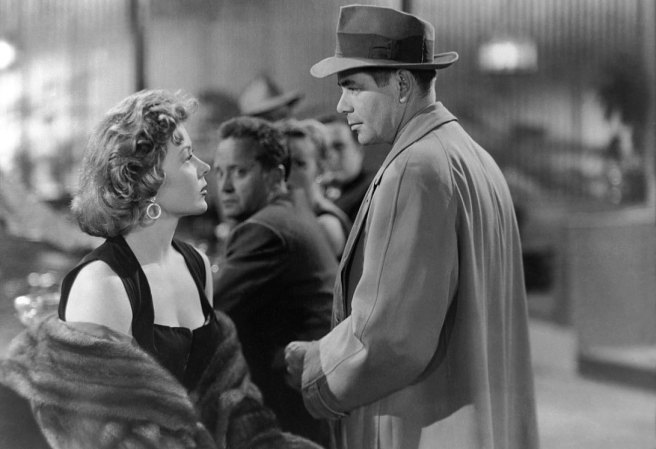
The Big Heat. Here we see the repercussions of a righteous anger, an uncompromising pursuit of justice. I love that our hero has a strong marriage and family life when he’s not on his beat. I haven’t seen that in film noir before. I really like this Glenn Ford guy (see also: 3:10 to Yuma, Gilda). Metropolis is the only other Fritz Lang I’ve seen. I should probably watch M at some point.
[Hair-metal musicians] are idealists, some of the last true believers in a weird idea that had floated around for decades: that rock music could be used to escape all the moral and hygienic values of the working and middle classes–self-restraint, work ethic, humility, sexual decency–and live happily among baser pleasures.
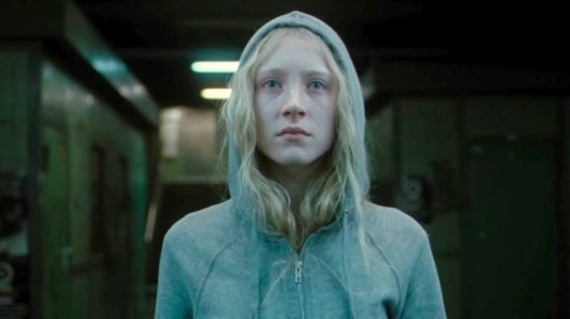
Hanna. A blend of fairy tale and thriller-realism. I have some quibbles with premise, plot, and character, but a couple moments were pure cinematic delight for me. I’m thinking of the early chase in the bunker and the later one in the cargo container yard. The way that the natural ambient lighting, the camerawork, and the blocking all work in perfect sync… so cool. Great editing. I kinda wish Joe Wright had gone a little more in that style-over-substance/style-is-substance direction. Delightfully weird electronic-heavy score.
I beg you, to have patience with everything unresolved in your heart and to try to love the questions themselves as if they were locked rooms or books written in a very foreign language. Don’t search for the answers, which could not be given to you now, because you would not be able to live them. And the point is to live everything. Live the questions now. Perhaps then, someday far in the future, you will gradually, without even noticing it, live your way into the answer.
Rainer Maria Rilke, Letters to a Young Poet (via malevichsquare) Cf. George Saunders:
If I just stay fully engaged in whatever has presented itself, things will be fine. That is, I try not to think about things like: Next, I begin MY NOVEL!

Hövding Invisible Bicycle Helmet. Wooooooooooooaaaahhh. Airbag for cycling!! This is brilliant. See also: Revolights.
The problem is that today’s meritocratic elites cannot admit to themselves that they are elites. Everybody thinks they are countercultural rebels, insurgents against the true establishment, which is always somewhere else. This attitude prevails in the Ivy League, in the corporate boardrooms and even at television studios where hosts from Harvard, Stanford and Brown rail against the establishment. As a result, today’s elite lacks the self-conscious leadership ethos that the racist, sexist and anti-Semitic old boys’ network did possess. If you went to Groton a century ago, you knew you were privileged. You were taught how morally precarious privilege was and how much responsibility it entailed.
It’s hard to see yourself from the outside. This also made me think of arguments in favor of monarchy in Hoppe’s Democracy.
Couldn’t you argue that the men and women who make Battlefield and Modern Combat and Call of Duty are making the world a demonstrably worse place? I think you could. Sometimes I wonder how they sleep at night. Sometimes, when I can’t sleep at night, I play Call of Duty.

Haywire. I love when genre films are cooler than they need to be. There’s plenty of moments of playing color and camera angles and audio cuts. The long shots of just running or driving in reverse (!). Quiet fights. Shower-time rummaging. The house with the lights out. The sunset beach scene. The careful, cautious rooftop chase was a nice change from the insane parkour we often see. The use of moody soundtrack reminded me of Manhunter. Carano is a little bit of a robot. It fits, though. Dialogue isn’t too special, but there’s a certain magic that a recognizable ensemble cast brings. I need to see more Steven Soderbergh. Out of Sight was great.

The Fall. Storytelling narrated by an injured stuntman paired with visuals imagined by a young girl. The hokey melodrama and goofy costuming is perfect. Awesome, awesome location shooting and set design. This movie is a lot of fun.
If you’re the kind of reader who doesn’t intend to give up on a Great Big Important Novel no matter how inhumanely it treats you, then there’s a sense in which Joyce or Pynchon or Gaddis (or whoever your captor happens to be) owns you for the duration of that captivity. In order to maintain your sanity, you may end up being disproportionately grateful for the parts where they don’t threaten to bore you to death, where there seems to be some genuine empathic connection between reader and writer.
Forms, styles, structures–whatever word you prefer–should change like skirt lengths. They have to; otherwise we make a rule, a religion of one form; we say, “This form here, this is what reality is like,” and it pleases us to say that (…) because it means we don’t have to read anymore, or think, or feel.
On the other side of the class and educational divide (…) it’s easy to forget what it’s like not to know.

 Mark Larson