Feeling-Making Machine: An Interview with Mary Karr – R A I N T A X I o n l i n e Spring 2010

This interview is such a gold mine.

I differ from the most diseased part of myself, and I think that an irony of spiritual practice is that when you get out of yourself you kind of more become yourself. When I was a little kid I was bouncy and I made a lot noise and I broke shit. I ran around, I was very enthusiastic. In all the pictures of me I’m smiling. Now, I’m pretty happy. I laugh a lot. I have joy on a given day. I’m not a blithering idiot, and I suffer when it’s hot out or it’s raining and I can’t get a cab. I worry about my kid or my friend getting chemo or whatever. I suffer. But I’m pretty happy. And it’s almost like, I remember my mother saying when I was getting sober, “you’re going to come back to that [childhood happiness].” And I said, “Mother, I don’t even fucking remember that.” I just don’t remember feeling that way. But I really think that voice—not the one that says, fuck you, you stupid bitch, you’re a whore, but the one that says, you can do better than this, honey—that voice is God. And that’s actually who you really are. The other stuff that’s telling you what an asshole you are all the time is fucking noise, your ego or your head or whatever. The Buddhists would call it your ego. Pentecostals would call it Satan. It doesn’t matter what you call it. It’s my fucking head talking.

Feeling-Making Machine: An Interview with Mary Karr – R A I N T A X I o n l i n e Spring 2010

Advice for Boys – The Bygone Bureau

My readers taught me as much about listening and taking people’s problems seriously as anything I have ever done. They taught me the value of what kindness and generosity can do, not only for the person receiving it but for you who give. Of what happens when you give people the space to talk about themselves, and of how much guys will start to talk about their feelings if we give them space to do so.

Advice for Boys – The Bygone Bureau

Literature is Eucharistic. You take somebody else’s suffering into your body and you’re changed by it, you’re made larger by their pain.

Art & Film: Rembrandt/Tarkovsky

kino-obscura:

From the canvas to the cinema.

David Liu | 21 January 2013

imageThe Return of the Prodigal Son (Rembrandt, 1669; oil on canvas)

imageSolaris (Andrei Tarkovsky, 1972)

In the end: a dog, a father and a son. Like the works of Rembrandt, Tarkovsky’s adaptation of Stanislaw Lem’s 1961 science fiction novel reveals a consummate humanist at work — an artist for whom the individual search for redemption transcends the realms of faith and waking consciousness.

Everybody talks about the writer’s feeling and the writer’s expression and the writer’s experience, and, you know, I don’t give a fuck how the writer feels. I want a fucking book that I can be in love with. I want a book that I’ll reread seventeen times. That’s what I want.

Mary Karr. I usually finish reading before I tumble, but I couldn’t help it this time. (via)

Eyes Wide Shut

Eyes Wide Shut. I didn’t love it, but I’ll put it in the plus column for Stanley Kubrick. The cult scene had some wonderful tension. I also respect his willingness to let scenes slow down to a near stand-still, like during Kidman’s monologues. And he’s got a great way with music and musical commentary (the Shostakovich waltz; “When I Fall In Love”; “Stranger in the Night”). My Kubrick rankings (there’s considerable distance between #3 and #4):

  1. 2001: A Space Odyssey
  2. The Killing
  3. Eyes Wide Shut
  4. The Shining
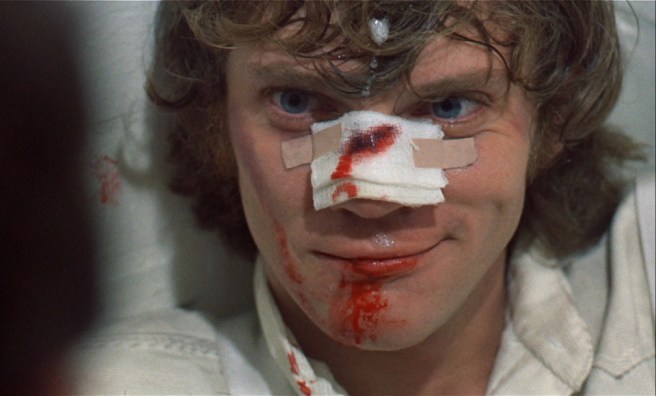
  5. A Clockwork Orange

A Brief Remark on Zero Dark Thirty « The Pinocchio Theory

Zero Dark Thirty is the ne plus ultra of proceduralism, its ultimate expansion and reductio ad absurdum. It’s all about the well-nigh interminable process of searching for, and then eliminating, Osama Bin Laden. The premise and initial impetus of this process is of course the mythological demonization of Bin Laden, as the ultimate culprit responsible for Nine Eleven. But in the relentless proceduralism that the film presents to us, this goal or rationale is abraded away. The torture which the film has become controversial for depicting is of course part of this. But so is the process of painstakingly correlating irrelevant information, the accidental discovery of leads in years-old records, the repetitive tracking of the vehicle of the suspected courier, the endless bureaucratic meetings at which officials seek to decide if the information is valid and what should be done about it, and above all the military operation in the last thirty minutes of the film (has military action ever been depicted in the movies with such relentless a focus on operational techniques, in a manner that is utterly devoid alike of the horror of war and of the glory and heroism that are so often invoked to justify it?). The goal has been so absorbed into procedural routine that the ostensible climax of the film, the actual killing of Bin Laden, occurs offscreen; and we barely even get a glimpse of the corpse, zipped as it is into a body bag, which is to say treated entirely (and literally) according to Standard Operating Procedure.

A Brief Remark on Zero Dark Thirty « The Pinocchio Theory

Relationships are complicated, but happiness in a relationship isn’t: It’s just wanting exactly what you have. Wanting something else is dispiriting.

Zero Dark Thirty

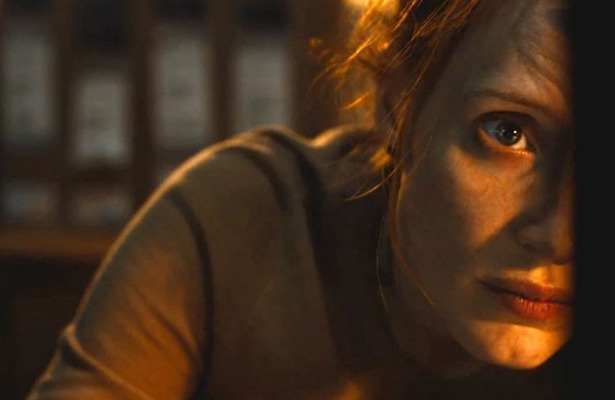
Zero Dark Thirty. I can’t think of many movies with such a steady build-up. Really well done. Setting aside any moral/political/veracity issues you may like to bring up, what I really loved was the simplicity of the plotline. Like Steven Shaviro wisely points out (must read, I say), it’s a procedural film. There are people who want to locate a man. It’s really difficult. They spend a decade working on it. Although we have a single protagonist, there’s no love interest. There are only hints at a personal life, mostly so the possibility can be downplayed. (I actually thought some of the weakest, most embarrassing moments were when Chastain was showed some ‘tude, like in the hallway confrontation and the writing on the office window. The script just wasn’t built for it.) There’s no sabotage, no competitors, just work. Oh, and chronic failure. And somehow it didn’t feel like 2.5 hours! All the plot resistance comes from the difficulty of the task itself and bosses who like good work, sure, but demand incredibly great work. In the end, after all the collaboration, the actual fulfillment of the mission is completely out of our heroine’s hands. She just watches and listens, like us. And what’s interesting from a filmmaking standpoint, is that climax is pretty dry, detailed, by-the-book. There’s no personal bloodlust, just well-rehearsed and well-executed teamwork. The movie progress from the horrific, emotional opening, through a couple hours of procedural drudgery, to an incredibly competent raid. By the time we get to the end of the movie (sort of like how we might have felt by the end of the manhunt in real life), the ending lacks much triumph or satisfaction. Everything zipped up. On to the next. Like the heroine, I just felt drained.

While we’re on the topic, I remember the song I was listening to when I heard that Bin Laden had been killed: Marvin Gaye’s If I Should Die Tonight. It was a strange night, wasn’t it?


Fish Monkey’s Writing Stuff: On Shoes

Shopping for shoes is largely free of body anxiety associated with clothes shopping.

Never thought of that. I remember asking a woman I used to work with about the allure of shoes. Her response, “It’s like a little sculpture. You can put it in your hand and look at it and it’s just perfect.” She’s an artist, so that might be a natural response, but I still think about it years later.

Fish Monkey’s Writing Stuff: On Shoes

Whenever we invent something new, our neuroses rush over there and get writ large.

George Saunders. And further in his LARB interview:

A definition of parenting: “That state in which, because of the existence of great love, an individual feels that he or she has failed, or is failing, or will soon fail.”

Paris Review – CivilWarLand in Bad Decline: Preface, George Saunders

When I was in my twenties I had this plan to go to El Salvador and write about the experience. I had no money, didn’t speak Spanish, but this was “my dream.” I stopped by one day to see a friend of mine but found only his father home. I’d never spoken to this man before, not really. He was a truck driver, a father of eight, always went around in a white T-shirt and a pair of Buddy Holly glasses. But this day, we talked. I told him about my El Salvador plan, expecting him to find it indulgent. But instead he said, “You know what? You have to do it.”

“Yes,” I said, with the force of revelation. “I do. I really do.”

“And you know why?” he said. “Because you know who you’re going to blame if you don’t?”

I did know.

“Myself,” I said with a knowing smile.

“Bullshit,” he said. “You’ll blame your wife and  kids.”

I often thought of this conversation when I was stealing time from Radian to write this book. If I didn’t, I told myself, I was going to become a bitter old-fart version of myself, blaming Paula and the girls.

So I stole like a mother. I wrote in the bathroom, I printed using the company printer, I turned away from my Kodak report to jot things down, I edited while waiting for an offsite groundwater remediation system to purge, I sometimes blew off a full afternoon when I was feeling ripe, although usually, when that happened, I’d take work home, just to be fair.

(Cf. Amy Poehler.)

It’s been a few years since I’ve read any Saunders, but I’m really excited about his new book.

Paris Review – CivilWarLand in Bad Decline: Preface, George Saunders

Jacob Silverman: Some Notes on a Book

jacobsilverman:

Last month, I sold a proposal to HarperCollins for a book about social media and its role in online identity, privacy, self-expression, and Internet culture. All this began with my “Against Enthusiasm” essay in Slate, but I’m now looking more broadly at the attention and sharing economies; how (for some people) life becomes reconstituted around the ways in which we can broadcast it online; how the wall between online and “real” life has largely collapsed; the values engineered into social networks (which include incessant liking and favoriting); and so forth.

If you’re interested in talking to me about the book, want to send me something to read, or you think there’s someone I should be talking to, please feel free to get in touch. I’ll still be doing some freelancing and book reviewing, though I’ll be focusing more on social media and the culture of technology. But for now, it’s time to get to work. The book will be out sometime in 2014 (release date TK). Thanks for reading.

I like and reblog this without reservation.

Jacob Silverman: Some Notes on a Book