Nitsuh Abebe on the Punk Movement — New York Magazine

By the time punk swept the U.K., the sound had cut itself back to the sinew and muscle of early rock and roll, yes, but it had also excised one of the key things that made early rock and roll captivating to young people, which was some sense of sexual urgency—swing, groove, sly vocal implication. All were traded for happy hectoring and desiccated angularity. The guitars may have a kinship with Chuck Berry, but the barking does not.

Ergo, punk never had much appeal for me.

Nitsuh Abebe on the Punk Movement — New York Magazine

Green Screen: The Lack of Female Road Narratives and Why it Matters

To offer some context for my perspective, the year I was fifteen I hitchhiked 15,000 miles alone, mostly through truck stops. By the time I was nineteen I had hitchhiked another 5,000 miles through Turkey, Greece, and pre-war Yugoslavia, also alone. Those years were a time of misery and terror, but they were also transformative. Every day I bounced wildly between danger, high comedy, and extreme loneliness—which is to say that it was also an adventure, and that inside all the high stakes turmoil was a nascent self that was trying to become, to change, to step out into the world as an adult.

But there is no female counterpart in our culture to Ishmael or Huck Finn. There is no Dean Moriarty, Sal, or even a Fuckhead. It sounds like a doctoral crisis, but it’s not. As a fifteen-year-old hitchhiker, my survival depended upon other people’s ability to envision a possible future for me. Without a Melvillean or Kerouacian framework, or at least some kind of narrative to spell out a potential beyond death, none of my resourcefulness or curiosity was recognizable, and therefore I was unrecognizable.

Green Screen: The Lack of Female Road Narratives and Why it Matters

Quaker Mode – The Pastry Box Project | 22 April 2013, baked by Mike Monteiro

The incredibly great thing about Quaker meetings is that everyone just sits there. Silently. And they talk only if the spirit moves them to talk. They only open their mouths if it improves on the silence. I’m gonna repeat that phrase because I love it so fucking much: “if it improves on the silence.”

When we were staying over at grandma’s house, when me and my brother and sister were getting annoying, we knew fun time was over when Grandma would say firmly, “Okay. Let’s play Quaker.” The three of us then groan and sigh and collapse on the floor, mortally wounded, sulky, resentful. Quiet time had begun. I hated that “game” so much. Mike Monteiro’s idea sounds good, though.

Quaker Mode – The Pastry Box Project | 22 April 2013, baked by Mike Monteiro

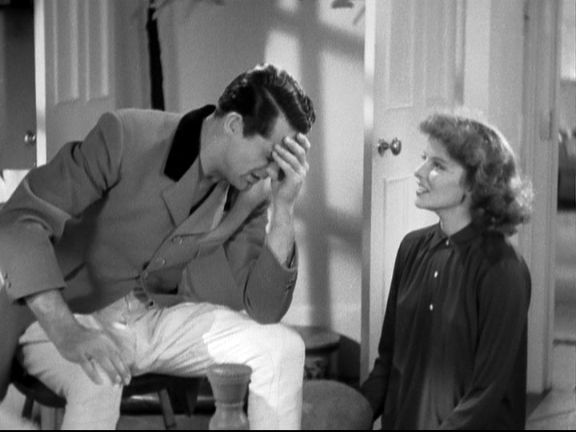
Bringing Up Baby

Bringing Up Baby. Too much of a muchness w/r/t silly characters and storytelling contortions to keep the laughs coming. Of all the Cary Grant I’ve seen, this is the first straight-up goofy comedy role (sillier than in The Philadelphia Story). He’s got a knack for it, apparently. I love seeing a new side of an actor I know mostly for being dashing. Favorite Howard Hawks movies? Gotta take Scarface over The Big Sleep, and then this one after Gentlemen Prefer Blondes.

The Place Beyond the Pines

The Place Beyond the Pines. It’s a bummer that the wind goes out of the sails when Gosling leaves the screen, but that’s still to his and the director’s credit for those parts of the movie. And Mendes was fantastic. What a talent. I just wish the third act hadn’t run out of gas. But, then again, I think that’s partly me being snob-weary-dreary-bonehead, “Oh, another fathers and sons tale” and not wanting to give in to it. It’s good, though. Derek Cianfrance’s Blue Valentine is pretty sharp, too.

I think we have to be frugal with our photo-viewing. I love it when you find a photo from a time you’ve forgotten about – one that, maybe, someone else had possession of. It makes you realise how linear and reductive memory is.

Why it’s ok to buy books and not read them

I used to feel guilty about books I own but haven’t read. They’d sit in piles making me feel unworthy as a writer, and reader. And no matter how many books I’d read in a year, I’d always find myself buying more. I couldn’t win. It was a destructive cycle and it drove me mad. One day I realized there was another way to frame my behavior. The goal should not be efficiency because efficiency makes you conservative. As a writer I need an ambitious curiosity, not a safe one. It’s good to take bets on books at the limits of my comfort zone.

Why it’s ok to buy books and not read them

I am not a scholar and the majority of my references have been culled from my personal library, allowing me to check them without difficulty. But I read in zigzags, I travel from one book to the next, and this is not without risks. It is quite possible that here and there, certain interpretations or comparisons are stretched or simply gratuitous. However, this book is a journey—and travelers should be aware that paths leading nowhere are also part of the trip.

Raul Ruiz, from the introduction to Poetics of Cinema. I read in zigzags, too. Michelle Orange mentioned this excerpt in an interview with the Paris Review. Her book This Is Running for Your Life is pretty awesome.

The disruptive potential of native advertising | Felix Salmon

In that sense, TV ads are truly native; the way you consume a TV ad is the same as the way you consume a TV show. Similarly, long copy print ads are native, for the same reason. And the ultimate native ads are the glossy fashion ads in Vogue: in most cases, they’re better than the editorial, and as a result, readers spend as much time with the ads — if not more — as they do with the edit.

Fashion magazines are such a good racket. Love that junk.

The disruptive potential of native advertising | Felix Salmon

Q & A with artist Ashley Anderson | CommonCreativ ATL

I moved to Atlanta in 2007, which was pre-WonderRoot, pre-Dashboard, pre-Living Walls, pre-Glo, pre-Flux and plenty of other stuff. And then WHAM, everyone’s doing stuff. That’s in a period of five-and-a-half years. That’s insane—good insane. And we’re all still very much learning what each of us does, galleries are closing, capital is moving around, new artists are constantly showing up, communities are reacting—there’s whole lotta shakin’ goin’ on. Beats the hell out of how it was when I moved here and it’s a light years better than what little was going on in the last city I lived in. Keep going everyone, and bless the haters as you climb over them.

Q & A with artist Ashley Anderson | CommonCreativ ATL

Mean Professor Tells Student to “get your sh*t together” | Things Doanie Likes

One of the perks of the job.

xxxx, get your shit together. Getting a good job, working long hours, keeping your skills relevant, navigating the politics of an organization, finding a live/work balance…these are all really hard, xxxx. In contrast, respecting institutions, having manners, demonstrating a level of humility…these are all (relatively) easy. Get the easy stuff right xxxx. In and of themselves they will not make you successful. However, not possessing them will hold you back and you will not achieve your potential.

This is straight out of the Marcus Aurelius playbook. One of my favorite passages from Meditations comes in Book 5:

Display those virtues which are wholly in your own power–integrity, dignity, hard work, self-denial, contentment, frugality, kindness, independence, simplicity, discretion, magnanimity. Do you not see how many virtues you can already display without any excuse of lack of talent or aptitude? And yet you are still content to lag behind.

Mean Professor Tells Student to “get your sh*t together” | Things Doanie Likes
Why techies don’t buy contemporary art | Felix Salmon

This, for me, is the real reason that tech types don’t buy art: they’re busy investing in each other’s startups instead. Being an early-stage investor is in many ways just like being a contemporary art collector: you’re very unlikely to make money at it, even though the potential and anecdotal returns can be enormous; and it’s used in large part as a way of supporting your friends and being seen as being important within a very small world.

Why techies don’t buy contemporary art | Felix Salmon