


Keep your tissues handy.
Bret Dunlap Discovered Running and It Changed His Life | Runner’s World
How did reading poetry become an essential part of so many American wedding ceremonies—and why is it still so hard to choose a wedding poem of one’s own? […] It was around the early 1960s that some Protestant denominations began loosening the strictures of approved readings and music, according to Paula Treckel, a historian at Allegheny College who has written about the history of American weddings. The usual suspects were first to acquiesce: Unitarians, Congregationalists, and Presbyterians, responding to counterculture couples who wanted to make their wedding ceremonies their own. Suddenly, weddings were taking place in parks, and couples were writing their own vows. As the journalist Rebecca Mead writes in her 2007 book about contemporary weddings, One True Day, the modern idea is that “a wedding ceremony, like a wedding reception, ought to be an expression of the character of the couple who are getting married, rather than an expression of the character of the institution marrying them.”
Fascinating.
Despite our best attempts at uniqueness, we have generated a canon (as people do). And so what if the canon shifts over time (as canons do)? If, in 30 or 40 years, Cummings brands an early-21st-century wedding as indelibly as Gibran brands a 1970s wedding, well, so be it. Marriage means stepping into an ancient institution marked by hundreds of temporal particulars—everything from the cut of the bride’s dress to who is legally allowed to marry. We hope the marriage lasts forever, but we have to expect the wedding itself will age. Maybe we’ll all look back on our wedding poetry the same way we’ll look back on our wedding photos: with a fondness for those young, goofy people who had no idea how their tastes would change, or what was to happen to them.
Pretty cool. Cf. the Arctic 1000 traverse from a few years back, which crossed through the most remote part of Alaska. Also reminds me of some of the issues and ironies that William Cronon brings up in The Trouble with Wilderness.
A Scientific Search for the Most Remote Places in the United States – The Atlantic Cities

Buckets of iron ore are transported to a major steelworks in Hunedoara, Romania, November 1975.
Photograph by Winfield Parks, National Geographic
The mood here made me think of Tarkovky’s Polaroids. Winfield Parks also took that great photo of the Turkish steambath.
This movie has prompted some really good writing.
The Thoreau Poison: Shane Carruth’s ‘Upstream Color’ : The New Yorker
It is not the young man who is most happy, but the old man who has lived beautifully; for despite being at his very peak the young man stumbles around as if he were of many minds, whereas the old man has settled into old age as if in a harbor, secure in his gratitude for the good things he was once unsure of.

Iron Man 3. I liked it more than Iron Man 2, maybe not as much as the original Iron Man, though I don’t remember it well at this point. This was definitely funnier than the first sequel, with some Kiss Kiss Bang Bang-ish genre awareness and biting humor. The villains, though, were a letdown, and the silly action spectaculars were kind of a mess. And yeah, it is kind of a feature-length damnation of wearable computing.

Girl Rising. Got suckered into seeing this two-hour commercial. Some vignettes are better than others (depending on the spunk of the girls and the writers’ adaptation), but some seemed a dangerous mix of exploitative and/or pandering. And the didactic interludes just grate after a while. Like, say, a Michael Moore film, I’m not sure that anyone who agrees really needs to see it, no one who disagrees (and who might that be?) will be persuaded.
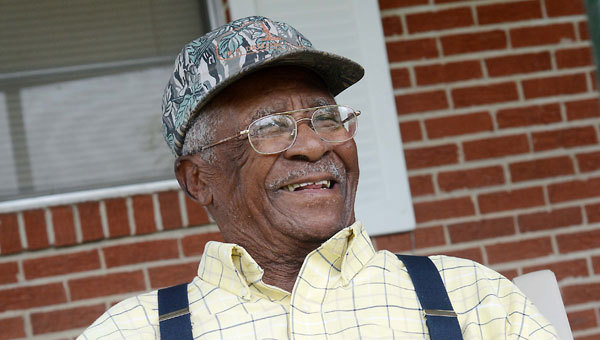
Retired man enjoys easy life at home | Mississippi’s Best Community Newspaper. Not The Onion. Something to shoot for! (via)
In the country you have to drive when you want to go anywhere; in a big, dense city people get around on foot and via public transport. Suburbs are in this respect in-between. And in other respects too. Which is why, I suppose, suburbs are never perceived as either divine or demonic. “Nothing too much,” the suburb seems to say, which means that, though its human dramas exist, and are as meaningful as they are anywhere else in the cosmos, they remain largely inaccessible to our myths.
Basically, it’s not that people born after 1980 are narcissists, it’s that young people are narcissists, and they get over themselves as they get older. It’s like doing a study of toddlers and declaring those born since 2010 are Generation Sociopath: Kids These Days Will Pull Your Hair, Pee On Walls, Throw Full Bowls of Cereal Without Even Thinking of the Consequences.
Every Every Every Generation Has Been the Me Me Me Generation – The Atlantic Wire
Suppose you wish to send $25,000 from Vancouver, British Columbia, to a friend in Helsinki, Finland. You would hand $25,000 cash to a Vancouver money changer (Hawaladar) in Vancouver, and receive code words (or an agreed signal such as a secret handshake) and a contact address in Helsinki. No actual cash moves out of Canada. Instead, when your friend gives the code to the correspondent hawaladar in helsinki, he will receive the equivalent in euros (less a commission) from money that is already there. To review: -There are no written documents. The exchanges are based on mutual trust (perhaps for that reason unpopular in the United States?). -Only local currencies are used. Thus, if you are sending money from the UK to Mexico, you pay in pounds and the receiver in Mexico collects in pesos. -This exchange cannot be traced because no money crosses a border.
Has this been done in a movie yet?
Marlboro Southern Cut Cigarette Review. Incredible. Package analysis, unlit dry puff, regular drag, deep inhalation, nostril exhale, body, flavor, taste, aroma. You can find geeky unboxings and video reviews for anything. This is a genre. (via)
Motivational advice risks making things worse, by surreptitiously strengthening your belief that you need to feel motivated before you can act. By encouraging an attachment to a particular emotional state, it actually inserts an additional hurdle between you and your goal.






{rickrossgrunt}. See the Days of Heaven Screencaps Gallery for more.
No Country for Old Men (2007) – “I feel overmatched.”.
All the time you spend tryin’ to get back what’s been took from you, more’s goin’ out the door.
I need to watch this movie again. Cf. F. Scott Fitzgerald.
Vitality shows in not only the ability to persist but the ability to start over.
What we respond to is not the gadget itself but its promise of some personal and highly specific gratification.


 Mark Larson