“Minds wiped calm as sea-leveled sands”

Child in the womb,
Or saint on a tomb —
Which way shall I lie
To fall asleep?
The keen moon stares
From the back of the sky,
The clouds are all home
Like driven sheep.

Bright drops of time,
One and two chime,
I turn and lie straight
With folded hands;
Convent-child, Pope,
They choose this state,
And their minds are wiped calm
As sea-leveled sands.

So my thoughts are:
But sleep stays as far,
Till I crouch on one side
Like a foetus again —
For sleeping, like death,
Must be won without pride,
With a nod from nature,
And a lack of strain,
And a loss of stature.

Philip Larkin. Via Maud Newton. Filed under: sleep.
Flush

I read Virginia Woolf’s Flush, a biography of Elizabeth Barrett Browning’s cocker spaniel. We grew up with two cocker spaniels (first Nugget, then Rusty, and I still take pride in choosing such good names), so I was rooting for this one from the start. It’s short and breezy and completely charming.

The true philosopher is he who has lost his coat but is free from fleas.

Manhunts: A Philosophical History

I read Grégoire Chamayou’s Manhunts. I may not have given it a fair shake – it has a way more academic bent than what I was in the mood for – but there are some neat ideas here. The most useful:

Every hunt is accompanied by a theory of its prey that explains why, by virtue of what difference, of what distinction, some men can be hunted and others not.

One of the better parts of reading this wasn’t the book itself, but how it related to other things I’ve come across. Manhunter, clearly, and how pursuit puts one’s soul at peril. Njál’s Saga frequently deals with banishment and outlaws, vengeance and vulnerability. Also the book Columbine and other events like the OKC bombing and Isla Vista, and how theories of exclusion always follow closely behind. Zero Dark Thirty, too.

The Cold Stoicism of Advice Columns for Men

Advice columns for men, however, seem not to have made the leap from proscriptive notions of rectitude to the smart-older-sister vibe of advice for women. In GQ and Esquire and even Maxim, which are full of Q&A-format advice for readers, situations are often posed in a joking tone and answered as if the writer were the dude from the Dos Equis commercials and the ultimate ethical standard is masculinity rather than humanity. “How to be a man” literature is the new conduct literature: it’s not that men haven’t cared about ideals of masculinity before now, but the idea verges on obsession these days, cf. everything from Shia LaBoeuf’s resignation note to the fact that someone greenlit How to Be a Gentleman. It’s a whole genre and evidently a popular one—but, while advice columns are the delicious and healthy snack of things to devour on the Internet, it matters for men and women alike that advice columns for men evolve, not by abandoning their gentlemanly tone but by choosing the right questions to answer.

That’s one reason why I read waaaaay more of Carolyn Hax than anything in men’s magazines.

The Cold Stoicism of Advice Columns for Men

My friend Mario Joyner has a funny line. It’s not something he does in his act, but he’s a brilliantly funny guy about life. The wedding gown, the celebration, the aggrandizement of the woman in this amazing outfit at the wedding—she’s telling the world “I got one of these motherfuckers to act right.”

The NeverEnding Story

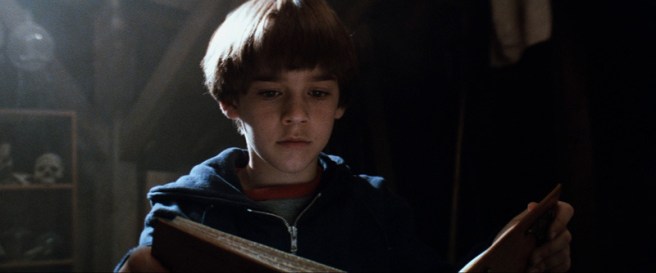
The NeverEnding Story. The handful of times I watched this as a kid I found it too baffling to grow any sort of attachment or fondness. I remembered only a few snapshots before re-watching: boy reading in attic, boy warrior in a terrifying bog, flying on a dogdragon, wolf with a twitchy nose, a young queen in distress. Good young actors in a dark, compressed allegorical movie about bullying, escapism, and the value of imagination. Let’s also take a moment to appreciate that the villain is called “The Nothing” and the rad electro soundtrack in the Swamps of Sadness. :( :( :(

In the Cut, Part I: Shots in the Dark (Knight). I really, really liked this dissection, by Jim Emerson, of a chase scene in The Dark Knight. I think the scene still communicates on a sequence-of-events level – chase goes underground, trucks smashes car, weapons are fired, Batmobile rams a dump truck – but there are definitely ways the editing makes it less spatially coherent or viscerally “real”. You can set aside whether that makes the scene good or bad, or whether it undermines or supports whatever Nolan’s intentions were. It’s still a nice primer and breakdown of how they communicate narrative through the frame, and how ignoring or adhering to visual conventions affects how you understand what you see.

Once Upon a Time in the West

Once Upon a Time in the West. Welp. It’s perfect. This was my second time seeing it all the way through (my first), and I was very lucky to catch it on the big screen. Two things that stood out for me more this time around….

One, the operatic heightening. Straight out of opera, each major character gets a leitmotif in the soundtrack, they’re all introduced in a different way to draw attention to their role, and they’re all pretty unambiguous archetypes: villain, hero, buffoon, hooker with heart of gold. And dang, that score.

Two, the recurring hints about time. The movie opens with a shot of a rail schedule, then shifts to a comically, absurdly extended introduction marked by dripping water and creaking windmills. The anxious father who wants to be ready for his beloved’s arrival. Watches checked, appointments made. A capitalist who wants to reach the Pacific coast before his death. A railroad station that must be built on a deadline. Fancy clocks in the financier’s railcar. The clockface in town during a shoot-out. And battles that the hero faces are a sort of countdown: three assassins, then two, then one.

Let’s fly: How to survive air travel

I remember reading somewhere that if you’ve never missed a flight then you’ve wasted too much of your life waiting in airports. Fair point, maybe. But I have to agree, after a few recent flights, that arriving much much earlier than needed – giving over to what might first feel like inconvenience – can create some beautifully peaceful and productive time to work with.

Let’s fly: How to survive air travel

When people say, “I’m the kind of person who,” my heart always sinks. These are formulas, we’ve all got about ten formulas about who we are, what we like, the kind of people we like, all that stuff. The disparity between these phrases and how one experiences oneself minute by minute is ludicrous. It’s like the caption under a painting. You think, Well, yeah, I can see it’s called that. But you need to look at the picture.

Solaris

I read Stanisław Lem’s Solaris (the new Bill Johnston translation, grade-A uncut straight from the Polish), and enjoyed it for the most part. Not available in paper, so I finally used this Kindle gadget thing.

This is a book for ideas. The writing isn’t too special on its own, on a sentence and paragraph level. I could have done with less of the spinning off into academic/history tangents, but I suppose they have their purpose. Reminds me of Borges a bit, that spirit of developing gobs and gobs of history and references. I think the spirit is more ironic here, underscoring how the knowledge of Solaris that humans gathered and theorized for generations really amounts to so little.

Now I really want to watch both movies again. I read a lot of this while listening to the soundtrack for The Fountain, which makes a good pairing.

Another Lem book I really, really liked was Imaginary Magnitude, which, as a collection of… stories?… offers a lot more variety and more opportunities to have your mind blown.