Andy McKenzie: The Blog: Subsdize Earnestness

I see two paths towards a more earnest culture:

1) Glorify the revision process. The goal would be to illuminate the messy middle steps that underly successful endeavors. For example, in his interview with Ben Casnocha, Colin Marshall suggested a museum of rough drafts that would emphasize how most everyone’s first draft sucks. This applies particularly well to art but generalizes, as we could include first business plans, first lines of code, and first experimental designs. If these messy middle steps are glorified then people will be more willing to share them.

2) Shun those who act mysteriously. Mysteriousness is cool because it emphasizes the short run over the long run. In the short run your onlookers will think of your success as effortless, which will raise your status. But in the long run, nobody knows how to help you or whether they can offer you advice, because you haven’t made your plans transparent. So we should punish mysteriousness and unabashedly pressure people to open up.

I love the idea of a Museum of Rough Drafts.
Andy McKenzie: The Blog: Subsdize Earnestness

“The Greatest Love Story of the 20th Century”

austinkleon:

Sarah Vowell on June Carter’s “Ring of Fire,”

In this song, to compare love to fire isn’t just the music sexy/heat cliche like you give me fever, or, hunka-hunka burnin’ love, or, it’s gettin’ hot in here. This is fire as in brimstone. Old time religion. Written by the daughter of a people who believe in the eternal flames of hell. June Carter was coveting her neighbor’s spouse, which meant she was breaking one of the Ten Commandments. Loving Johnny Cash was a sin. And for her, the wages of sin were death. A death in which the sinner spent all eternity as nothing more than kindling. When June Carter admitted to herself that she loved Johnny Cash, it is, in a small country and western love song way, not unlike the moment Huck Finn resolves to help the slave Jim escape, even though he’s been told that doing so would be wrong. Alright then, he says, I’ll go to hell.

Act Three of This American Life #247, about 47 minutes into the show.

“The Greatest Love Story of the 20th Century”

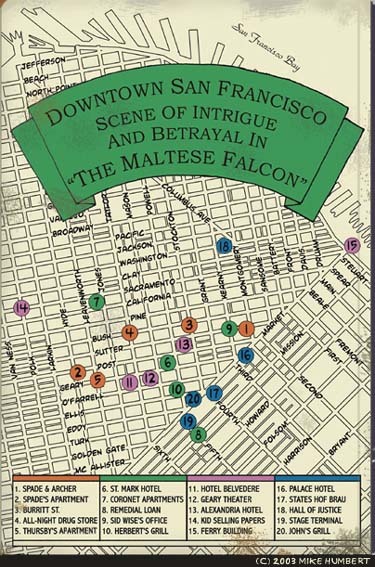
Watching The Maltese Falcon last month inspired me to read the original. It’s cool to see the names of streets and places I recognize. When I visited SF last year, my hotel was right in the thick of it.

The Case For An Older Woman « OkTrends. And there’s data to back it up, it seems. I thought this was interesting: “Because men’s dating preferences skew so young, and women’s are age-equitable, men peak later, and have a longer plateau of desirability, than women.” The OkTrends blog is of the most consistently interesting out there.

Music = dye

I’ve been listening to more Indian classical music lately, so I was reading about ragas, these traditional musical forms that guide how you play and develop a piece. Instructions for creating a mood, if I can semi-ignorantly generalize. And take a look at the etymology…

Raga. 1788, from Sanskrit raga-s “harmony, melody, mode in music,” literally “color, mood,” related to rajyati “it is dyed.”

I like this idea of music as a “dye” for the mind.

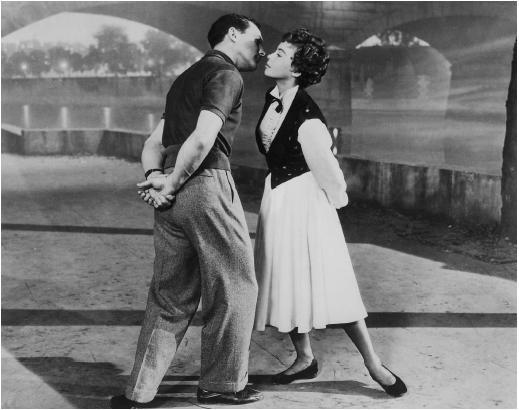
Oscar Levant daydreams a total performance of Gershwin’s Concerto in F. From the film “An American in Paris”.

The September Issue

The September Issue. This was mostly interesting for the visual spectacle. As a “story” it falls flat. It’s more a series of snapshots. The goal is to produce the Biggest Magazine Ever in the history of anything, but there’s no strong sense of beginnings, endings, middles, challenges. Perhaps there’s no proper place to begin watching a process that happens 12 times a year every year, but you still want some kind of narrative handhold. As for the people… of Vogue editor-in-chief Anna Wintour, you don’t learn much directly, but watch her meet and quietly decree. It is pretty amazing how everyone just folds around her. Well, almost everyone. The magazine’s creative director, Grace Coddington is presented as the warmer, romantic foil to Wintour’s frosty business demeanor. Perhaps the most interesting bit of process was seeing the storyboarding of the magazine. There’s a separate room where they’d lay out potential photoshoots on a table, then select and sort the miniature 2-page spreads on a big wall, shuffling and reshuffling pages until press time.

billa:

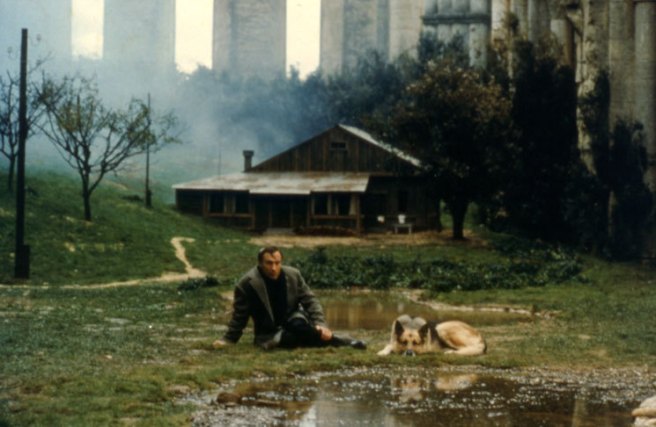
Color photograph of a set from Tarkovsky’s “Nostalghia”, in which the director built a 1/3 scale model of his childhood home within the ruins of a bombed out cathedral.

via judesays

I simply want to celebrate the fact that right near your home, year in and year out, a community college is quietly — and with very little financial encouragement — saving lives and minds. I can’t think of a more efficient, hopeful or egalitarian machine, with the possible exception of the bicycle.