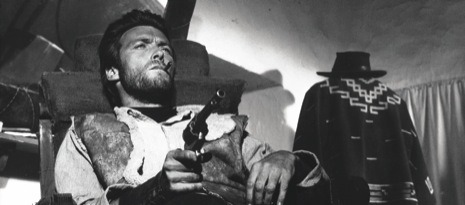
Out of the West: Clint Eastwood’s shifting landscape by David Denby for The New Yorker. My relatively new Eastwood obsession means of course I dropped everything to read it. Lots of good stuff in this article.
Out of the West: Clint Eastwood’s shifting landscape by David Denby for The New Yorker. My relatively new Eastwood obsession means of course I dropped everything to read it. Lots of good stuff in this article.
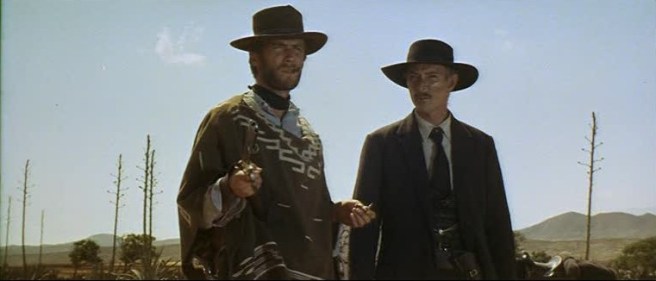
For a Few Dollars More. I’ve finally finished the Dollars Trilogy. This one is great. I found it much better than A Fistful of Dollars and almost up there with The Good, The Bad and the Ugly. The first duel in this movie is either the first or second best in the whole trilogy. I love the way Leone builds from silence to melodramatic swells of music and back to silence and only then gives you resolution. And nice little details like in the delightful hat duel where every time Eastwood shoots the hat it lands in a pool of light. And the repeated appearance of the safe during the bank robbery scene. You know something is going to happen with/to/near/around it, but you gotta wait for the moment. Sweet, sweet suspense.
I’m to make my first trip to Los Angeles in just a couple weeks. I will bring my elastic pants.
Manhattan may boast the highest concentration of high-end restaurants in the world, and Singapore hawker centers may pack more joy into each square inch, but Los Angeles is the best place in the world to eat at the moment, a frieze of fine dining overlaying a huge patchwork of immigrant communities big enough and self-sustaining enough to produce exactly the food that they want to eat.
A piece about painter Thomas Kinkade and the California real estate market.
We have to accept that the violent orange glow that emanates from the interior of nearly every house in a Kinkade painting merely indicates that the house is warm and inviting, not burning to the ground. […] He says that as the son of a single mother who worked late, he often came home to a house that was dark and cold, especially in winter. The “Kinkade glow” represents what he wished was there instead. He tells the story more than once, which raises a question or two: Didn’t he maybe just want to burn the place down? Is his art really a form of arson?
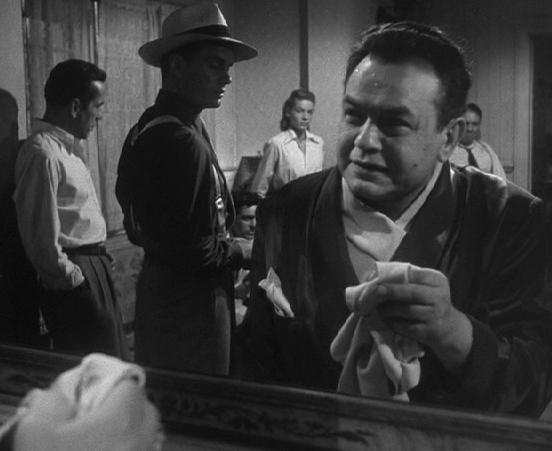
Key Largo. “Your head says one thing and your whole life says another. Your head always loses.” This was a drawing-room crime/suspense film with relatively low stakes. It turned out to be pretty good, but could use some trimming. Edward G. Robinson really carries it.
Sorry about the couple photo-less posts in a row, but you have to hear this: Alex Ross’s “Top Ten Glissandos.”
For maximum effect, press all the buttons in quick succession.
(via Unquiet Thoughts)
This is delightful. Might I also suggest The Beatles’ A Day In the Life?
Alice in Wonderland (1903). “The first-ever film version of Lewis Carroll’s tale has recently been restored by the BFI National Archive from severely damaged materials.” (via)
People say you teach during the day and you’re free at so-and-so, but there’s a certain energy that goes into teaching people, it seems to me… and if you don’t give them that energy, then you’re immoral. And if you do give them that energy, then you’re wiped out. Because there’s only so much energy anyone has. So I’d rather drive a cab – I had a good time driving the cab, I wasn’t invested in it, you know what I mean? I could think about music, I could bug the cab, I could take time off to play a show – it really fit me. And I was making more money than most assistant professors too!
You should be able to anticipate your first drink after the day’s work and use it to refresh your spirit and relax your mind. It should awaken senses dulled at the office and by the speed and distances of contemporary life. It should move you from the determined needs of a workday to a thoughtful consideration of the better and more charming aspects of living and talking and reading. Anticipation should not be underrated as an aspect of any aesthetic experience.
And also: “Drinks that don’t taste of alcohol were developed for coeds and the saps who try to get them drunk.”
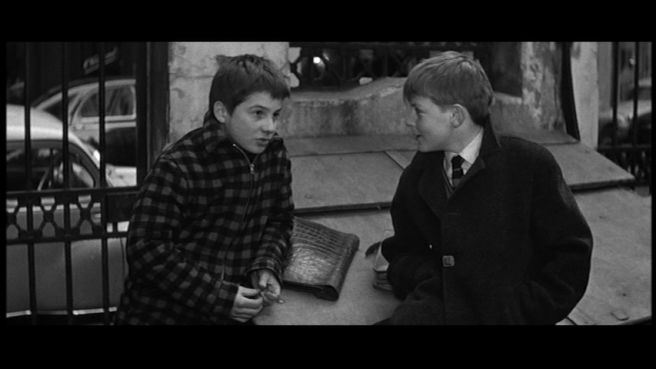
The 400 Blows. I really liked this movie. Truffaut found some great young actors. Good laughs and good music to boot.
Lately, I’ve been wondering if sitting quietly in a café, pretending to read a newspaper, and not writing is the most earnest expression in our age: no echoes of language, nothing to reblog, just pure unmitigated self sitting with self. I might, after a time of blank staring, find myself constructing a sentences in my head, maybe a paragraph, simply letting the words roll around in my mind. I will not. I repeat. I will not write them down. They are my secret sentences, not yours.
“Today, according to the ISU, figure skating’s governing body, ‘Ladies must wear a skirt. The Ladies dress must not give the effect of excessive nudity inappropriate for an athletic sport. Men must wear full-length trousers: no tights are allowed and the man’s costume may not be sleeveless.’”

A flock of starlings on a page from “The Curse” in Kevin Huizenga’s Curses. [@melanie made me think of it.]
“The kind of wines one loves in blind tastings are not necessarily the kind of wines one actually likes to drink in real life.” See also: Pepsi vs. Coke. I’m wondering how this would apply in a museum, perhaps. Maybe what you like to gawk at for a few moments in a gallery is different from what you’d want in your living room. Is there psychological concept for liking different things depending on the length of exposure?
Hear ‘Have One On Me’ In Its Entirety. Finally.
“A few weeks of ignoring can easily buy parents extra years of good sleep.” Mental note: train my future kids to not expect me to comfort them in the dark of night.
Ignoring: There Is Such a Thing As Free Sleep, Bryan Caplan | EconLog

HWY 66, New Mexico, 2007, 5 ft x 5 ft, archival digital print by Chung Fanky Chak. I stumbled on his work at Eyedrum this weekend. I also like the five Japan prints in this project.
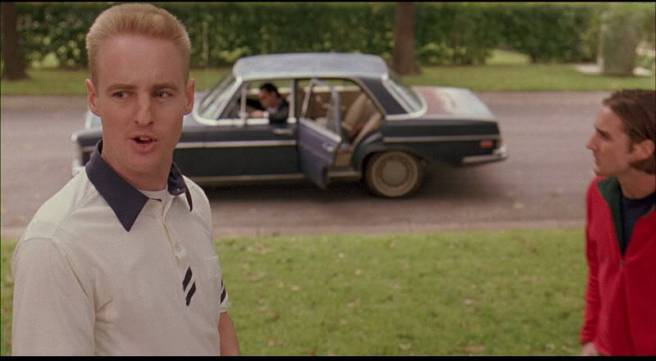
Bottle Rocket. Eh. I’d like to see the short film that was the germ of this full-length one. My current Wes Anderson rankings: 1. The Darjeeling Limited 2. The Royal Tenenbaums 3. Bottle Rocket 4. Rushmore. I wonder if I’d like his movies more if I’d seen them as serials? Seems like a more forgiving format for these somewhat aimless stories, but still have some interesting moments sprinkled around.

 Mark Larson