
Up on the Dirt Pile.
Whatever it is you have never done before in your life and have no interest in doing, that’s probably what you’ll need to learn in order to keep your business running. Accounting, sales, inventory management. These are all things I’ve had to take on. These are also things that I would rather not do for the rest of my life. And while I’ll never be a crack accountant or a star salesman, it’s better to be mediocre than incompetent.
The question arose as to what we would do differently if we were immortal. […] I answered that I would travel more. Later the question was asked, what would you do differently if you found out you had only a short time to live. I answered again that I would travel more. Click, buzz, whirr…does not compute, does not compute. […] Given that I would travel more if I was to live either less or more, the probability that I was at just that level of mortality that I should not be traveling now must be vanishingly small.
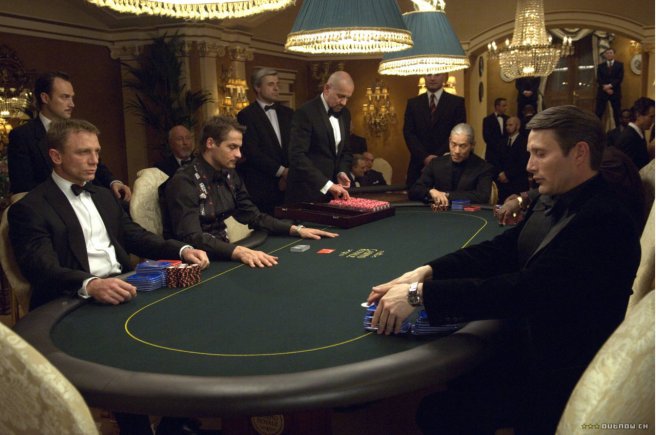
Casino Royale. I admitted on Twitter that I’d never seen a post-Dalton Bond film and asked for recommendations. This was the clear favorite. I like this reboot. Craig is excellent. The movie is kinda Bourne-y, and therefore great as an action film. It’s kinda eehhhhh if you’re looking for clever spy things. (Chasing baddies by text messages they leave behind on cellphones? Surely it’s harder than that…) It has basically no sense of humor. It’s a bit too long. Appropriately glamorous photography. Soundtrack is nothing special, but I really appreciate withholding the main theme until the closing credits. The arc of storytelling is not the revelation and denial of a grand evil plot; it’s gloomy, reckless Bond becoming Bond. Looking forward to Quantum of Solace!
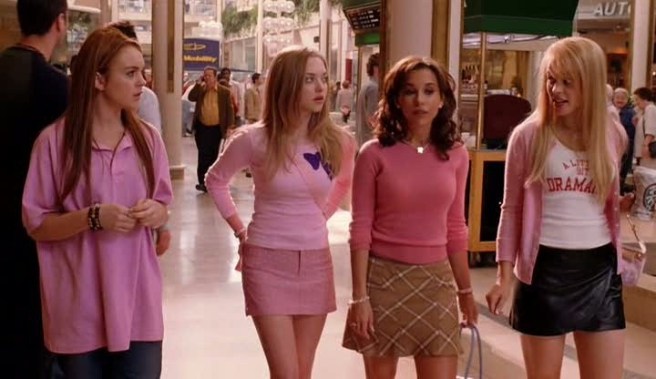
Mean Girls. This is one of the great comedies of our era. So quotable, awesome characters, great pace. Talent is put to perfect use here. I really hope Lohan bounces back some day.
Just in time. The Wirecutter is wonderful.
Atlanta = number 5 in musical artists per capita, behind Beverly Hills, San Francisco, Nashville, and Boston. Eat it, cities not in the top 5! (via)
See also evidence for Atlanta listeners being the among the most influential. We run this.


Eating right is a long-term goal, eating better is something we can start today.
Mindless Eating: Why We Eat More Than We Think is really great. It’s not just prescriptive tactics (eat this, don’t eat that). It takes a bigger perspective, drawing on psychology and environmental influences, and suggests some guidelines with those pressures in mind. Smart, moderate changes over long periods of time.
There’s a double meaning in the title there: there’s “mindless eating” in the sense of the subconscious habits and tendencies we have around food (grazing, over-ordering, overeating, impulse purchases), and there’s “mindless eating” in the sense of re-writing those scripts and re-structuring our eating environments so that our choices about food are easier, healthier and more automatic in a smarter way. And since we make ~200 food decisions a day, relying on willpower alone is a recipe (ha!) for disaster.
Besides, deprivation diets don’t work. Our body and brain and environment tend to conspire against us. There are all kinds of signals and cues, both internal and external, that persuade us to keep eating. That brings us to what author Brian Wansink calls the “mindless margin”. We can only lose roughly half a pound per week without triggering our bodies’ metabolic alarms. It’s science. Lose weight more quickly, and your body panics a bit and starts compensating by being more stingy, storing more fats, etc. If 1 pound is ~3500 calories, we’re talking about cutting 1700 calories/week or 200-300 calories a day. Doable. At that amount, you basically won’t miss it. Slow and steady is the key.
With a modest goal in mind, the books explores a lot of the psychology and research behind eating, and comes up with some simple tactics. Many of these are great even if you’re not trying to lose weight, but just trying to maintain weight or get some better habits:
Great stuff. A couple other parts I appreciated…

The First 20 Minutes is a decent summary of what we know about exercise, at least for those of us who aren’t preparing for the Olympics and are just trying to avoid dying. It’s worth flipping through for a hour or so.
“Exercise more!” Yeah yeah yeah. What’s best here is the attitude. It’s not motivational or encouraging, really, but it’s practical. The author calls out her own failings and averageness, which helps drive home one of the early points: if you’re looking to not die a stupidly early death, you have to exercise, but maybe not as much or as hard as you think. This book pairs very nicely with Mindless Eating. Moderate changes with a long-term attitude will do you a world of good.
The vast majority of exercise’s benefits come with any movement at all above zero. Think power law relationship or Pareto principle. If you get about 150 minutes of walking each week (or equivalent light activity), or about 75 minutes of jogging each week, you drastically reduce your risk of fairly avoidable things like diabetes and heart disease. When it comes to mortality, the benefit of a small activity change like that is right up there with laying off cigarettes. Anything beyond is icing on the cake.
And with that in mind, if you’re not a driven athlete and don’t particularly care to be one, you don’t need to train like one. Spare yourself the need for exercise paraphernalia that people would love to sell you. You don’t need special shoes, special clothes, performance gels or nutritional supplements. Basically the stuff you’ve got and a reasonable diet and you’re good to go. And exercise is going to make your brain even more awesome, too. Better memory, better mood, etc.
There’s also some good myth-busting in this book:
One last interesting idea here was that inactivity has its own physiology. Sitting and laying about cause their own (often negative) processes in the body, like normal gene activities shutting down or enzymes getting made in the wrong proportions. And that’s gonna happen every time you spend a lot of time on your ass. I don’t claim to understand the science, but the point is, exercise can’t reverse all of it. You gotta stand up more. Walk around. Do some more ironing or cooking or carpentry. Pace while you’re on the phone. Dance. Wiggle. Fidget.
One small complaint: I wish this book had a better index.
Wow. Unearthed this 3.5-year-old draft from the dusty back hallways of my computer. Read on for one of the best hikes of my entire life…—
In mid-September [of 2008], just slightly off-season, I spent a couple days hiking Laugavegurinn (translates something like “the warm pools way” or “the hot springs route”) in south-central Iceland. I started at Landmannalaugar and hiked south to Þórsmörk. Immensely helpful in planning my hike, which I sandwiched between some tourist days, were Andrew Skurka’s Iceland page, Jonathan Ley’s Iceland photos and advice, and Ferðafélag Íslands, a group that maintains some of the very nice huts along the way.
The weather wasn’t very extreme, but it did change frequently, like every half-hour or so. Temperatures were mostly in the mid-40s to high 50s F (5-10C). Low-hanging clouds mostly–just a few hours of genuine, full sunshine. No terrible rainstorms, but the occasional rain changed to sun changed to mist change to light rain change to fog, etc. Heavy winds were common, as there was no tree cover until the last 30 minutes of my hike.
I’ve got the full set of photos on the Laugavegur available on Flickr, but here are some highlights:
First morning out, looking back at the hut at Landmannalaugar:

A short walk over a lava field and into the hills beyond:

Unfortunately fog and high winds were the norm on the way to Hrafntinnusker, where the trail skirts a volcanic crater at about 3000 feet. This is where I had repeated moments of being lost and found, lost and found. And when I stopped to take a break with no shelter from the wind, my hands froze. Lesson learned:

I made it over the crest of the volcano and back down, then stopped and warmed up at Höskuldsskáli hut for an hour or so. The old season’s snow had melted, and the new snow hadn’t yet arrived. So the next stretch was up and down and up and down a series of small creek valleys.

Here’s a look back where I came from. The hut is a speck about 1/3 of the way in from the right edge of the image:

Then uphill again, where thankfully the weather was fair enough to see those famous rhyolite hills:

Next was a steep drop down to Álftavatn, where I spent the night:

The second morning featured several very cold river crossings. Bláfjallakvísl was easily the widest, deepest and coldest I’ve ever crossed on foot. Just over knee-deep at the worst, and really swift. NOT fun. VERY stressful. I had to run for about 10 minutes afterward to warm my frozen legs again.

I was glad that the Nyrðri Emstruá had a bridge!

The most of the rest of the day was mostly flat, going through some very cool volcanic wastelands. Only a few little plants could eke out a living there:

I finished the second day in the early afternoon at Emstrur/Botnar hut, so I spent a few hours trail running and exploring the surroundings, like the Markarfljótsgljúfur. The Markar river canyon is about 500 feet/180m at the deepest point.

The third day was the warmest and best weather, the only day I got to wear shorts. The trail snaked down to cross the river at the bottom of the Syðri-Emstruá canyon (Entujökull glacier in the background), then bent back to head towards the right side of this photo:

A walk in the lovely Sandar, a glacial wash, and then up the basalt cliffs in the distance:

Up and over the basalt cliffs, it goes on to the Almenningar plateau:

One last break to reflect on the trip before the last major river crossing…

…and then into the more lush environs of Þórsmörk Reserve:

And lastly, I took a quick jaunt up Valahnúkur while waiting for the bus back to Reykjavik.

I highly recommend this trail if you happen to be nearby. I’d gladly do it again.
What we call a home is merely any place that succeeds in making more consistently available to us the important truths which the wider world ignores, or which our distracted and irresolute selves have trouble holding on to. As we write, so we build: to keep a record of what matters to us.
People exhibit territorial behavior when they take seats in public places, limiting themselves to small areas so they don’t have to “renegotiate” seating arrangements with other people, researchers say. In one study by Marco Costa of the University of Bologna in Italy, university students showed strong attachments to specific areas of a lecture hall; on average, each student made use of just 2.4% to 2.7% of the seating area.
Confession: at college back in the day and at work currently, I’m that jerk that, every so often, likes to take the seat where other people always sit. Always stirrin’ shit up.
Why do you always sit in the same place in meetings? – Barking up the wrong tree
A hushed theater reminds me why I love movies. But a midnight show reminds me why I love going to the movies.
Everybody’s Al Capone in a barber’s chair.
Killer Mike. Also:
Atlanta [is] the post-civil rights city that worked. I think that’s the real legacy. All this foolishness we be doin’ as rappers is just something for the old guys to laugh at,“ he says with a conciliatory chuckle. "They did this on Simpson [Road] 50 years ago.”

The Shawshank Redemption. Second time around. Still don’t like it.
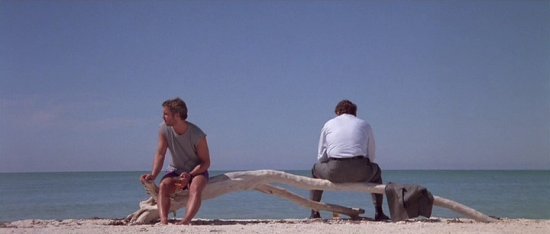
Manhunter. Awesome. Slow-burning Miami-synth-moods thriller. I love the pre-cellphone detective work, cops running evidence from office to office. The sitting and pondering. The prison scene in Atlanta is actually in the High Museum! I now have to see everything Michael Mann has done.
Many people think that in the 1960s I quit my job in an advertising company to write my first novel. Not at all: I just quit so I could go to the movies every afternoon.
Don DeLillo. (via) Echoing the Paris Review interview:
I wish I had started earlier, but evidently I wasn’t ready. First, I lacked ambition. I may have had novels in my head but very little on paper and no personal goals, no burning desire to achieve some end. Second, I didn’t have a sense of what it takes to be a serious writer. It took me a long time to develop this. Even when I was well into my first novel I didn’t have a system for working, a dependable routine. I worked haphazardly, sometimes late at night, sometimes in the afternoon. I spent too much time doing other things or nothing at all.

a new home for everything crocheted, doodled, felted, crafted, cooked, knotted, photographed, and made by my hands. enjoy!
Because why have one tumblr when you can have like 97?

 Mark Larson