
The breakfast table by John Brack. I took a bunch of photos of the art at the Art Gallery of New South Wales, but I think this was my favorite.
The breakfast table by John Brack. I took a bunch of photos of the art at the Art Gallery of New South Wales, but I think this was my favorite.
Body my house
my horse my hound
what will I do
when you are fallenWhere will I sleep
How will I ride
What will I huntWhere can I go
without my mount
all eager and quick
How will I know
in thicket ahead
is danger or treasure
when Body my good
bright dog is deadHow will it be
to lie in the sky
without roof or door
and wind for an eyeWith cloud for shift
how will I hide?
May Swenson, “Question” (via malevichsquare)
I’ve come back to read this a dozen times.
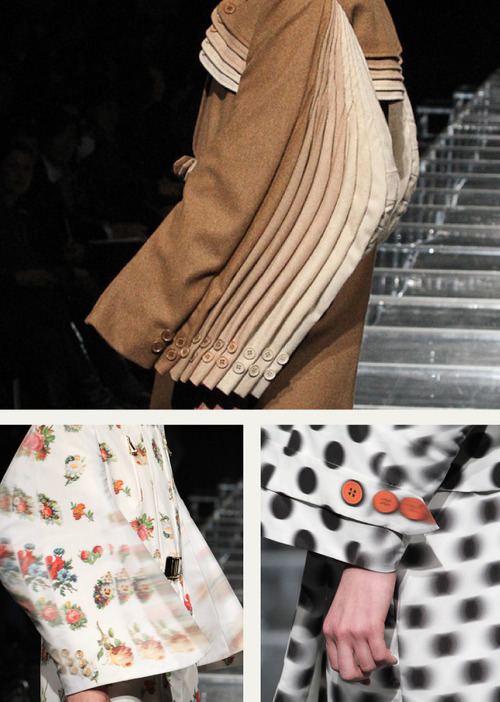
Anrealage, AW12, Tokyo.
In the same way that some of the Futurist artists used stuttering lines to indicate speed and movement, Japanese label Anrealage was able to give the impression of blurry human movements, seen as though captured through the passing of time for the Autumn-Winter 2012 collection.
At first some of the garments trick the viewer into believing the photos are out of focus, with exaggerated silhouettes enhanced using prints and patterns that blur on the edges. However the effect is created through carefully considered print placements and precise pattern cutting.
Blows my mind.
Rivalries are born from teams that play each other a lot. When you’re not in the rivalry and you look back at it, you’re thinking, Well, I hated that guy because he would have made a great teammate.

The Last Word On Nothing | Guest Post: The Art (& Science) of Lefty Portraits.
Consider these simple line drawings of half-smiley, half-frowny faces. In a literal sense, each is equal parts sad and happy. But to most people the emotion on the left side of each face (from the viewer’s point of view) dominates, and determines the overall emotional tenor. There are a few reasons for this…
With a bottle of Soylent on your desk, time stretches before you, featureless and a little sad. […] Soylent makes you realize how many daily indulgences we allow ourselves in the name of sustenance.
Lizzie Widdicombe: Could Soylent Replace Food? : The New Yorker
Doubt is what drives me, the nervousness that I don’t have it anymore. There’s nothing a coach or anyone can say to me that’s more powerful than my own fear that I can’t do it anymore.
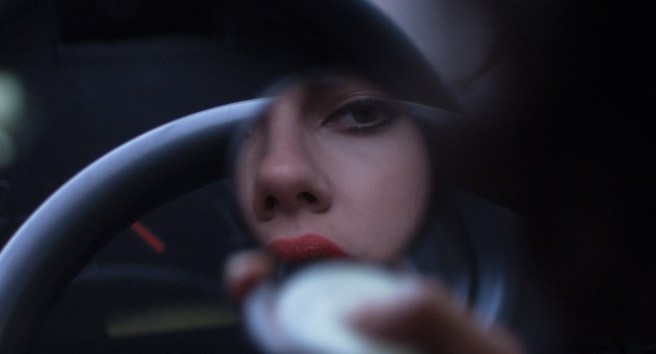
Under the Skin. Even now, a couple weeks later, I’m still not sure if I liked it or not. Which technically is a “yes”, I think. At the least, I appreciate that there’s nothing quite like it.
My father was a very disciplined and punctual man; it was a prerequisite for his creativity…. No matter what time you get out of bed, go for a walk and then work, he’d say, because the demons hate it when you get out of bed, demons hate fresh air.
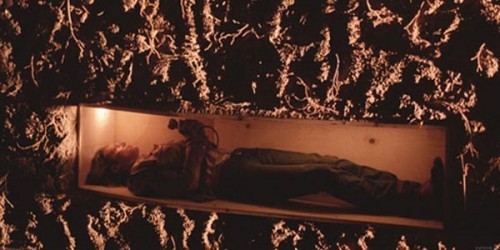
Kill Bill: Vol. 2. The lesser of the two Bills, I say, because there’s so much more talk-talk-talk. It’s thoughtfully done, but I just like the more action-y first one.
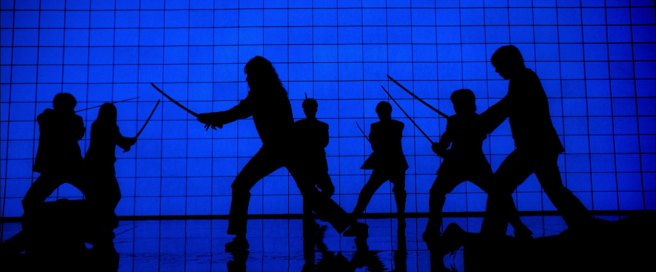
Kill Bill: Vol. 1. The better of the two Bills. Kind of exhausting at times, being submerged in a fanatic’s imagination and obsessions for two hours, but it’s good goofy fun.

La Belle et la Bête (Beauty and the Beast). So creepy and strange and fantastical. Props (so to speak) to the set and costume design and clever special effects.

Frozen. Sorry not sorry: that famous song isn’t very good – and especially not in comparison to “In Summer”. Good movie overall, though. The state of animation today just blows my mind.
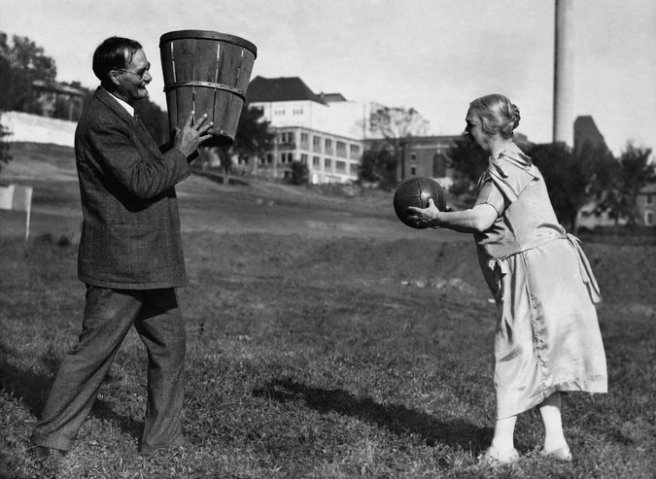
“James Naismith in 1928, holding a peach basket for his wife, Maude, to make a shot.”
Blessed with 20/20 hindsight, we’re now able to look back on a given era’s “future” and glean some of what was percolating through the collective unconscious.

If Tyler Cowen, Austin Kleon, and Ben Casnocha all recommend a book, I don’t really need another nudge. I loooooooved Mohsin Hamid‘s How to Get Filthy Rich in Rising Asia.
Two structural things you don’t see very often in fiction: it’s written in the second person, and the novel’s chapter titles and general format are plays on the self-help genre (“Move to the City”, “Get an Education”, “Don’t Fall in Love”). In the story, the protagonist (uh…”you”) is a third-world scrub who gradually climbs his way up the social ladder. I really appreciated the perspective on economics and daily life in a world that that’s not all that familiar.
Some favorite parts:
You read a self-help book so someone who isn’t yourself can help you, that someone being the author.
Some understated humor on receiving bad news:
You take this news as well as possible, which is to say you do not die.
So much awesome imagery and color in this one. As in this classroom scene, where students look on as one of their classmates gets on the wrong side of their teacher:
They watch in horrified fascination, like seals on a rock observing a great white breaching beneath one of their own, just a short swim away.
On becoming a parent:
Fatherhood has taught you the lesson that, even in middle age, love is practicable. It is possible to adore those newly come into your world, to envision, no matter how late in the day, a happily entwined future with those who have not been part of your past.
On books:
Writers and readers seek a solution to the the problem that time passes, that those of us who have gone are gone and those who will go, which is to say every one of us, will go. For there was a moment when anything was possible. And there will be a moment when nothing is possible. But in between we can create.
On taking out a business loan:
With borrowed funds, a business can invest, gain leverage, and leverage is a pair of wings. Leverage is flight. Leverage is a way for small to be big and big to be huge, a glorious abstraction, the promise of tomorrow today, yes, a liberation from time, the resounding triumph of human will over dreary, chronology-shackled physical reality.
That passage hints at what’s particularly hard to capture: the restless energy in this book. It just keeps coming and coming, so much invention, and it’s so fun to read. I wouldn’t be surprised if I reread this one soon.


“Comedy thrives inside a fixed frame. It’s not an essential element, but as with dancing and magic tricks, it’s always more impressive if the viewer can see the performer’s hands and feet at all times. In Sherlock, Jr, Keaton moves the camera when he has to, during all of the movie’s crazy chases. But even then, the motion is limited: Keaton tracks alongside the actors, or he attaches the camera to the front of one of the moving vehicles so that he can keep all the action inside the rectangle.Sherlock, Jr. is at its funniest, though, when the camera stays still, and the characters move in and out, like figures in a side-scrolling platform videogame. Maybe that’s because the fixed frame emphasizes the characters as characters, arriving into the picture exactly when needed for the plot—and sometimes remaining stuck there, like the projectionist, never confident that he can find a way to break out of the box.”
Noel Murray kicks off our Movie Of The Week discussion of the 1924 classic Sherlock, Jr. with an examination of how Buster Keaton’s physical comedy thrived in a fixed environment of boxes and lines. [Read more…]
Buster Keaton insta-reblog rule in effect.


 Mark Larson