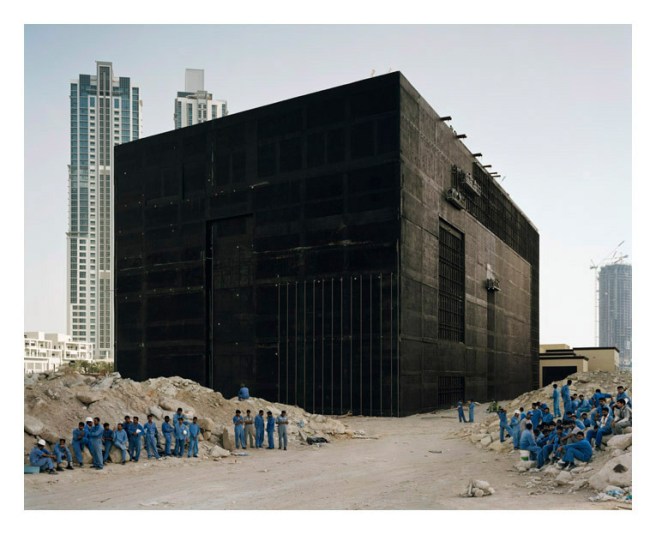
Cooling plant (Dubai) 2009 by Bas Princen. I love this photo. Came across it in the current issue of Harper’s.
Cooling plant (Dubai) 2009 by Bas Princen. I love this photo. Came across it in the current issue of Harper’s.

Los Angeles-based artist Steve Roden has worked in an overwhelming variety of forms throughout his career, creating everything from conceptual recordings and sound installations to color field paintings and experimental films. For his latest project, Roden has teamed up with Atlanta-based record label and publisher Dust-to-Digital to release a book and two cds culled from his extensive collections of early photographs and 78 rpm recordings. (via Preview: Steve Roden’s collections at the Contemporary | Atlanta A&E Blog)
It might reasonably be said that all art at some time and in some manner becomes mass entertainment, and that if it does not it dies and is forgotten.
You cannot meet someone for a moment, or even cast eyes on someone in the street, without changing. That is my subject.
When you visit New York City, you worry about whether you are being a tourist, about whether you are doing as the locals do. Same with visiting Paris, Rome, London. But in Las Vegas, everybody is a tourist. Anybody who’s not a tourist works in the tourism/hospitality industry. There is no real thing. It’s fake all the way to the bottom. The very idea of a sprawling, water guzzling city that sits in the middle of barren desert is too absurd to take seriously.
See also Richard Thompson & Communicatrix on cultural neutrality.
Ben Casnocha: The Blog: Las Vegas: Authentically Unauthentic
http://www-tc.pbs.org/video/media/swf/PBSPlayer.swf
Watch the full episode. See more Austin City Limits.
Austin City Limits Pilot Episode: Willie Nelson. Recorded October 17, 1974. (via)
Green Tunnel. The Appalachian Trail lives up to its nickname in this stop-motion journey. Man, this takes me back. Was it really 6 years and 4 years ago?
https://www.tumblr.com/audio_file/mlarson/3877420797/tumblr_li2xqux5wK1qzdvhi?plead=please-dont-download-this-or-our-lawyers-wont-let-us-host-audio
http://mlarson.tumblr.com/post/3877420797/audio_player_iframe/mlarson/tumblr_li2xqux5wK1qzdvhi?audio_file=https%3A%2F%2Fwww.tumblr.com%2Faudio_file%2Fmlarson%2F3877420797%2Ftumblr_li2xqux5wK1qzdvhi
Duke Ellington – Midnight Indigo (via Anatomy of a Murder: Original Motion Picture Soundtrack)
One of the great soundtracks.
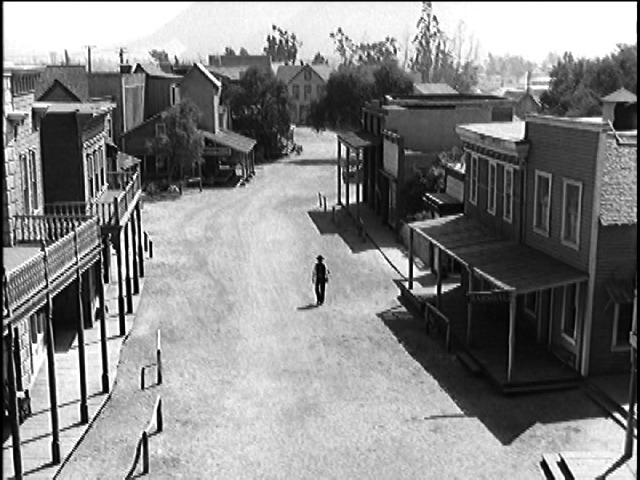
High Noon. Great movie. Here are some very good reasons to watch it: 1. It takes place in real time – 85 lean, tense minutes. The deadline is firm. No dilly-dallying. 2. There’s plenty left unsaid/implied. I love when the backstory and mechanics aren’t fully clear and you end up guessing (often along with the characters themselves) and interpreting relationships based on a few clues here and there – a gesture, a look, a rhythm of conversation that suggests years. (And in this movie, given that the plot hinges on an event approaching at noon, there’s not much time for backstory, either.) 3. Gary Cooper is really good. I need to see more with him. 4. Grace Kelly. 5. It’s the first film appearance of Lee Van Cleef.
Odds are good that you primarily know one sort of person: highly educated, high-achieving, extremely cerebral, etc. Odds are also good that you give too much weight to feedback and ideas from this sort of person, while discounting arguments and complaints from people who don’t know the right way to persuade you. Try to keep that in mind.

Glenn Gould, March 1955, at the Columbia studio in New York during the recording sessions for the Goldberg Variations. Photo by Gordon Parks for LIFE. PIANIST GLENN GOULD | REJECTING THE ‘BLOODSPORT’ CULT OF SHOWMANSHIP « The Selvedge Yard.
Meek’s Cutoff – Trailer. An upcoming western directed by Kelly Reichardt, who did Old Joy, which I saw and loved a few years ago. I’ve got high hopes for this one.
IT’S AMAZING WHAT SOME SLEEP WILL DO FO A MUTHA FUKA!!
Ambient music + Los Angeles police radio. This is awesome. (via)
“This is Keith Houston’s blog about the unusual stories behind some well-known — and some rather more outlandish — marks of punctuation.”

Woody Guthrie’s New Year’s Rulin’s, 1942. (via). See also Johnny Cash’s to-do list and David Foster Wallace on the philosophical depth of country music.
- Work more and better
- Work by a schedule
- Wash teeth if any
- Shave
- Take bath
- Eat good – fruit – vegetables – milk
- Drink very scant if any
- Write a song a day
- Wear clean clothes – look good
- Shine shoes
- Change socks
- Change bed clothes often
- Read lots good books
- Listen to radio a lot
- Learn people better
- Keep rancho clean
- Don’t get lonesome
- Stay glad
- Keep hoping machine running
- Dream good
- Bank all extra money
- Save dough
- Have company but don’t waste time
- Send Mary and kids money
- Play and sing good
- Dance better
- Help win war – beat fascism
- Love Mama
- Love Papa
- Love Pete
- Love everybody
- Make up your mind
- Wake up and fight
Before we learned to tell stories, we learned to read them. In other words, we learned to track. The first letter of the first word of the first recorded story was written–“printed”–not by us, but by an animal. These signs and symbols left in mud, sand, leaves, and snow represent proto-alphabets. Often smeared, fragmented, and confused by weather, time, and other animals, these cryptograms were life-and-death exercises in abstract thinking. […] The notion that it was animals who taught us to read may seem counterintuitive, but listening to skilled hunters analyze tiger sign is not that different from listening to literature majors deconstruct a short story. Both are sorting through minutiae, down to the specific placement and inflection of individual elements, in order to determine motive, subtext, and narrative arc.
John Vaillant in his excellent book, The Tiger: A True Story of Vengeance and Survival. Great storytelling and lots to learn about tigers and Russia. I also liked this bit:
Evidence suggests that the reason tigers and their kind continue to capture our attention is because, over time, this has proven the most effective way to prevent them from capturing us. Maybe this is why it is impossible not to wonder what Markov and Khomenko saw and felt in their last moments–an experience so aberrant and alien to us, and yet strangely, deeply familiar: there is a part of us that still needs to know.

 Mark Larson