A Prayer That Will Be Answered

Lord let me suffer much
and then die

Let me walk through silence
and leave nothing behind not even fear

Make the world continue
let the ocean kiss the sand just as before

Let the grass stay green
so that the frogs can hide in it

so that someone can bury his face in it
and sob out his love

Make the day rise brightly
as if there were no more pain

And let my poem stand clear as a windowpane
bumped by a bumblebee’s head

Anna Kemienska’s poem from The Book of Luminous Things, translated from Polish by Stanislaw Baranczak and Clare Cavanagh. Via malevichsquare.

Filed under: poetry, prayer.

Meditations (review)

Meditations

Your mind will take on the character of your most frequent thoughts: souls are dyed by thoughts.

Funny to think how I am still very much myself. Same Mark, more detail. If you overlapped all my pattern-stereotypes I had around 1992, you’d get a pretty good picture of me today of what 2012 Mark is like.

Summer of last year, I started reading more works of and about Stoicism, and that led to tumbling a lot of stoicism quotes. This was not a new interest by any means. I remember thinking Stoics were cool back in childhood, when I first learned about them. I think my interest then was more of a tough-guy, counter-culture, I-am-a-rock/island sort of thing. Maybe a way of validating introversion, independence, self-protection.

Men seek retreats for themselves–in the country, by the sea, in the hills–and you yourself are particularly prone to this yearning. But all this is quite unphilosophic, when it is open to you, at any time you want, to retreat into yourself. No retreat offers someone more quiet and relaxation than that into his own mind, especially if he can dip into thoughts there which put him at immediate and complete ease: and by ease I simply mean a well-ordered life. (4.3)

I remember picking up Marcus Aurelius’ Meditations on at least three different occasions, but never finishing. In fact, barely starting each time. Some lessons can’t be learned early, I guess. I still like the independent-minded ideas, but I think now a lot of what gets me are the ideas of acceptance, attitude, gratitude (which is the focus of the entire amazing first chapter). And, yeah, being hard on myself….

They cannot admire you for intellect. Granted–but there are many other qualities of which you cannot say, “but that is not the way I am made”. So display those virtues which are wholly in your own power–integrity, dignity, hard work, self-denial, contentment, frugality, kindness, independence, simplicity, discretion, magnanimity. Do you not see how many virtues you can already display without any excuse of lack of talent or aptitude? And yet you are still content to lag behind. (5.5)

I bookmarked the hell out of it when I was reading and made a bunch of notes to myself (hypomnema!). I’ll probably be turning back to this one for a long time to come. All the quotes below come from Martin Hammond’s translation. The numbers refer to chapter and sub-section, should you decide to pick up this book. Which you should do.


On gossip. (3.4)

Do not waste the remaining part of your life in thoughts about other people, when you are not thinking with reference to some aspect of the common good. Why deprive yourself of the time for some other task? I mean, thinking about what so-and-so is doing, and why, what he is saying or contemplating or plotting, and all that line of thought, makes you stray from the close watch on your directing mind.

On hurt and its source, our compulsion to draw conclusions and render judgement on what has befallen us. (4.7)

Remove the judgement, and you have removed the thought “I am hurt”: removed the thought “I am hurt”, and the hurt itself is removed.

On revenge. (6.6)

The best revenge is not to be like your enemy.

On transience. There were several moments of this kind of beautiful writing that makes you slow down or rest the book and think it over. (6.15)

Some things are hurrying to come into being, others are hurrying to be gone, and part of that which is being born is already extinguished. Flows and changes are constantly renewing the world, just as the ceaseless passage of time makes eternity ever young. In this river, then, where there can be no foothold, what should anyone prize of all that races past him? It is as if he were to begin to fancy one of the little sparrows that fly past–but already it is gone from his sight.

On history repeating and our shared universal experience. (6.37)

He who sees the present has seen all things, both all that has come to pass from everlasting and all that will be for eternity: all things are related and the same.

On adapting to and embracing what is, caring. (6.39)

Fit yourself for the matters which have fallen to your lot, and love these people among whom destiny has cast you–but your love must be genuine.

On composure, comportment, grace, style. (7.60)

The body, too, should stay firmly composed, and not fling itself about either in motion or at rest. Just as the mind displays qualities in the face, keeping it intelligent and attractive, something similar should be required of the whole body. But all this should be secured without making an obvious point of it.

On vice and keeping good company. (7.71)

It is ridiculous not to escape from one’s own vices, which is possible, while trying to escape the vices of others, which is impossible.

On change, being wrong, graciousness. (8.16)

Remember that to change course or accept correction leaves you just as free as you were. The action is your own, driven by your own impulse or judgement, indeed your own intelligence.

On looking back, looking forward, being present, letting go. (8.36)

Do not let the panorama of your life oppress you, do not dwell on all the various troubles which may have occurred in the past or may occur in the future. Just ask yourself in each instance of the present: “What is there in this work which I cannot endure or support?” You will be ashamed to make any such confession. Then remind yourself that it is neither the future nor the past which weighs on you, but always the present: and the present burden reduces, if only you can isolate it and accuse your mind of weakness if it cannot hold against something thus stripped bare.

On simplicity, kindness, perseverance, virtue. Like water off a duck’s back. (8.51)

If a man were to come up to a spring of clear, sweet water and curse it–it would still continue to bubble up water good to drink. He could throw in mud or dung: in no time the spring will break it down, wash it away, and take no color from it. How then can you secure an everlasting spring and not a cistern? By keeping yourself at all times intent on freedom–and staying kind, simple, and decent.

On fame, attention, transience, obsessions, Facebook, death. (10.34)

All things are short-lived–this is their common lot–but you pursue likes and dislikes as if all was fixed for eternity. In a little while you too will close your eyes, and soon there will be others mourning the man who buries you.

On duty, openness, constancy, honesty. (11.27)

The Pythagoreans say, “Look at the sky at dawn”–to remind ourselves of the constancy of those heavenly bodies, their perpetual round of their own duty, their order, their purity, and their nakedness. No star wears a veil.

On dying. (12.36)

It is like the officer who engaged a comic actor dismissing him from the stage. “But I have not played my five acts, only three.” “True, but in life three acts can be the whole play.” Completion is determined by that being who caused first your composition and now your dissolution. You have no part in either causation. Go then in peace: the god who lets you go is at peace with you.

Favorite movies of 2011

I watched a lot of movies last year, 82 if my count is right. I re-watched some favorites (Out of the Past, Alien, Back to the Future), but I kept these monthly selections focused on new-to-me stuff. Out of all of them, I think Winter’s Bone and Apocalypto were really amazing movies that you’d be a fool to miss. All the links go to my tumblr, where you’ll find whatever brief or sometimes rambling commentary I had in mind after watching. Right now I’m too lazy to get images like I did for my favorite albums of 2011. So here’s the quick text-only run-down, mostly to give you an encouraging nudge if you get the chance to see them:
January
The American

February
Double Indemnity
The Virgin Suicides
Brazil
Force of Evil

March
High Noon
Chinatown
Winter’s Bone

April
Some Like It Hot
The Social Network

May
Shotgun Stories
ATL
Guess Who’s Coming to Dinner

June
127 Hours, by default.

July
Days of Heaven

August
3:10 to Yuma
The Last Days of Disco

September
Apocalypto
The Seventh Seal
Ivan’s Childhood

October
Drive
Mystic River
Scarface (1932)

November
Martha Marcy May Marlene
Badlands

December
D.O.A.
The Purple Rose of Cairo
The Artist

When you’re in denial about how invested you are in a single outcome, that’s when unrealistic expectations creep in.

Hunger

Hunger. Not sure how I feel about this one overall. I was glad Bobby Sands wasn’t really portrayed as martyr-hero or villain-fool, just a really committed guy. Much more about the choices of a life than the politics that motivate them. I wish the dreamy bits at the end had been chopped down a bit, maybe a better balance with the first two acts that way.

Uncouple your own grief from the hopes you pin on others. All relationships stand alone; there are no replacements.

They say you only live once but every time I come to work I feel like I’m starting a second life.

Kanye West on the transformative power of creative endeavors.

Louis CK Q&A – JonahWeiner.com

Well, this is awesome. (via) Here we have an edited transcript of Jonah Weiner’s interview with Louis CK that was used for the Rolling Stone profile last fall. Lots of good stuff here. Here’s Louis CK on the importance of those early failures and growing experiences:

Stand-up, I didn’t know what that was going to feel like. I guess I thought it would feel like it does in TV shows or movies: they’re going to laugh. That’s part of it, right? You tell a joke and then they laugh. It has this feel to it that I knew, and boy, when you realize how wrong you are, that’s a fucking cold slap in the face. I think that’s true of anybody’s first time. […] You need to enter stand-up with that cold slap in the face, or you’ll never really understand what you’re doing.

This next part rang really true for me. I thought for a long time that I was headed to grad school right after college, but each fall afterward I just couldn’t bring myself to do the paperwork. That’s me sending myself a message. CK on resisting college and keeping a day job while he chased his dreams (cf. Steve Reich):

An old teacher of mine got me an interview at NYU film school, and I brought all these videos I’d made, and photographs, a portfolio – I’d gotten into photography and stuff, and they said that they would accept me to go to film school. So I quit my job with that in mind, and I’d been doing stand-up, but not well or successfully, and then I never filled in – I got these forms from this guy to fill in, on the floor of my apartment somewhere, but I couldn’t get my brain to…I was supposed to go back to my high school and get my transcripts, and the idea of doing all that, just that paperwork – going to NYU film school was this dream come true for me, but I couldn’t fill out the thing, couldn’t fill it out and go to the Xerox machine and put a stamp on an envelope, all that stuff. It made me want to vomit. That sort of thing has always been the case for me, I can’t get that done. That’s why I have an assistant. Now if I just dream up shit I want to do, I have her to take care of it.

So I decided, “Fuck it, I’m a comedian. I’m just going to do that, I’m going to stay in Boston.” That’s when I worked at the garage. I stopped working at local-access cable. I drove a cab for a while. I started taking shitty jobs so I could do stand-up, I didn’t want an all-encompassing job. I liked that, I just liked having dead-end jobs and doing stand-up. I thought, “Fuck it, that’s what I’m going to try to do.” I had an instinct that if I just kept hammering it and hammering it, I had a head start on people, I was very young, and I was resilient, I didn’t mind living stupidly, I wasn’t anxious about making a living, just played it close to the bottom for a long time, and I knew how to do that, it didn’t bother me. I liked the freedom, I didn’t have a job-job, I’m not working for a company, I’m not going to a school, I live on my own.

And, wow, on the typical sitcom plot:

With a lot of these shows, I know what’s going on, and I think the audience does, too. Here comes the part where they’re going to walk in the door while the credits are still rolling. They’re going to trade quick barbs, “What did you do?” “I went to the store to get a coffee and they had the Michael J. Fox coffee today, so they spilled it.” “Oh, ha ha ha.” “What happened to you today?” Kind of inconsequential jokes. Joke, joke, joke, then somebody goes, “Somebody was here to ask you about this” – here comes the story, and it gets quiet, and then, “Oh, I can’t go, because I have this thing,” “He’s only in town for one day,” and now we’re laying pipe and it’s getting quiet. “What are you going to do about that?” “I don’t know,” because here’s a joke about the character that is an outside world joke or observational joke, and then the blow, the big fucking blow to get out of the scene – you have to have a blow, a big enough laugh, and it’s something really contrived: people sat there in the writer’s room, fucking eating fast food and going, “Where’s the blow for this scene, I want to go home.”

Then here comes the funny character, the guest star, who’s in town, and we find out what the lead character hates about him, and then there’s the guy, the character, that carries all the jokes. He says dumb things and keeps it going, there’s this energy, he’s like a circuit or something, just does this one thing. […] So there’s a guy on every show that does that, he has his one way, he has his variety, about eight different joke formulas, and you refill them with different stuff. He’s either the dumb guy or, like, Lisa Kudrow’s character on Friends or whatever. “I thought coffee was from Brazil.” “Ugh, no the guy’s name is Coffee. He’s from Italy.” Garbage like that. Then you start building the story, then you go away on an act break. Then you build a third act that just is the train wreck of not really much fun, but it pays everything off, it leaves everybody feeling exactly the same way they left, that they felt before the show started. That’s what shows are meant to do, is leave on par and leave a few jokes behind, to be printed in Entertainment Weekly’s sound bites.

On kids and growing up:

Having kids, you don’t escape from it, you seize onto it, it’s a big, stressful, exhilarating, real life thing. And it’s permanent, it’s something that you have to evolve for. Some people don’t, but I think you have to actually change your values system, and you have to revolutionize yourself in order to do it properly, because kids can’t raise kids, and I think you’re somewhat a kid until you have them, then you really have to grow up.

Lastly on being in control, experimenting, being wrong, being interesting:

I’m not a dictator, because I’m not in control of anything, I’m just deciding what to try. To me, it’s not that I control a bunch of people, it’s just that nobody controls me. There’s nothing above me except responsibility to the product. That’s the ultimate responsibility, is if the show sucks, then what was the fucking point of being in charge? I’m right about these things on the show, and when I’m not, it’s interesting to watch me be wrong. I don’t think you have to be perfect, you just have to be compelling in the work you do.

Louis CK Q&A – JonahWeiner.com

Right on Cue – Ta-Nehisi Coates – The Atlantic

Age, like all power constructs, (race, gender, class) encourages it’s own ignorance. To not know is a luxury of power. You don’t have to know Their Eyes Were Watching God. But I damn sure better know The Scarlet Letter. (It’s bad enough I’m slipping on Twain.) Age turns ignorance into a luxury, and worse, if you don’t recognize it as a luxury you start to think everyone is as clueless as you. And of course you’re clueless that any of this is even going on. It’s just a bad look all around.

(via)

Right on Cue – Ta-Nehisi Coates – The Atlantic

Super 8 as an Allegory on the Triumph of Digital FX « Pancake Dominion

When a filmmaker makes totally 100% sure that even the most moronic audiences notice some non-plot thing in his film, there’s almost always a solid reason for it.

This brings to mind complaints about, for example, Mel Gibson’s detailed, graphic violence or Tarantino’s fountains of blood and foul language. It might be excess, it might be artistic signature, it might mean something. Note to self: it might be better to assume thoughtful intent, rather than be dismissive or complain about part of a movie/book/song I don’t like. Seek ye first to understand. Whether it works or not is another thing.

Super 8 as an Allegory on the Triumph of Digital FX « Pancake Dominion

The Gollum Effect

Extreme couponers, if you count the value of their time, basically make a modest living doing below-minimum-wage marketing work for the coupon-based marketing universe that welcomes them as raving fans.

From the point of view of the stores, far from being hostile opponents in some asymmetric game of chess, these are merely cheap and committed marketers. They are encouraged to model, in extreme ways, the very couponing behaviors that the marketing machine wants others to emulate in less extreme ways.

Which is exactly what happens. So long as you and I casually clip and use coupons, inspired by the extreme couponers in our midst, the grocery stores still comes out on top. If the extreme couponers’ leadership behavior were to actually lead to large-scale loss-driving sedition by too many customers, the store could easily staunch the losses overnight, by making minor changes to coupon-redemption rules.

I hadn’t thought about it this way.

The Gollum Effect

Why We Stopped Spanking – Megan McArdle – The Atlantic

It strikes me as plausible that a world in which kids spend more time unsupervised requires a parenting style more reliant on swift punishment for detected wrongdoing than rewards for good behavior.

This is probably the best summary I’ve ever seen for 1) why I got spanked every so often, and 2) why I don’t really feel bad about that.

Today’s kids seem to be not only supervised but regimented; most of their time is supposed to be spent in some sort of structured activity. This makes it very easy to create elaborate reward systems, because there is all this elaborate surveillance that makes it very easy to monitor compliance.

File under: parenting.

Why We Stopped Spanking – Megan McArdle – The Atlantic

The Language of Food: Entrée

Language mavens have probably been around pretty much since there were two speakers to complain about the vocabulary, pronunciation, or grammar of a third. They can be very useful for historical linguists, because grammar writers don’t complain about a change in the language until it’s basically already happened

File under: purists.

The Language of Food: Entrée

Wall Street

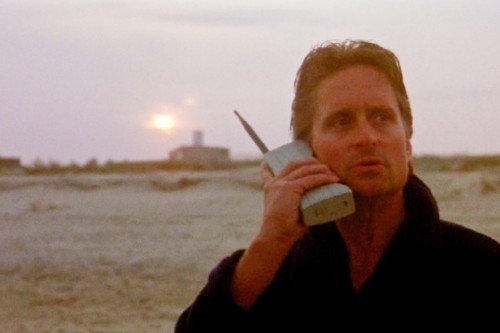
Wall Street. First movie I saw in 2012, because money never sleeps. Michael Douglas and Martin Sheen are really good. I like how Oliver Stone worked in a couple small moments of respite–the sunrise on the beach, the “Who am I?” on the balcony–and then gets right back to business. The only other Stone-directed films I’ve seen are Platoon (pretty good), The Doors (eh), and Natural Born Killers (ugh). I felt a little sad to realize I have little interest in anything else he’s done.

Dumb and Dumber

Dumb and Dumber. This one makes me wonder how today’s comedies will come across in 2030. This is the first time I finished this movie, though I’ve seen the beginning chunk a couple hundred times. Maybe the slowest-starting comedy I’ve ever seen. The road trip and early Aspen scenes in the middle are the best.

The Karate Kid (2010)

The Karate Kid (2010). I accurately predicted this would be bad. Everything is bigger than it needs to be. The actors are way too young to carry their extremes. The emotions, the violence are waaaaaayyy over-the-top for their age. The 1984 film hit the right tone with hormonal high-schoolers. These kids barely have all their teeth. Smith has little of Macchio’s likeability, and I think a large part of it is because he’s a tween. Weak soundtrack that has too many “We’re on a magical adventure!”-type swelling moments. I could pile on more, but I’ll just point you to these 11 criticisms.