
The Iron Giant. The greatest anti-war film ever made. I LOLed a lot. So good.
The Iron Giant. The greatest anti-war film ever made. I LOLed a lot. So good.
I was always somebody. I was famous at the Chevron. I’ve had some trials that would have made the average motherfucker jump out a window a long time ago, but if you wake up one morning and say, ‘I can’t do it no more,’ then it’s all over. That’s why I wake up every morning and say, let’s do this shit. Let’s get it.
Young Jeezy on staying optimistic. (via howtotalktogirlsatparties). And don’t forget:
I don’t give a fuck if you’re doin’ petty shit or big shit. […] Get your motherfuckin’ money and make other people’s lives better.
I have saved the world so many times in video games that lately I have felt a kind of resentful Republicanism creep into my game-playing mind: Can’t these fucking people take care of themselves?

The Crowd. It took a while for the talkies to catch up with the camerawork in this 1928 film. Nicely done. And as I find with many silent films, it was much funnier than I expected. The work scenes anticipate Il Posto (one of my favorite movies) in some ways. Technically, it’s supposed to be one of the pinnacles of silent film. One early long zoom moment reminded me of Hitchcock’s famous zoom-in in Notorious, 20 years later. Themes include changing social mores in relationships, expectations about masculinity, the arrival of modernity, self-realization, practicality. Probably hard to find on DVD, I lucked out with a live screening and piano accompaniment. Looking forward to the rest of Emory Film Department’s spring 2012 series.
I think that part of my experience of growing up in the American South in the early ‘60’s was one of living in a place unevenly established in the present. You could look out one window and see the 20th century, then turn and look out another window and see the 19th.
I think it’s an expression of our old hunter-gatherer module. I think that’s the module that lights up for everybody on eBay, regardless of what they’re looking for. It’s the flea-market gene. It’s hunting a bargain, sometimes. But when I went through my “watch process,” at the end of it I realized it was about information, about trying to master a body of fairly esoteric knowledge, regardless of what it was about. For somebody else it could have been hockey statistics. It wasn’t really collecting; it was about getting the knowledge.
I was at a Hilton a few weeks ago. They had taken this absurdity to its logical end. There was a huge sign in the lobby that said, “Our goal is to exceed the customer’s expectation.” The best way to start would be to take down that bullshit sign that just reminds me, as a customer, how cosmic the gap is between what businesses say and what they do.
Filed under: bullshit.
I Don’t Understand What Anyone Is Saying Anymore – Dan Pallotta – Harvard Business Review
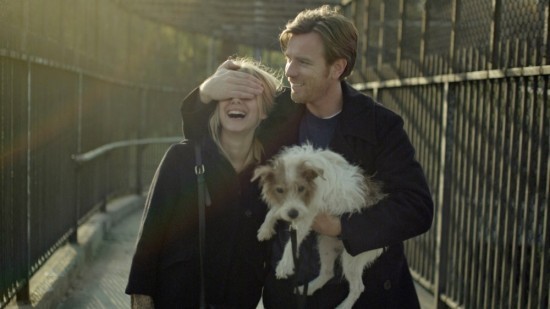
Beginners. What a good, sweet movie. If you miss and/or dismiss this you’re dumb. Excellent soundtrack with old blues and standards and, much to my delight, an arrangement of the Adagio from Marcello’s Oboe Concerto in D minor, one of my favorite tracks from one of my favorite albums of 2010. Another good movie about starting over that co-stars a charismatic dog: The Artist. The dog has the best line in the whole thing:
Tell her the darkness is about to drown us unless something drastic happens right now.
One of the fundamental aspects missing in today’s game is the ability for players (of any position) to work hard to get good spots on the floor (For post-up opportunities, that usually means getting at least one foot in the paint on a post catch). Contrary to popular opinion, this isn’t always derived from laziness. In fact, most times it’s because players are so used to being so much taller/stronger/more athletic than their competition, that they haven’t yet realized the value of getting prime real estate.
Do your work for six years; but in the seventh, go into solitude or among strangers, so that the memory of your friends does not hinder you from being what you have become.
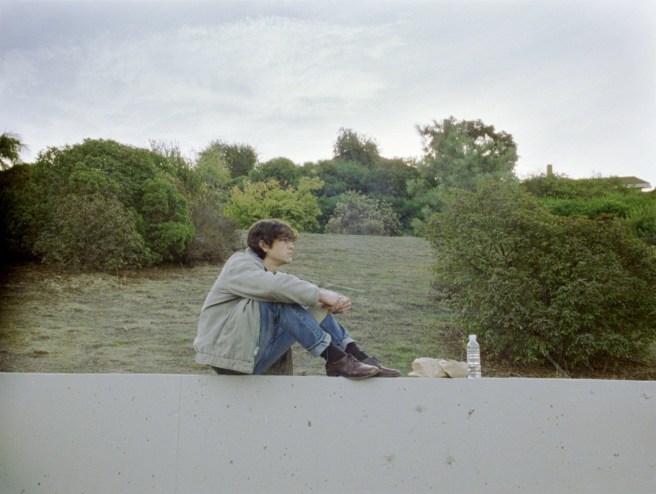
Brick. Hard-boiled film noir in modern high school suburbia. Everything was treated very carefully here, and it totally works for me. I could understand how ostensible 17- or 18-year-olds talking like Dashiell Hammett characters might not work for some, though. Some of which characters are clearly set to type (femme fatale, loyal informant, short-fused blockhead, sad-sack, etc.). Most of the movie has great, lively style but isn’t afraid to undercut itself every now and then. Solid score. I say it’s worth your time.
I was born in 1962 which was like the end of an era of breakthroughs. The moon walk, wow! That was exciting. Maybe it didn’t lead to anything, but we were all stunned. We saw it as a kid. I was like seven and thought “oh my god, this is awesome!” and you are like “science brought us this” and everyone was like “woah, science,” and then you have this long period of science not bringing that much and I think some of that status just went away. I can understand why.
BrightestYoungThings: Futurenomics: The Tyler Cowen Interview
The long sentence is how we begin to free ourselves from the machine-like world of bullet points and the inhumanity of ballot-box yeas or nays.
Pico Iyer. Here’s mills:
Pico Iyer, in a pleasant Los Angeles Times article noted by Schmudde, defending his use of “…longer and longer sentences as a small protest against —and attempt to rescue any readers I might have from— the bombardment of the moment.”
Iyer chooses two sorts of reduced expression as examples: bullet points, which are the prose of the business world; and the “inhuman” ballot-box, where political expression occurs. It is amusing to note that many believe that it is in precisely these spaces —the professional and the political— that their identity resides, that the substance of their life resides. If not there, after all, where?
Reminds me of an Andrew Potter quote I tumbled from The Authenticity Hoax:
It is hardly surprising to find that the two areas of human enterprise most concerned with sincerity as opposed to truth—namely, politics and advertising—are also the two areas most steeped in bullshit. Or would it be better to say that politics and advertising are the two areas most concerned with the appearance of authenticity? This might be a distinction without a difference.
And another thing I think of and repeat often:
If you write like porridge you will think like it, and the other way around.
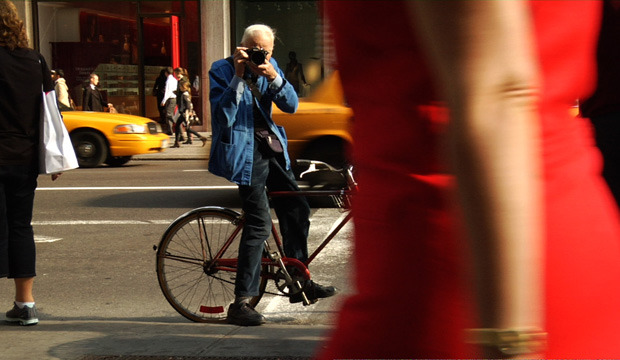
Bill Cunningham New York. Very highly recommended. What a guy.
If you don’t take money, they can’t tell you what to do. That’s the key to the whole thing.
Here are 15 things I learned from watching and writing about these 101 movies.
I loved following along with @jamesfflynn’s screenplay series.
If you look and see who is healthier, you’ll find out that people who were mostly vegetarians tend to live longer and have less cancer and diabetes than people who get most of their fat and protein from animal products. The assumption by the researchers is that this is causal – that the only difference between mostly vegetarians and mostly meat-eaters is how many vegetables and how much meat they eat. I’ve argued that this assumption is naïve almost beyond belief. In this case, vegetarians or mostly vegetarian people are more health conscious. That’s why they’ve chosen to eat like this. They’re better educated than the mostly meat-eaters, they’re in a higher socioeconomic bracket, they have better doctors, they have better medical advice, they engage in other health conscious activities like walking, they smoke less. There’s a whole slew of things that goes with vegetarianism and leaning towards a vegetarian diet. You can’t use these observational studies to imply cause and effect. To me, it’s one of the most extreme examples of bad science in the nutrition field.
Yep.
Introspection means talking to yourself, and one of the best ways of talking to yourself is by talking to another person. One other person you can trust, one other person to whom you can unfold your soul. One other person you feel safe enough with to allow you to acknowledge things—to acknowledge things to yourself—that you otherwise can’t. Doubts you aren’t supposed to have, questions you aren’t supposed to ask.
Sparrows were feeding in a freezing drizzle
That while you watched turned to pieces of snow
Riding a gradient invisible
From silver aslant to random, white, and slow.There came a moment that you couldn’t tell.
And then they clearly flew instead of fell.
(via)
Because You Asked About the Line Between Prose and Poetry by Howard Nemerov
One purpose of children is to shred parental black-and-whites into gray confetti.
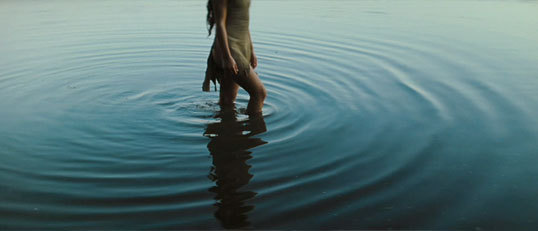
The New World. In which the title is a metaphor. Terrence Malick is a seductive director. I thought it started a little conventionally, but partway in, it turned into something special. You’re forced to set aside Disney memories and whatever historical précis you’ve got leftover from school. Interesting to see what expected bits of history and relationship development that he delays or leaves out completely, or proceeds quickly through and moves on. Lots of amazing nature scenes and life out of doors. I love the contrast of Smith’s time in the lush forests, and then the return to grey, denuded, muddy Jamestown. Malick uses narration again, which is kind of a clever cheat. You allow characters to voice their thoughts over visuals, and that keeps you from having to dialogue all the time. Couple that with the often elliptical camera–characters rarely face to face, often staggered in distance or in gentle motion, seen over-the-shoulder or trailing behind–you just get to gaze and treat your eyes and ears. I like Ebert’s observation: “The events in his film, including the tragic battles between the Indians and the settlers, seem to be happening for the first time.” Right now I think Days of Heaven is still my favorite Malick, with Badlands coming in close third.
 Mark Larson