The general glut of information and opinion makes it disconcertingly easy to kid yourself about how well you understand a particular topic.
September 4, 2009
A Case of the Mondays. Jonathan Baker (@mondaynight) makes the case for Monday Night Brewery at IgniteATL.
(Source: https://www.youtube.com/)
September 3, 2009
We had a few complaints that the MP3s of our last record wasn’t encoded at a high enough rate. Some even suggested we should have used FLACs, but if you even know what one of those is, and have strong opinions on them, you’re already lost to the world of high fidelity and have probably spent far too much money on your speaker-stands.
September 3, 2009
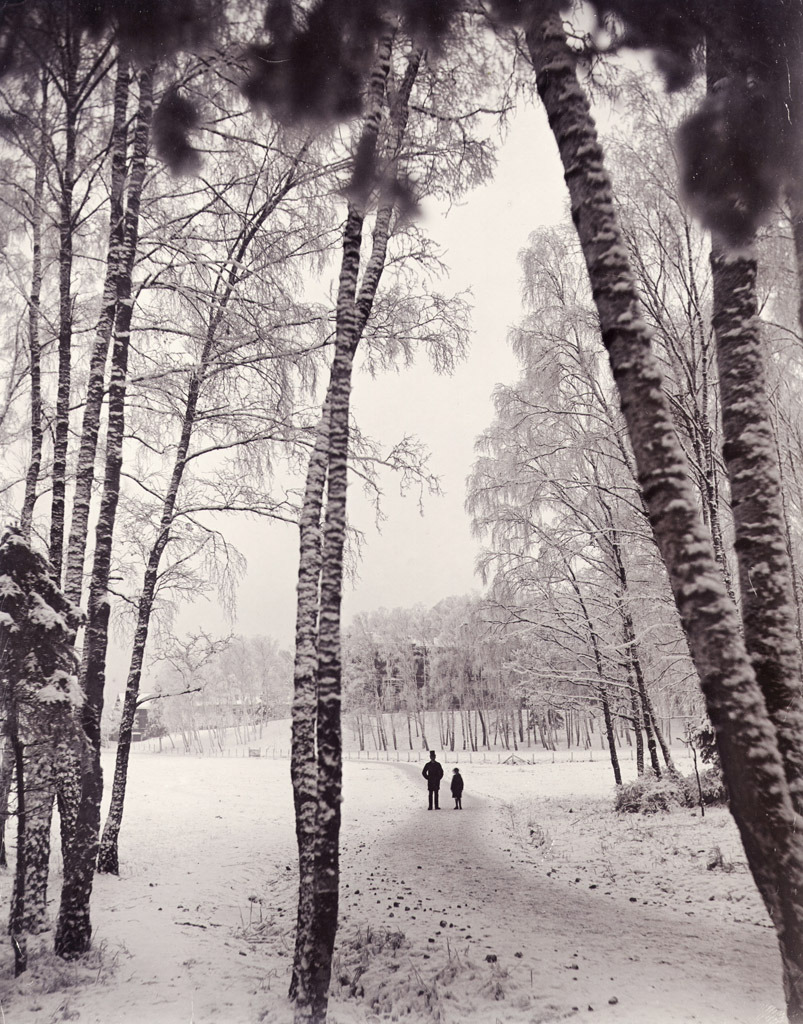
A walk in wintry woods, Stockholm, Sweden.
Nancy Pearl's The Rule of 50
When to give up on a book (from Book Lust):
“Believe me, nobody is going to get any points in heaven by slogging their way through a book they aren’t enjoying but think they ought to read. I live by what I call ‘the rule of fifty,’ which acknowledges that time is short and the world of books is immense. If you’re fifty years old or younger, give every book about fifty pages before you decide to commit yourself to reading it, or give it up. If you’re over fifty, which is when time gets even shorter, subtract your age from 100. The result is the number of pages you should read before deciding.
Heartily agree. This is why my reading log has so many DNFs. I still think I need to raise my standards, though.
Exclusive First Listen: Yo La Tengo on NPR
Hear the band’s 16th album, ‘Popular Songs’ in its entirety.
CANABALT
I don’t much follow the Flash games scene, but this one-button jumping game is great. (via snarkmarket)
August 28, 2009
Success guide: 1. Cultivate risk tolerance. 2. Cultivate endurance.
August 28, 2009
“If you pan & scan Lawrence of Arabia, you lose the desert.” (via kottke)
(Source: https://www.youtube.com/)
August 28, 2009
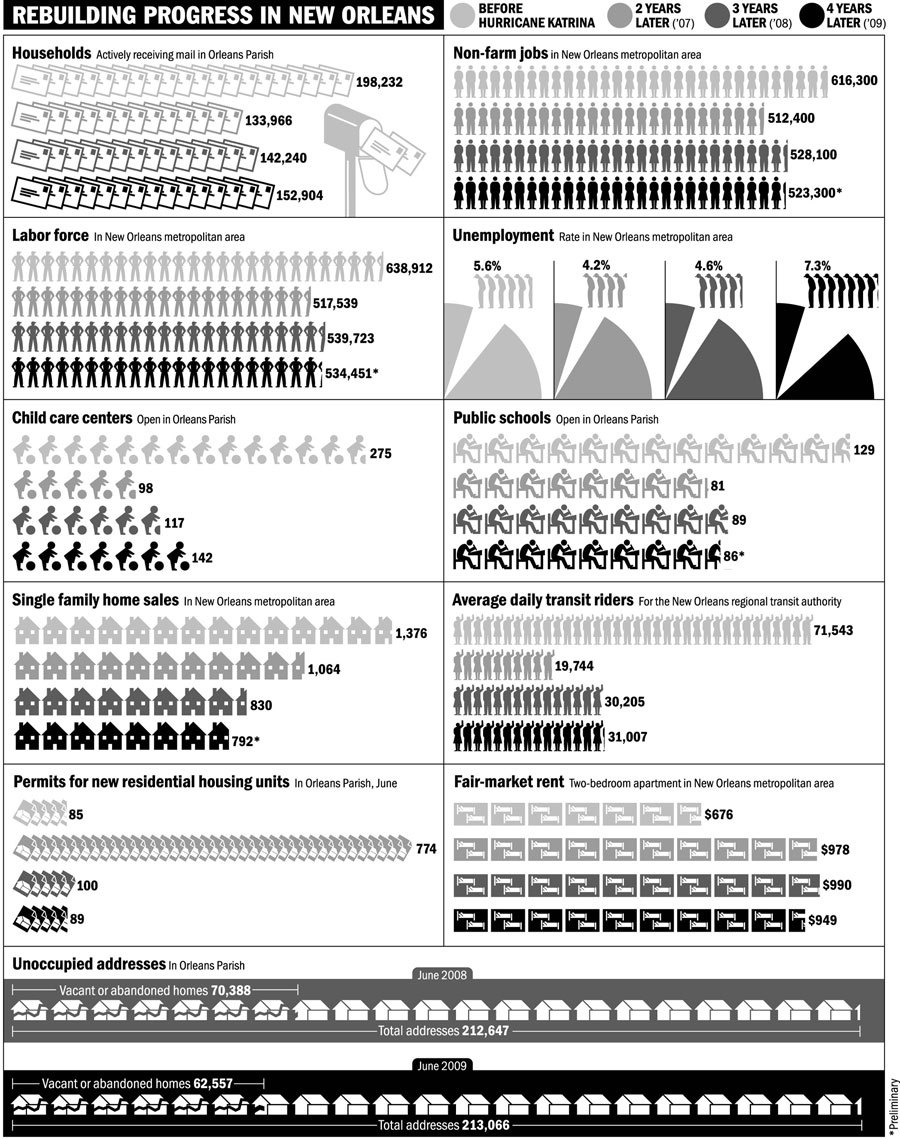
The State of New Orleans by Nigel Holmes for the New York Times.
Some wisdom before school starts
Q:
“How do you remember Amherst? What are the experiences—in and out of the classroom—that shape those memories? Similarly, what aspects of your Amherst education served you best? And what are the things about Amherst that, in hindsight, disappoint you?”
A:
“I don’t know that many would remember me at all… I was cripplingly shy at Amherst. I wasn’t in a fraternity and didn’t go to parties and didn’t have much to do with the life of the College. I had a few very close friends and that was it. I studied all the time. I mean literally all the time…
So ‘the things about Amherst that, in hindsight, disappoint [me]’ are things not about Amherst but about who I was when I was there. I let almost no one know me, and I lost the chance to know and learn from most of my peers. It took years after I’d graduated from Amherst to realize that people were actually far more complicated and interesting than books, that almost everyone else suffered the same secret fears and inadequacies as I, and that feeling alone and inferior was actually the great valent bond between us all. I wish I’d been smart enough to understand that when I was an adolescent.”
— David Foster Wallace interviewed by Amherst magazine

New Orleans

I went to New Orleans this past weekend. Great trip, my opinion of the city definitely went up (which makes sense, because there wasn’t much lower to go before). Though I’ve been a couple dozen times, this was my first trip out and about as an adult, sampling nightlife-y kinds of things. Friday we were out in the French Quarter wandering around. The Acme Oyster House is okay, nothing special. Oysters are inherently good, but the rice in my mediocre gumbo was kinda crunchy. D.B.A. is a very cool spot with a great drink list. The rest of Frenchmen Street was good, too. There was also a cool spot on a street that I don’t remember that had really nice neighborhoody people who gave us directions. I’d love to find it again. Saturday was a little time in the Warehouse District and on Magazine Street. Republic reminded me of Opera here in Atlanta, so naturally I didn’t go in. I give my highest recommendation to The Bulldog on Magazine Street, which has a great selection and a sweet, sweet patio.
When I gave to a beggar
Yesterday on the way back home I came across a rough-looking guy. Sweating, dirty, walking with a cane. When he started talking to me I stopped. He told me he was from Metairie, and then told me he had diabetes and something else wrong that I didn’t really hear because I wasn’t really listening. He asked me for some money to help him out and I said “sorry” and walked away. Then he said, “F*** you, man.” I kept walking as he continued to rant, but I could still hear it and eventually I was so pissed I turned and said something not very nice, and then went on my way, now fuming to myself about what a jerk he was. Then I went into a store and perused shelves of high-end imported Belgian ales to bring to a dinner party. And now we’re firmly in “Man Struggles With Affluence/Guilt” territory. But it’s more complicated than that, right?
I left the store and started to look for this guy. I spiraled out and did loops around town, trying to track him down. After a while, when I’d pretty much given up and was headed home, I saw him again. I walked up, told him I was sorry about our last exchange and I handed him a bill. He gave me a handshake. He explained his story again in more detail, but I mostly didn’t listen this time, either. I told him I had some family back in Louisiana near him. He told me he understood why it’s so hard to trust someone asking for a handout. We shared a fist bump and we went our separate ways. It was hot and I wanted to go home. I realized walking back that I hoped I didn’t see him again. I’m not sure how to feel about that. And I’m not sure, never been sure, whether I should give or just move on. If I gave to every beggar that asked me, worst case scenario? We’re talking like $100/year, maybe. But still you wonder if it does any good, but then again does it really matter because it doesn’t affect me that much, anyway, and then you start spiraling out again. There’s never an easy answer, which is both depressing and a kind of relief. It’s nice to have something unsettle you every now and then.
August 26, 2009
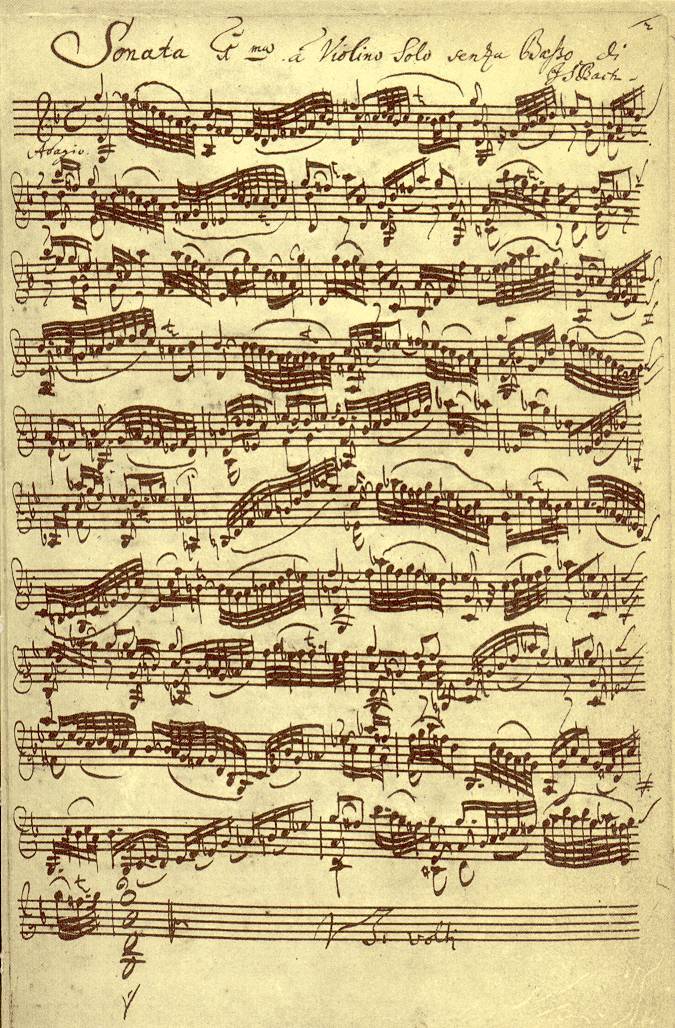
The first movement of Bach’s Violin Sonata No. 1 in G minor (BWV 1001). Listen.
August 26, 2009
http://video.ted.com/assets/player/swf/EmbedPlayer.swf
Dan Pink’s TED Talk about motivation and the ineffectiveness of extrinsic rewards and incentives in the workplace. Intrinsic is where it’s at.
(Source: http://video.ted.com/)
Edge: What makes people vote Republican?
Making the Clackity Noise
August 25, 2009
CUD, a documentary about White Oak Pastures. (via)
(Source: https://player.vimeo.com/)
August 20, 2009
Reading through the histories of both jazz and rock, I am struck again and again by the fact that although women and girls were the primary consumers of popular styles, the critics were consistently male–and, more specifically, that they tended to be the sort of men who collected and discussed music rather than dancing to it. Again, that is not necessarily a bad thing (some of my best friends…), but it is relevant when one is trying to understand why they loved the music they loved and hated the music they hated.
Another selection from How the Beatles Destroyed Rock ‘n’ Roll. Over the past year or so, I find I’m more and more reluctant to condemn music I don’t like, maybe partly because I’m more willing to dance than I used to be.
August 19, 2009