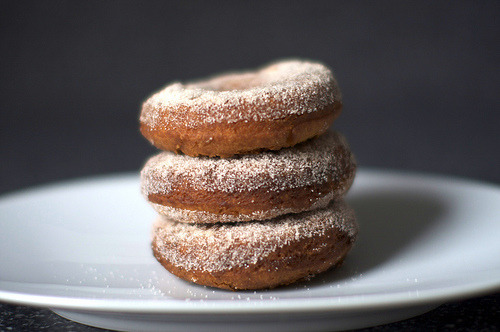
Apple cider doughnuts | smitten kitchen. Mental note.
Apple cider doughnuts | smitten kitchen. Mental note.
A great episode about the beloved Atlanta landmark built in 1924 and the (in)famous, seedy, must-see strip club in the basement that’s been running since 1965, the Clermont Lounge. One old postcard calls it As Modern as Tomorrow.
Featured on this episode of Sidewalk Radio are guests Boyd Coons, Executive Director of the Atlanta Preservation Center, Mike Gamble, a tenured professor in architecture at Georgia Tech, DJ, the de facto spokesperson and bouncer at the Clermont Lounge at the Clermont Lounge, and Atlanta icon and dancer at the Clermont Lounge, Blondie.
Paul F. Tompkins - The perfect beer. It really is great to be an adult.
(Source: https://www.youtube.com/)
“The state of acting against one’s better judgment.” See also phronesis.
Using U-Haul pricing for one-way trips to figure out where people want to move. Very clever idea.
One-Way Trip (August 2005)
Los Angeles to Las Vegas - $454.00
Las Vegas to Los Angeles - $119.00One-Way Trip (October 2010)
Los Angeles to Las Vegas - $223.00
Las Vegas to Los Angeles - $234.00

Obligatory birthday post. Scene from The General.
After us they’ll fly in hot air balloons, coat styles will change, perhaps they’ll discover a sixth sense and cultivate it, but life will remain the same, a hard life full of secrets, but happy. And a thousand years from now man will still be sighing, “Oh! Life is so hard!” and will still, like now, be afraid of death and not want to die.
Anton Chekhov, The Three Sisters, quoted by sometimes a great notion. See this also. (via)
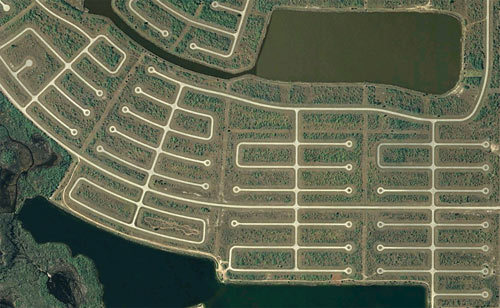
Reminds me of an excellent trio of recent Florida real estate journalism… In Harper’s, from Paul Reyes, Paradise swamped: The boom and bust of the middle-class dream and Bleak houses: Digging through the ruins of the mortgage crisis. And from George Packer in the New Yorker we have The Ponzi State: Florida’s foreclosure disaster. All three are pretty darn good.
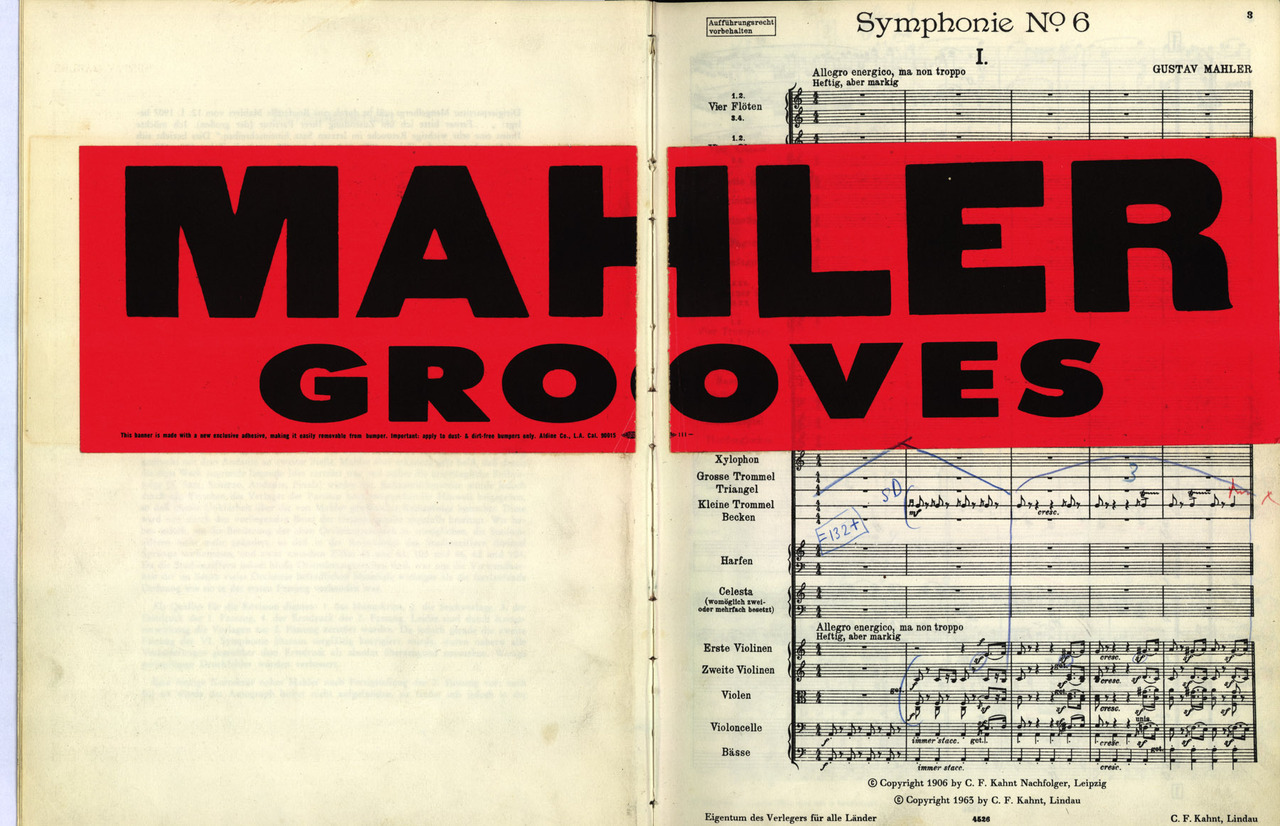
Leonard Bernstein’s score of former Philharmonic music director Gustav Mahler’s Symphony No. 6, which Alan Gilbert conducts next week at Avery Fisher Hall on September 29, 30, and October 1.
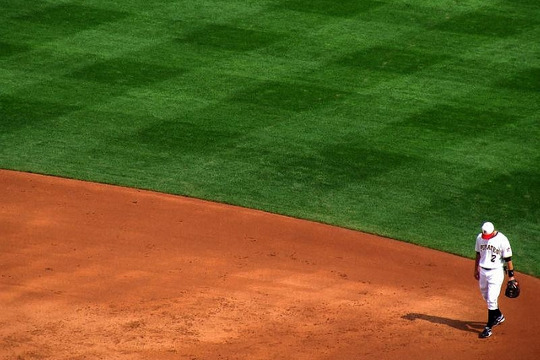
Norman Einstein’s Sports & Rocket Science Monthly #17: October 2010. “Movies. Music. Media. This month the Einsteins are digging into on our sporting stories, why they are told and how they unfold.” One reason Norman Einstein’s has grown on me is that the monthly gap from issue to issue is kind of a nice change from usual RSS trickle from the rest of the web. *Surely* there is an untapped market for more online periodicals.
http://www.archive.org/flow/flowplayer.commercial-3.2.1.swf
Coffee Break. A 1958 film about lost time in the workplace. From the Prelinger Archives.
(Source: http://www.archive.org/)
 Steamboat Bill, Jr.. Brilliantly funny movie. I had the great pleasure of seeing it with a happy crowd and live piano accompaniment. It’s easy to find online, though. The hat scene and the jail scene about 45 minutes in were my favorites. Highly recommended. But then, I love Buster Keaton.
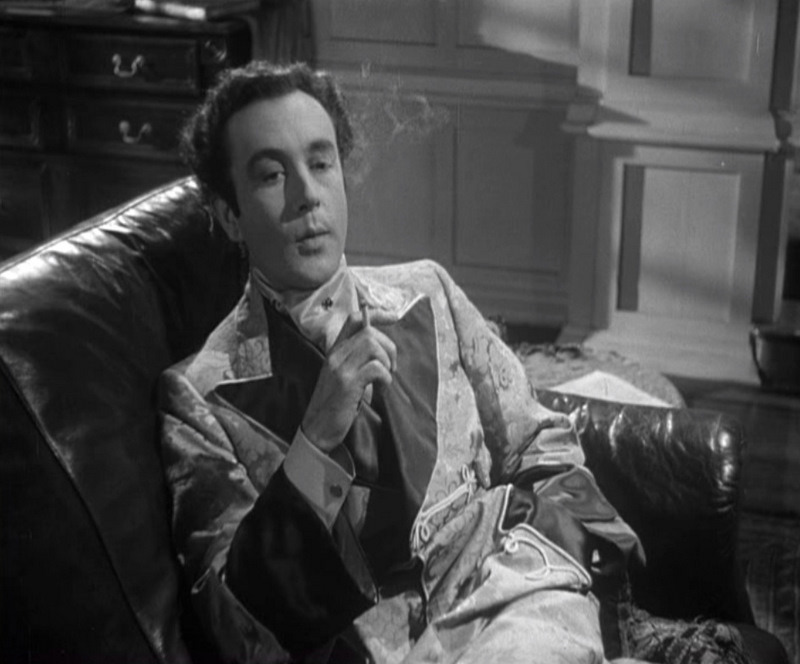
Kind Hearts and Coronets: Decadent Dennis Price | Clothes on Film. Storytelling through clothing! Lots of great stills from Kind Hearts and Coronets.
As Mazzini slowly murders his way up the social ladder, his manner of dress, starting as a humble store clerk in a lounge coat, becomes increasingly extravagant and dandified, in keeping with the growing hubris of the character.
Truth:
We Southerners get super sensitive about snow and ice in the winter but we LIVE for the first full weekend of zero percent humidity. Everyone breaks out their wool blazers and favorite argyle items as soon as temps dip below 87° – it’s a fact! That’s why it’s so sad when inevitably a three-week humid heat wave comes in October and no one wants to put sensible cotton short-sleeved attire back on. Lots of moist people in sweater vests and Glen plaid dragging themselves through the dying strains of Atlanta summer – it’s just embarrassing for everyone.
 Eating out can be incredibly frustrating. Take this dinner at Shaun's. Good chopped liver. Followed by a well-prepared pork dish that I forget. Decent? Yes. Worth the price? Hell no. Like I did when considering finishing books vs. finishing movies, here's some idle theorizing on why I often walk out of restaurants disappointed:
I'm open to other theories. In the meanwhile, I should probably just skip out on the bar food and fancy crap, and see what I can find eating out on Buford Highway.
Man, my reading of books has taken a nosedive since I got an iPad + Instapaper. But I'm not sure if I mind that much. The best of that stuff ends up on my tumblr, anyway. Here's a rundown of bound volumes: 1. A Certain "Je Ne Sais Quoi". It's basically a long list of phrases and where they came from. It's really good if you care about words and where they come from.
2. Coltrane on Coltrane. What comes up again and again in these profiles and interviews is how kind, humble, and reticent Coltrane is. He seems like a genuinely nice guy. Which makes it not nearly as interesting as Miles on Miles. Miles Davis is not known for being kind, humble or reticent. He'll speechify and declaim and accuse and he's got giant chips on his shoulder. In many of the Coltrane interviews, you see the interviewer's paragraphs of speech balanced with just a few words from Coltrane. Too bad.
3. The Broom of the System. I couldn't finish this one. Wallace's nonfiction is where it's at for me, though I'm still holding out hope for "Infinite Jest".
4. The Happiness Hypothesis. Did I mention that you have to read this book? Yes I did. Still standing as my favorite nonfiction of 2010.
5. I Love Led Zeppelin. Some of it is funny.
6. Exit Wounds. Skip.
7. The Elegant Man was a nice style guide, if only for reasons of vocabulary and attention to detail. The nice thing about being a guy is that if you learn the classics, you're set for life.
8. Mrs. Bridge. This is a day-to-day chronicle of suburban broken dreams, etc. Eh.
9. Finite & Infinite Games. Skip.
10. Then We Came to the End. I thought it was a nice chronicle of life in an office.
11. Once a Runner. It's one of the classics about running, and true to its reputation, the best passages are about running and how exhilarating and exhausting it is to take it seriously. The overall plot was merely okay.
12. Ghost Wars. I really liked another book of his, but I didn't get chance to finish this. What I read was really good.
13. The Places in Between. It's a great travelogue and has a nice balance with explaining the history and complicated social intricacies of Afghan culture. Great read. I hear author Rory Stewart is a potential Prime Minister.
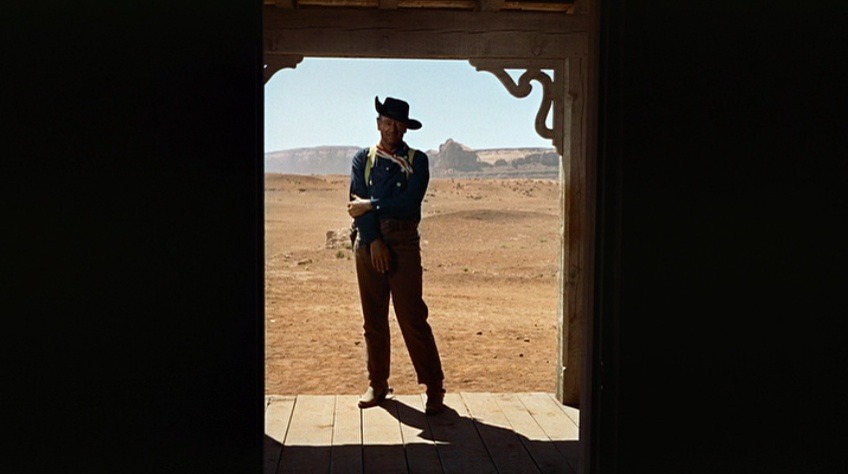
Doorways in John Ford’s The Searchers
Are you going in or are you staying out? In the world of The Searchers you must choose. You can’t have both. In this movie, everyone is on the threshold of that choice. And for some, it isn’t a choice at all, it’s just the way things work. Everything you want, everything you search for, is “out there”, or, on the flipside, everything you want is “in there”. There is a giant gap between in and out. Characters are seen standing a bit away from the house, with people clustered in the doorway, and it seems like anything, anything can happen in that gap.
I was reminded of this by the True Grit shot.
Great, great article. Liminality, my friends. And while we’re on the topic, I tumbled a doorway shot from The Outlaw Josey Wales after I watched it a month or so ago:
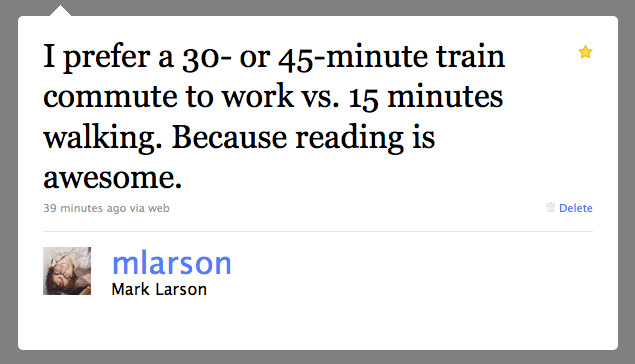
Constraint in everyday life. A lesson learned as I spent a couple weeks dog- and house-sitting barely a mile from the office. In theory my time not-on-a-train in the mornings and afternoons could have converted to reading time like usual. In theory. If I had any discipline. And thus I remind myself that less important than the amount time I have–a shit-ton, if you know where to look (as in, let us say, around lunchtime; before, during and right after breakfast when I’m usually just kind of sighing and limping around the house; and pretty much every day from 6pm to midnight)–is the structure I give it.
“It’s not that these new Manhattan buildings don’t look very good. It’s that they look lazily derivative, and they’ll make New York look like every other grubbily transparent financial hub in the world.”
“Palmer’s book underscores the fundamental challenge of wildlife filmmaking: Nature is frequently boring. Wild animals prefer not to be seen.” Fascinating. We’ve been faking the natural world for the sake of narrative and/or efficiency and/or profit. See also.
Wildlife filmmaker Chris Palmer shows that animals are often set up to succeed