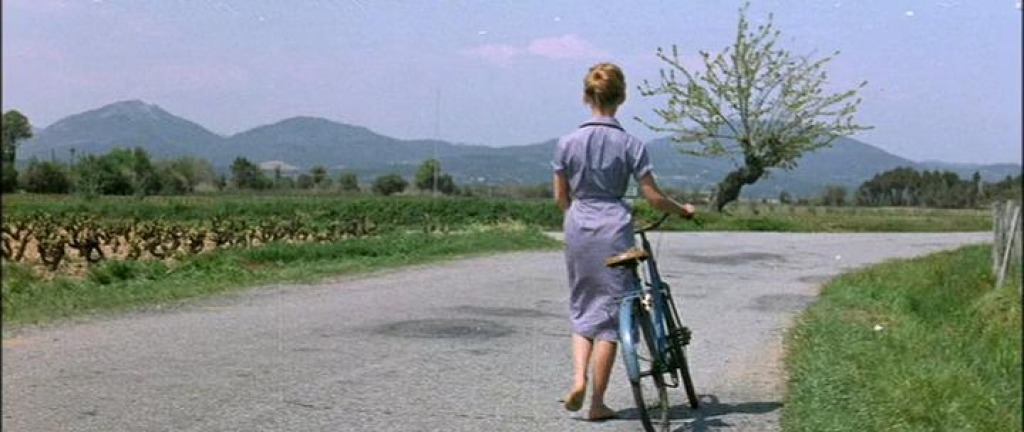
 Et Dieu… créa la femme (And God Created Woman). This is the film where Brigitte Bardot first got attention for the sex kitten thing. It’s an okay story, nothing special. I did appreciate many of the shots, lighting, and sets, especially the interiors. Definitely skippable, though. A funny coincidence: both this movie and the one I watched right before it, Blast of Silence, feature scenes where the emotional tension is heightened by quick cuts to musicians playing Latin music on hand drums. I assume this is a cliché that appears in other films of the era. See also: mad scene.
Around the clock at Waffle House: Smothered and covered on Cheshire Bridge…
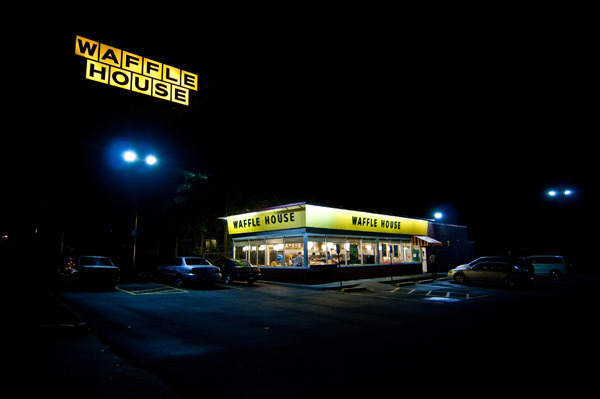
Around the clock at Waffle House: Smothered and covered on Cheshire Bridge Road | Creative Loafing Atlanta. Photo by Jason Travis.
Every night is different. We get a lot of drunks; you just have to know how to handle them. You gotta have a go-get-them personality. And you’ve gotta pray.
Blast of Silence
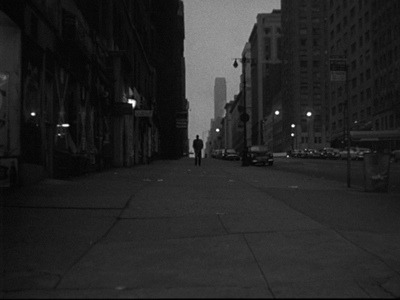 Blast of Silence. A Criterion essay cleverly calls it “the best movie ever made about a common, important, and unjustly neglected American experience: the really bad business trip”. It’s a great film noir that will only take 77 minutes of your time. It came out near the tail end of the genre’s peak, but in some ways it feels prototypical. Distilled. Lovely shots of New York City as he wanders in a sort of malaise. The hard-boiled voiceover really drives the misery home. Gangsters, dames, old friends-who-aren’t. Loneliness and disaffection. You know the clock is ticking on this guy from the very first moments. Nice appreciation at Bright Lights.
The rejection slip Essanay Film Manufacturing Company (1907-1925), a motion…
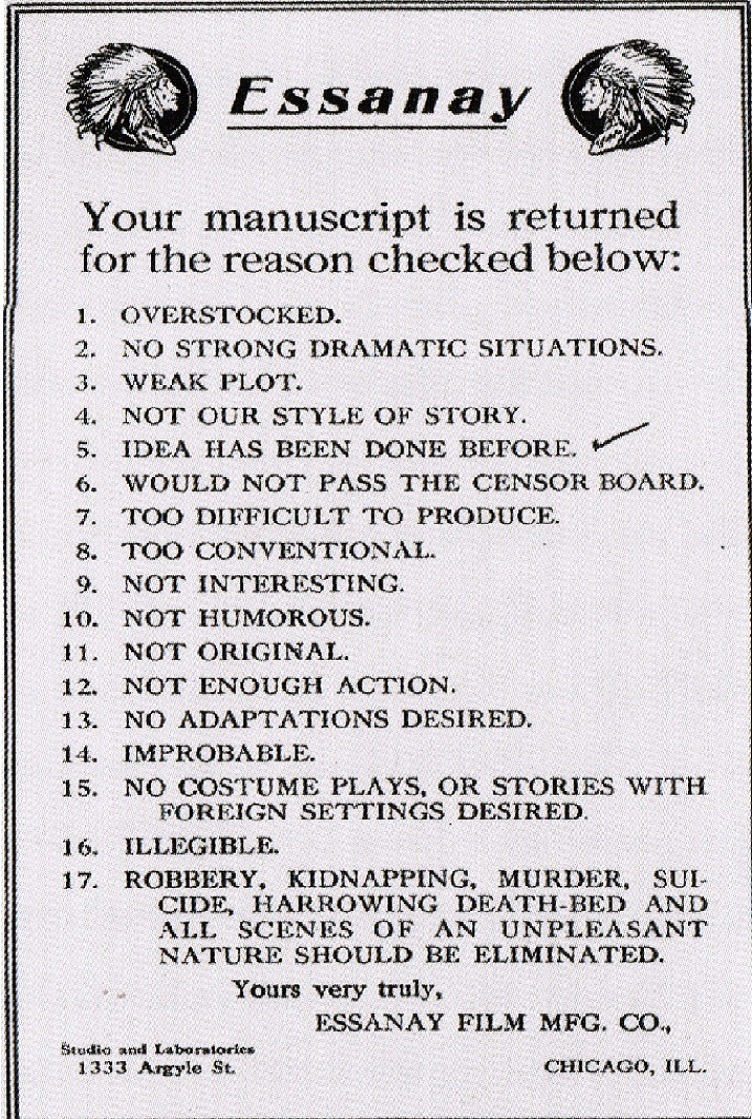
The rejection slip Essanay Film Manufacturing Company (1907-1925), a motion picture studio mostly remembered today for its series of Charlie Chaplin films, sent screenwriters whose submissions were found wanting (via Silent Movies: The Birth of Film and the Triumph of Movie Culture)
Oh, The Humanities!: What liberal arts are good for | The New Republic
Over the past few years, I have come to suspect that when any practice is praised for its own sake, the speaker is unwittingly confessing to his or her unfamiliarity with its previous uses, thereby making a virtue of his or her literal remoteness, distance, alienation, from it.
Oh, The Humanities!: What liberal arts are good for | The New Republic
Louis Armstrong - Mack The Knife - 1959
Louis Armstrong - Mack The Knife - 1959. Remembered this when I was talking about Kurt Weill this afternoon. Great song.
(Source: http://www.youtube.com/)
What Are You Going to Do With That? - The Chronicle Review - The Chronicle of Higher Education
The world is much larger than you can imagine right now. Which means, you are much larger than you can imagine.
What Are You Going to Do With That? - The Chronicle Review - The Chronicle of Higher Education
I Didn’t See It Coming — Crooked Timber
Liminality in music!
At what point in [Iron Maiden song] “Prodigal Son” does it become metaphysically impossible that this is a Belle and Sebastian song?
I should add that comment #2 is remarkably incisive.
A good death: Exit strategies - By William T. Vollmann (Harper's Magazine)
This nice essay on dying is behind a paywall, unfortunately. It’s the best thing in this month’s issue. Interesting blend of essay/memoir/reporting.
A good death: Exit strategies - By William T. Vollmann (Harper's Magazine)
Peanuts, March 25, 1952 by Charles Schulz
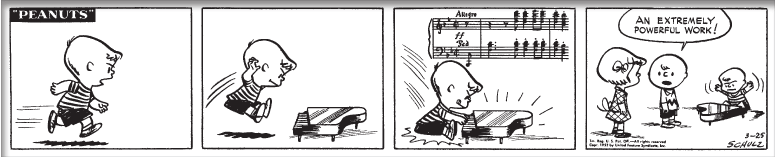
Peanuts, March 25, 1952 by Charles Schulz. Some pieces of music require a running start! Hell yes. From Schulz’s Beethoven: Schroeder’s Muse, an awesome 150+ page web exhibit from the Charles M. Schulz Museum and the Ira F. Brilliant Center for Beethoven Studies at San José State University. Lots of strips and music samples and biographical details to peruse.
It is such a simple thing, but since I started, about three years ago, using…

It is such a simple thing, but since I started, about three years ago, using Flickr and my top-secret notebooks to keep track of what I read, it has brought me a ridiculous amount of satisfaction.
Sweatpants in Paradise: The Exciting World of Immersive Retail - The Believer
Engineers of immersive retail must understand that we buy things when we are bored and not when we’re excited, alive, and metaphysically horny—that these feelings are just promises to get us in the door.
Sweatpants in Paradise: The Exciting World of Immersive Retail - The Believer
It’s a poor fellow who can’t take his pleasure without asking other people’s…
It’s a poor fellow who can’t take his pleasure without asking other people’s permission.
Korean Barbecue at Han Il Kwan

Eminem - Without Me (Ragtime Remix)
Eminem - Without Me (Ragtime Remix). Because why not? (via)
(Source: https://www.youtube.com/)
Play Misty for Me
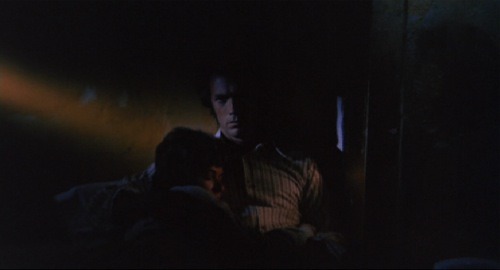 Play Misty for Me. I was trying to decide what to watch this evening when I was driving back home. Lo and behold, Misty comes on the radio. Case closed. This was Eastwood’s first film as director, and for a lead actor known for tough-guy roles, his character is surprisingly passive here. He gets steamrolled by the batshit insane Jessica Walter. (I was so glad when I finally realized why she was so familiar). This one definitely holds its own against, say, Misery, Basic Instinct, and Fatal Attraction. Ebert gives it four stars. See also psycho-biddy and bunny boiler, two of my favorite new terms.
The Running of the Dead - Christian Thorne | Commonplace Book
The first of a four-part examination of zombie movies through the lens of Hobbesian political theory. Part two. Part three. Part four.
The Running of the Dead - Christian Thorne | Commonplace Book
Emotive conjugation - Wikipedia, the free encyclopedia
“Humans’ tendency to describe their own behavior more charitably than the behavior of others.”
Escalation « Cheap Talk
“You are invited to extrapolate this idea to all kinds of social interaction where you are being perfectly polite, reasonable, and accomodating, but he is being insensitive, abrasive, and stubborn.” (via)
When Photographs Resembled Paintings — Alexis Madrigal
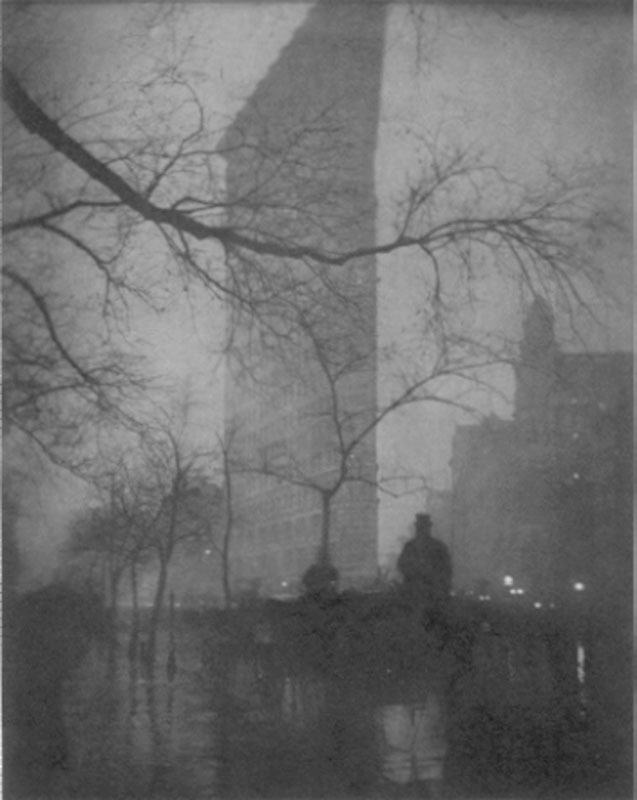
Alexis Madrigal reflects on a time when photographs resembled paintings:
Many works like Edward Steichen’s “Flatiron—Evening Camera Work 14” (above) play with fog and smoke. They hide things in the greyscale and even tend toward a hazy abstraction. Everything becomes a little harder to see and a bit more romantic. I’d long, lazily assumed that turn-of-the-century photos looked like this because of technical reasons, that this was just how cameras made photos at the time. That’s not true. These photographers were skilled enough and their techniques good enough that they could have made razor sharp portraits, but they didn’t. Instead, we have two decades where the best photographs work like memories not recordings.