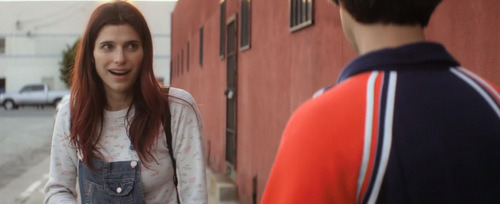
 In a World…. Loved it (again). It’s so nice to see a movie with such… complete characters. Driven, charming, obnoxious, lovable, self-defeating. All of it. And such a good momentum through the whole thing ‘til it smashes right through the glass ceiling. Very much recommended.
Hard Eight
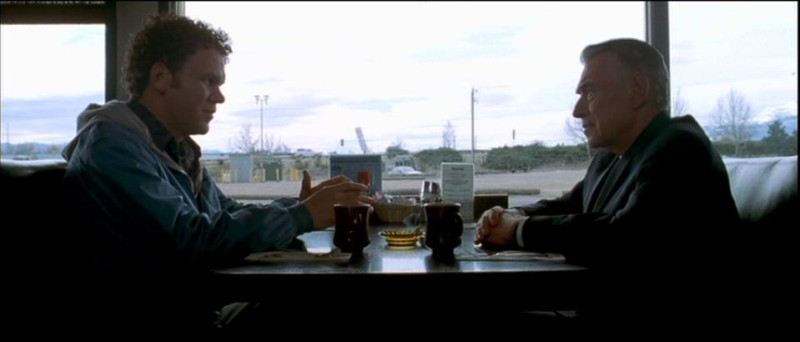 Hard Eight. Philip Baker Hall is awesome, and so is John C. Reilly. Love how Reilly becomes a poor imitation of the expert. I love the moments of still life, coffee and pie and cigarettes and such. I felt a bit let down by the reveal. I guess you’d have to steer the climax a bit differently without it, but I didn’t really need a reason for how the story opened. I was totally on board with this strange characters. I think The Master is my favorite of Paul Thomas Anderson’s, then probably this one and then There Will Be Blood and then Magnolia? Hard to say. They’re all pretty solid.
Grief is as unique as a fingerprint
Grief is as unique as a fingerprint.
The Amazon order test as an algorithm for evaluating books
If you read a book, how many other related or similar books does it make you order? […] If you don’t end your read with some additional book orders, maybe you need to ask yourself what exactly went wrong.
And this is worth pondering:
How about a book review outlet which refuses to consider the books under consideration, but rather considers and evaluates what they will induce you to read next?
Nothing has topped the way men shake her hand and look her in the eye
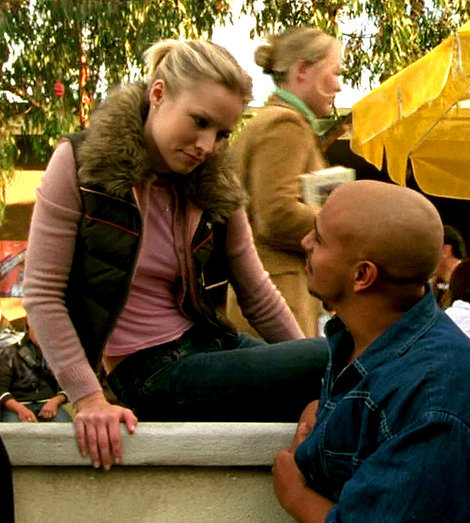
“Nothing has topped the way men shake her hand and look her in the eye, what it’s like to be able to call a man a chickenshit to his face and get away with it, to mean it, to feel free and dominant and in control of your life.”
—Megan Mayhew Bergman, Almost Famous Women
Give your past, present, and future selves influence in proportion
Give your past, present and future selves influence in proportion to what each has earned. Which one of you is working with the most reliable information — about you and nobody else?
“Have you made any New Year’s resolutions, Chuck?”
“Have you made any New Year’s resolutions, Chuck?”
All Is Lost
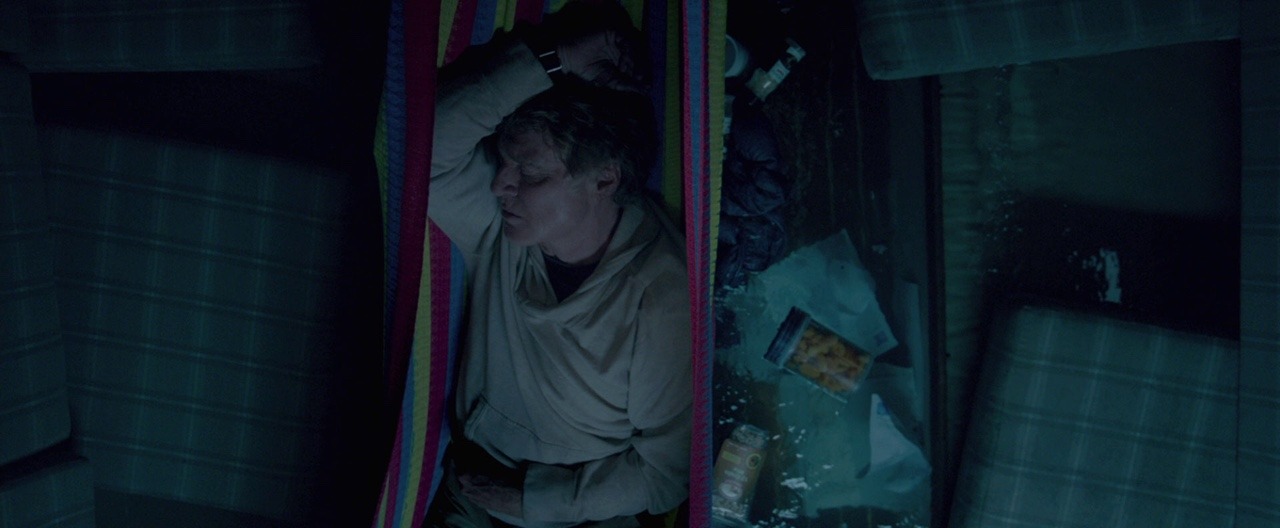 All Is Lost. Loved it. Perfect movie for the messy, rainy weather of late. Redford’s sailboat is hit by a freight container… and then he deals with it. Minimal script and music, the focus is on inventiveness, improvising, and the mundane aspects of making do. I appreciate that there weren’t any gimmicks that felt too dumb or contrived, like, I dunno, getting tangled in the ropes or something. It’s also a great example of how much more thrilling it can be to focus on the person facing peril, and how they react, rather than show a huge CGI wave vs. a tiny boat. I love the couple moments where he’s… enjoying himself, somehow? A sunset. A simple dinner. And there’s a beautiful, heartbreaking moment before he sends out a communication where he pauses – not quite ready – and then follows through. Other good “peril at sea” movies: Captain Phillips and Life of Pi. Other good survival films: Gravity (+ Aningaaq). The Grey. 127 Hours. Another good movie focusing on one actor, one vehicle: Locke. Another good movie with an older actor trying to get out of trouble: Arbitrage.
Veronica Mars
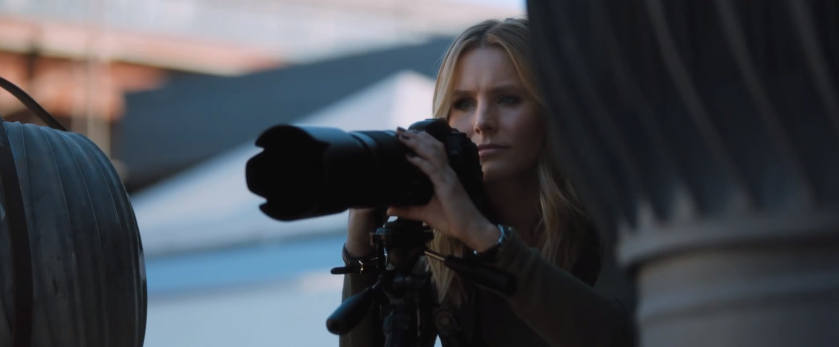
If I were wise enough to know the difference between what I can and can’t change, would I even be who I am?
Veronica Mars. It opens with an explanatory montage narrated by Bell – it’s a nice introduction for newbies and also helps boost the anticipation/nostalgia for veterans. Even with that lead-in, though, I don’t think you could get much out of the movie without watching a good bit of the TV series (which you should absolutely, definitely do as soon as possible). Lots of inside jokes, references, running gags, cameos, and other bits of fan service. There were a pair of legitimately shocking moments in there, too. The great writing that sustained the show carries over here, and the key relationships – Veronica and her dad; Veronica and Logan – are as sharp as ever. Love the Lou Rawls soundtrack during one of the climactic scenes. But alas, it’s not the TV show, and two hours simply is not enough for a challenge worthy of Veronica, and there’s not enough time for beloved supporting characters to remind us why we love them so much. Another great movie that revolves around noir-ish high school drama is Brick.
The Best Books I Read, 2014
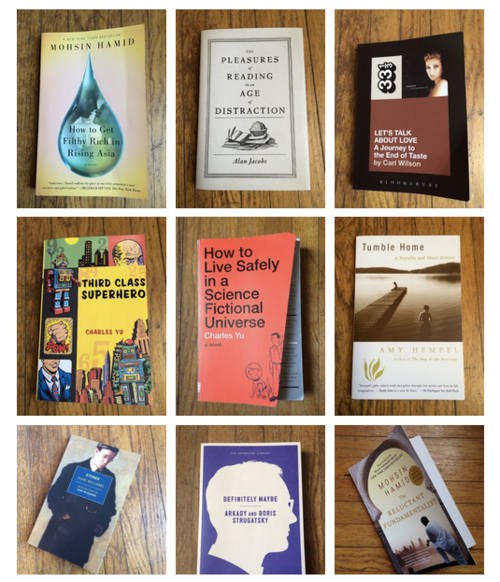
Well, there’s always 2015. What follows are the best of a pitiful 30 (?!) books I read in 2014, which is nowhere near previous glorious heights. These are in a very particular order – as more discerning readers will see – gently arranged for optimal reading pleasure. Don’t skim or jump around, or you’ll ruin the whole thing. All links are to my own notes on the books, such as they are.
- The Pleasures of Reading in an Age of Distraction by Alan Jacobs is a great reminder to ignore everyone else’s rules about reading. Read at whim!
- Mohsin Hamid’s How to Get Filthy Rich in Rising Asia has to be my favorite fiction of the year, and The Reluctant Fundamentalist is right up there, too.
- Let’s Talk About Love by Carl Wilson is the best nonfiction of my year, easily.
- Stoner by John Williams just works, and I have no idea how.
- Definitely Maybe from the Strugatsky brothers.
- My experience reading Gillian Flynn’s Gone Girl overlapped with the movie in really lovely ways.
- And I had similar fun with Dashiell Hammet’s The Thin Man and the film adaptation.
- Amy Hempel’s stories in Tumble Home make me want to write better.
- I love Charles Yu’s kooky Third-Class Superhero and How to Live Safely in a Science Fictional Universe. I’ve got another one of his books lined up for early this year.
- Flush by Virginia Woolf – the best dog biography you’ll ever find.
- A new translation of Stanisław Lem’s Solaris by Bill Johnston
- I read Njál’s Saga at the end of last year, so I’m giving it another shout-out here.
I hope your year is filled with books you enjoy.