El Secreto de Sus Ojos (The Secret in Their Eyes)

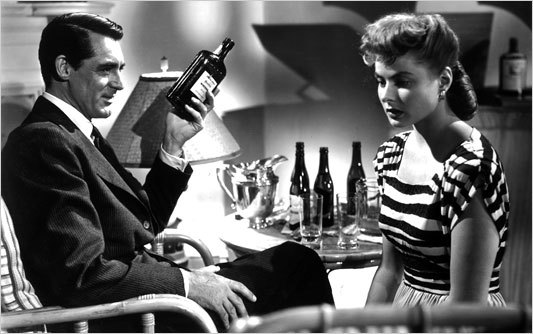
El Secreto de Sus Ojos (The Secret in Their Eyes). A retired detective-cum-novelist pursues a cold case and a lost love, and it’s pretty damn good. A few parts here and there feel a bit telenovela, but on the whole it’s a steady, confident story with some really solid side characters–especially Guillermo Francella. Also includes a ridiculously good chase and one of the most electric elevator scenes on film. You just feel your stomach drop. Ebert says ★★★★.


La Collectionneuse

La Collectionneuse. One of Éric Rohmer’s Six Moral Tales. Like Roman Holiday, this one centers on a question that doesn’t get answered until the last minute. It wasn’t as much pure fun, but I still respect a patient movie. From Phillip Lopate’s Criterion essay:

Here we see one of Rohmer’s most original tropes: the tepid attraction. It flies in the face of all cinematic convention, which dictates that the encounter of a good-­looking man and a good-looking woman must lead to grand narrative passion. […] Rohmer views the problems of indolent, potential-laden, prolonged youth in this film from the perspective of the middle-aged artist, who knows that the clock is ticking.


November 10, 2010

About Costa Rica, Nicaragua, their mutual border, and Google | Ogle Earth. (via)

Nicaragua did not mistakenly enter Costa Rican territory because it relied on Google Maps. Ortega’s justification for Nicaragua’s actions appeal to documents from the 19th century; Pastora’s mention of Google Maps is just a taunt.

This whole thing, after going to Nicaragua last winter, makes me wonder:

Is there a (preferably German) word for the residual interest/affection you feel about places you’ve visited only for a short time?

“Nostalgia” is too yearn-y and past-oriented. It’s more like wanting to be in touch with the Now that you’re missing over there.


Not Your Parents' Audiobook: David Byrne's "Bicycle Diaries"

utnereader:

David Byrne’s successful book, Bicycle Diaries, probably would have sold just fine as a traditional audiobook, as well. However, never one for the status quo, Byrne wanted to do something a little more interesting than simply reading the book in silence and releasing it as a download or cd. Instead, he looked to other successful audio formats for inspiration, namely NPR shows that incorporate scene sounds and podcasts.

I was pretty ambivalent about the book, but maybe ambient sound would have kicked it up a notch, especially for a work so linked to its geography. Great idea. Download the intro and hear some samples.

Not Your Parents' Audiobook: David Byrne's "Bicycle Diaries"


November 7, 2010

maudnewton:

yama-bato:

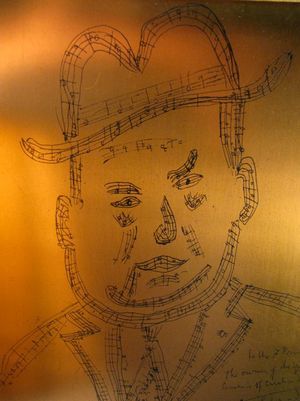
Jorge Luis BORGES (Argentinian, 1899 - 1986) Self-portrait. ink on paper
8 3/4 x 6 inches (225 x 150 mm)

http://ny.bloomsburyauctions.com/detail/NY034/61.0

When he drew this, because Burt Britton asked him to, Borges was blind.

Weirdly, Cormac McCarthy also did a self-portrait for Britton. Other writers in the collection: Joan Didion, Edward Gorey, Roald Dahl, Margaret Atwood, Saul Bellow, Norman Mailer, Maurice Sendak, John Updike, and Tom Wolfe.