What I've been reading, vol. iv

Gotta say, these past two months have been pretty good for reading. From the most recent to the more distant in time: 1. Why Mahler?. This might be better for people who already care at least a little bit about Mahler, one of those characters that lends to incompleteness. Like talking about his music. Too vast, too contradictory, too universal, too personal. Still, it's a breezy, rangy biography mixed with some memoir, and it's a good read.

2. Listen to This. Alex Ross is one of my favorite writers. This book is mostly a collection of stuff he's written for The New Yorker. The essays I dog-eared most heavily were Chacona, Lamento, Walking Blues, Infernal Machines, The Storm of Style, Song of the Earth, Verdi's Grip, and his writings on tour with Radiohead and Bob Dylan were interesting, too. He's also got a great audio guide for Listen to This like the one for The Rest is Noise (which is awesome).

3. The Art of Non-Conformity. Got curious about this one because I recognized the brand. The blog is better.

4. The Music Instinct. Author Philip Ball struck me first and foremost as a very fair writer. It seems like he doesn't have very many bones to pick, aside from the fact that we should stay open-minded and open-eared. The first 60-70% of the book, the best part, is nerdy stuff about music theory---the science of pitch, scales, harmony, timbre, rhythm, etc. He's glad to branch out across the world and not just focus on Western tradition. I found it quite good.

5. The Substance of Style. Couldn't finish. Seemed sort of argument-by-anecdote-y, which is fine, but not what I wanted at the time.

6. The Art of Travel. This is mostly worthwhile, the first half in particular. Each section centers around a topic (Anticipation, Curiosity, the Exotic, the Sublime, etc.), a tour guide of sorts (e.g. Huysmans, Humboldt, Baudelaire, Flaubert, Van Gogh), and de Botton's own observations and musings. It's a good, quick read.

7. The Book of Basketball. I thought it was awesome. Rare to find any book, nonfiction or otherwise, that keeps you up late a few nights in a row.

8. On Kindness. Another one that I really, really liked and shared a bunch of quotes from. Great brain food here.

9. Steppenwolf. I read this one right after "The Moviegoer", below. They both deal with existential angst, but this one is much more over-the-top, orotund, and, um, German. I think you could get your time's worth just reading the first 40 pages or so.

10. The Moviegoer. I liked this one alright. Nothing much happens in the story, but the narrator's struggles---with his own ambivalence, with relating to people, with finding satisfaction outside of passive distractions, etc.---were good food for thought.

11. Jane Eyre. This was a bit of a drag. Either I'm a curmudgeon with no heart or it's kind of boring. This was, however, the first book I read mostly on my iPad, so it was nice to have that experience. I would have shared a bunch of quotes and bon mots, but, alas, as of now there's no way to export highlights from iBooks other than tedious cut and paste. Maybe get to that later...

I think I'm due for some more fiction soon. More of what I've read lately can be found in volumes one, two, and three.


Read to Lead: How to Digest Books Above Your “Level” - RyanHoliday.net

Many good ideas on mercenary reading here. Feel free to set aside the “rules” of front-to-back reading. Gotta participate actively and take what you need.

The work is an expression of the message, not the message itself. So forget everything but that message and how to apply it to your life. Dates, names, pronunciations–-they only matter in how they provide context for the lesson at hand.

And also:

You ought to ruin the ending–-or find out the basic assertions of the book–-because it frees you up to focus on your two most important tasks: 1) What does it mean? 2) Do you agree with it? The first 50 pages of the book shouldn’t be a discovery process for you; you shouldn’t be wasting your time figuring out what the author is trying to say. Instead, your energy needs to be spent on figuring out if he’s right and how you can benefit from it.

Read to Lead: How to Digest Books Above Your “Level” - RyanHoliday.net


A Simple Man

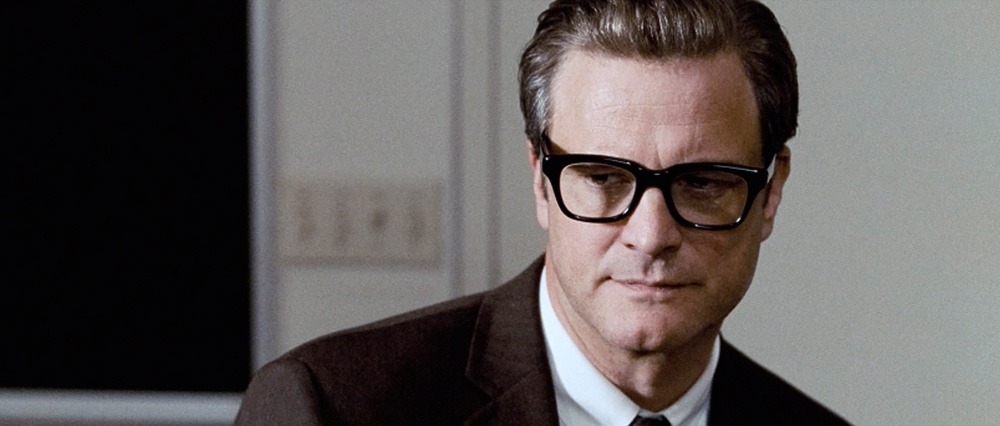
A Single Man. It’s okay. Heavily art-directed in a Wes Anderson kind of way that’s both really sharp and a little bit dead. It sometimes feels like a product shoot. Ponderous. Never funny. Both of these things could be conscious choices tied to the main character’s public facade of neat, refined detachment that hides his inner chaos. His lover is dead. I like how Ford plays with the colors and hues in this one. Most of Colin Firth’s daily life is in a muted, greyish-brownish palette. In moments of clarity or lust or novelty, the palette becomes richer, warmer, shades of red and gold. Not at all subtle, but it’s a neat trick.


I have to look them in the eye and decide whether they love the business…

I have to look them in the eye and decide whether they love the business or they love the money. It’s fine if they love the money, but they have to love the business more. Why do I come in at 7 every morning, can’t wait to get to work? It’s because I get to paint my own painting and I like applause.

Warren Buffett on choosing good managers.


La Boulangère de Monceau (The Bakery Girl of Monceau)

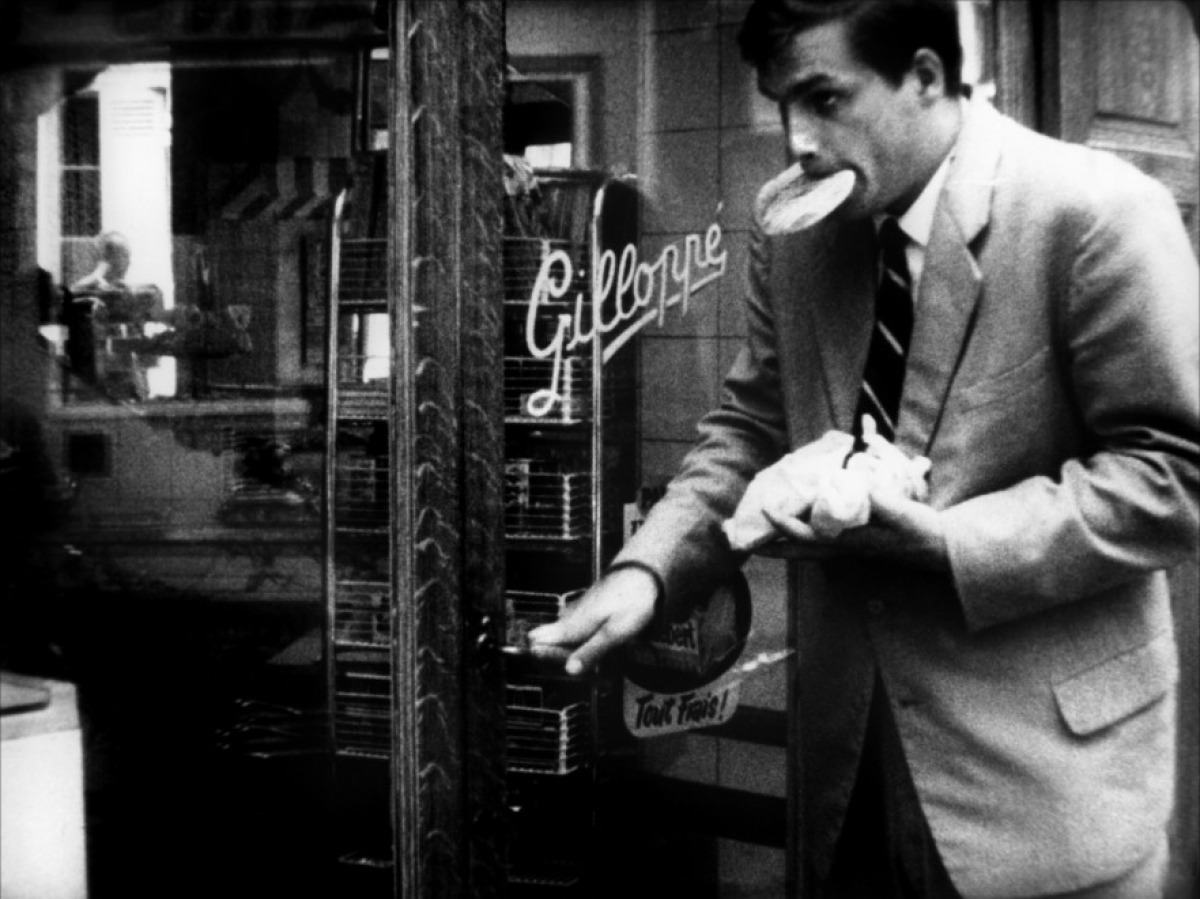
La Boulangère de Monceau (The Bakery Girl of Monceau). Another Éric Rohmer film (previously), the first of his Six Moral Tales. This is a worthy short one, only 23 minutes. The focus is an everyday occurrence: a guy sees an attractive gal on the street, doesn’t say anything, regrets it, then toys with a bakery girl as a substitute as he tries to find the first. The man’s narration is an out-loud self-analysis, full of his internal churning, hedges and rationalizations about his choices. Here’s a Criterion essay.


[If I could have lunch with one person I’ve never met] I would have to say…

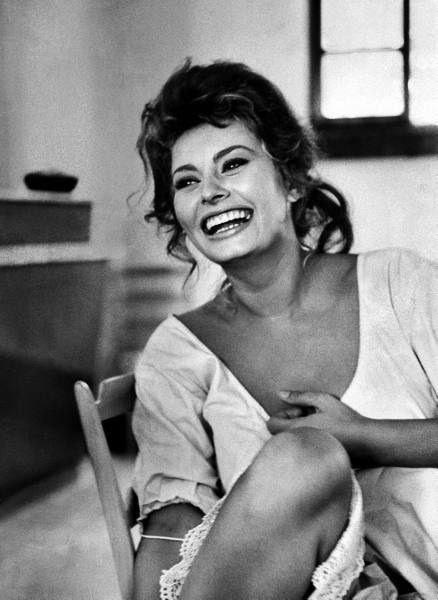
[If I could have lunch with one person I’ve never met] I would have to say Isaac Newton or Benjamin Franklin. I’ve met a lot of interesting people and some uninteresting ones, too. The two men had a bigger grasp of the world they lived in. But I don’t think I would pass up an opportunity with Sophia Loren.

-Warren Buffett.

Sophia Loren. Rome, June 1961. Photo by Alfred Eisenstaedt.


Paris Review - The Art of Nonfiction No. 3, John McPhee

Great interview. McPhee says gathering facts and writing nonfiction (as opposed to more self-generated fiction stuff) is like going from the grocery store to the kitchen:

I always say to my classes that it’s analogous to cooking a dinner. You go to the store and you buy a lot of things. You bring them home and you put them on the kitchen counter, and that’s what you’re going to make your dinner out of. If you’ve got a red pepper over here—it’s not a tomato. You’ve got to deal with what you’ve got. You don’t have an ideal collection of material every time out. […]

Once I’ve written the lead, I read the notes and then I read them again. I read them until they’re coming out my ears. Ideas occur, but what I’m doing, basically, is looking for logical ways in which to subdivide the material. I’m looking for things that fit together, things that relate. For each of these components, I create a code—it’s like an airport code. If a topic is upstate New York, I’ll write UNY or something in the margin. When I get done, the mass of notes has some tiny code beside each note. And I write each code on an index card.

That’s laying it all out where he can look at it. It’s a technique he got from his high school writing teacher. One cool thing he found is that when you get the structure set, you can let the juxtapositions do some storytelling for you. In Encounters with the Archdruid, for example:

The whole book had thirty-six components. What I ended up with was thirty-six three-by-five cards, each with a code word. Some of these things are absolutely dictated by the story of the journey down the Colorado River. But the choices are interesting where it’s not dictated, like the facts of David Brower’s life.

I knew where I was going to start, but I didn’t know the body of the thing. I went into a seminar room here at the university, and I laid the thirty-six cards out on the table. I just looked and looked at them. After a while I was looking at two cards: Upset Rapid, which is a big-time rapid in the Colorado River, and Alpinist. In Upset Rapid, Brower doesn’t ride the rapid. Why doesn’t he ride the rapid? His answer to Floyd Dominy is, “Because I’m chicken.” That’s a pretty strong scene. What next? Well, there are more than seventy peaks in the Sierra Nevada that were first ascended by David Brower, hanging by his fingernails on some cliff. “Because I’m chicken”? This juxtaposition is just loaded with irony, and by putting the Alpinist right after Upset Rapid, in the white space between those two sections there’s a hell of a lot of stuff that I don’t have to say. It’s told by the structure. It’s all crackling along between those two things. So I put those two cards side by side. Now there are thirty-four other parts there on the table.

Paris Review - The Art of Nonfiction No. 3, John McPhee