Riff Market: Theoretically Unpublished Piece About Girl Talk

I endorse this criticism, particularly regarding the uniformity of timbre/texture/tempo. And/or I’m just old and cranky and don’t understand kids these days. (via)

With Girl Talk, we get that blissful moment of recognition without having to suffer through the next three minutes and thirty seconds remembering exactly why it hasn’t been Hammertime for more than a decade now.

Also:

Girl Talk’s insistence on not being a pure DJ is a key to why the music sounds like it does, why it has only one speed, one timbre, and one density: if he lets a sample or phrase or loop breath on its own without some kind of additional percussion or secondary element, he is violating his own semantic scruples. Rule Number One of Girl Talk Club: Everything must be mashed at all times or otherwise the whole musique concrete / “art compounded from other art” rationale falls away, and Gillis is “just a DJ.”

This was intriguing, but has maybe been true for decades:

With Girl Talk compositions, one wonders how much of Gillis’s ease is a testament to his technical prowess, and how much is just an articulation of the fact that pop music has become increasingly standardized.

And also:

Forget art. The question is, without a public hungry for the references, is Feed the Animals anything at all? Does Girl Talk hold up as “music” without all the extratextual information? If you had no idea about mash-ups or hip-hop or “No Diggity” or “Epic” by Faith No More would you really be all that impressed? It would just be a long stream of unstructured pop drone. Imaginary straw-men that have lived in a underground bunker for fifty years would totally hate Girl Talk!

Riff Market: Theoretically Unpublished Piece About Girl Talk



The Problem With Memoirs - NYTimes.com

There was a time when you had to earn the right to draft a memoir, by accomplishing something noteworthy or having an extremely unusual experience or being such a brilliant writer that you could turn relatively ordinary occurrences into a snapshot of a broader historical moment. Anyone who didn’t fit one of those categories was obliged to keep quiet. Unremarkable lives went unremarked upon, the way God intended.

The Problem With Memoirs - NYTimes.com


As there is no appetite, sexual or otherwise, without excitement, the sane…

As there is no appetite, sexual or otherwise, without excitement, the sane person has to be unusually mindful of all the ways she has of attacking, trivializing, ignoring, ironizing and generally spoiling her own excitement. So she will prize charm in herself and others because charm gives excitement a chance; and she will be suspicious of her own shyness–and more sympathetically suspicious of other people’s–because it too smugly keeps the excited self at bay.

Adam Phillips.


Rope

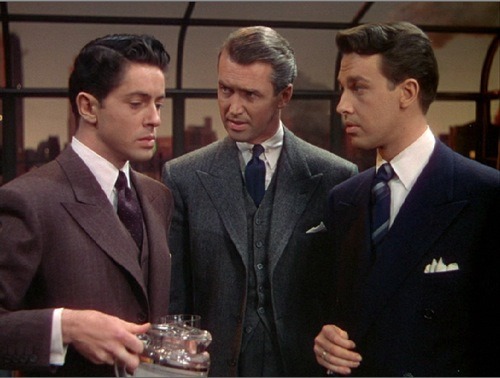
Rope. This was pretty good, but not quite high enough suspense levels with all the dinnertime distractions. There are some great side characters, though. I like the novelty of having the movie run in real-time with one camera tracking around the room. It’s based on a play of the same name, which leads to a big downside for me: walking standing talking walking standing talking walking standing talking. That’s one of the reasons I’ve never gotten into theater that much. Only so many things you can do when you’re trapped in a room, and this is no Rear Window. My updated Hitchcock rankings:

  1. Rear Window
  2. To Catch a Thief
  3. Notorious
  4. Vertigo
  5. Rope
  6. Psycho
  7. Sabotage
  8. North by Northwest
  9. The Man Who Knew Too Much

James Stewart has a pretty good track record for me. I’ll need to see some more of his movies. And I think I’ve had my fill of Hitchcock for a while, unless there’s something really awesome I still haven’t seen…?


The American

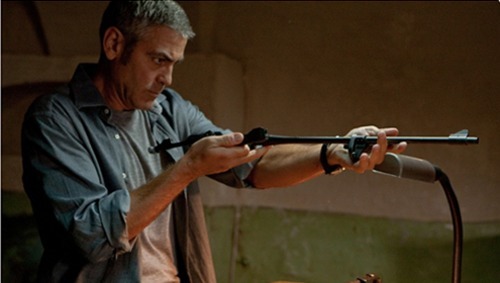
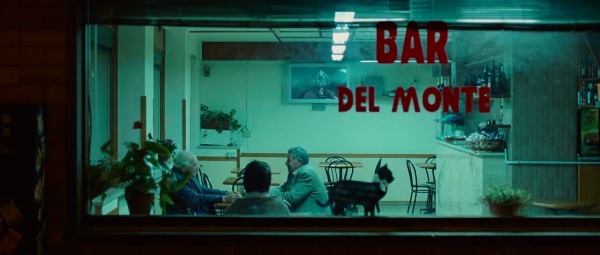
The American. It seems that critics are a bit mixed, but I’m with Ebert: I loved this one. It got billed as a semi-action-thriller. Yeah, there’s some killin’, but this is really more of a slow-burning mood piece like Le Samouraï. Or, say, a Sergio Leone western – there’s even a scene with the Once Upon a Time in the West McBain massacre playing in the background. This is not (just) about assassins doing jobs, but about an existential crisis–I detect some parallels in In Bruges, and in film noir like Blast of Silence and my beloved Out of the Past. Except this is set in sunny Italy. Great photography, absolute minimal soundtrack. Some obvious detractions are the heavy-handed dialogue with the priest and also the–yep–hooker with a heart of gold. But still. Master craftsmanship from Anton Corbijn. I’ll probably watch it again soon. Coincidentally, the only movie I watched twice last year was Clooney’s Michael Clayton. The guy’s got great taste.