I like #2: “Read people whose ideas or research you understand value.”
Five tips for writing non-fiction | The Undercover Economist | FT.com
March 9, 2010
March 8, 2010
What people today are beginning to realize is what became obvious to us back then—the important correlation is the one between familiarity and value, not scarcity and value.
John Perry Barlow, lyricist for The Grateful Dead in Management Secrets of the Grateful Dead - The Atlantic. See also John Perry Barlow in Wired, March 1994.
March 8, 2010
Tom & Jerry - Hungarian Rhapsody No. 2. One funny bit of trivia from Note by Note… the pianist Lang Lang was inspired to take up the piano after seeing Tom & Jerry’s Cat Concerto episode.
(Source: http://www.youtube.com/)
Note by Note: The Making of Steinway L1037
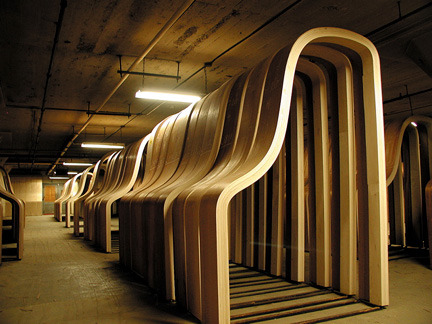 Note by Note: The Making of Steinway L1037. This was interesting, but not a must-see. You get to know the multi-national cast of employees that put them together up in the Steinway factory in Astoria, Queens, NYC. There are also some scenes from the public showrooms and artist relations (patient employees help sensitive musicians searching for an ineffable something). The scope of the actual construction is impressively broad–there are giant chunks of wood that just get absolutely manhandled, and there are tiny little fiddly bits that get tweaked and retweaked over a span of weeks. I used to work with my Grandpa in his workshop, and if you spend any time with smart carpenters, you catch on to the clever devices or tricks they invent to make the job easier. There’s some cool custom-made-for-the-job timesavers in the movie if you look for them. The downside to all the behind-the-scenes stuff is that while you see a lot, they don’t explain a lot. E.g. you see a foreman selecting wood, but you don’t know what kind of wood it is or what kind makes it better than other chunks. I don’t know that I wanted a narrator intoning facts over all the footage, but it’s a shame that so much is kept at arm’s length. Maybe a more probing interviewer could have helped. If you’re really interested in the details, I think you’re better off reading something like the A Romance on Three Legs: Glenn Gould’s Obsessive Quest for the Perfect Piano.
March 8, 2010
Papa Sangre is a forthcoming iPhone game that is audio only. Listen to this “video” above on headphones to get an idea of how awesome this game could be. I’m really looking forward to this one!
Yeah. Things like this are why I’m probably going to end up with a shiny new iPhone in a few months.
(Source: https://player.vimeo.com/)
Joanna Newsom, the Changeling - NYTimes.com
Okay-ish profile, but I like this bit in particular:
In “Sadie,” a ballad with a distinct Appalachian flavor, Newsom sings lines that could speak for thousands of musicians who’ve drawn on the deep well of American folk music: “This is an old song/These are old blues/This is not my tune/But it’s mine to use.”
March 8, 2010
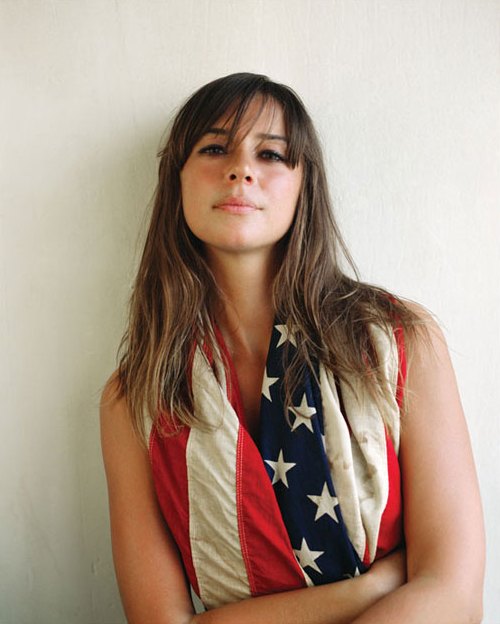
Chan Marshall Revisited « A Continuous Lean. God bless America.
Being foreign: The others | The Economist
An American child psychologist, Alison Gopnik, when reaching for an analogy to illuminate the world as experienced by a baby, compared it to Paris as experienced for the first time by an adult American: a pageant of novelty, colour, excitement. Reverse the analogy and you see that living in a foreign country can evoke many of the emotions of childhood: novelty, surprise, anxiety, relief, powerlessness, frustration, irresponsibility. It may be this sense of a return to childhood, consciously or not, that gives the pleasure of foreignness its edge of embarrassment.
Alice in Wonderland
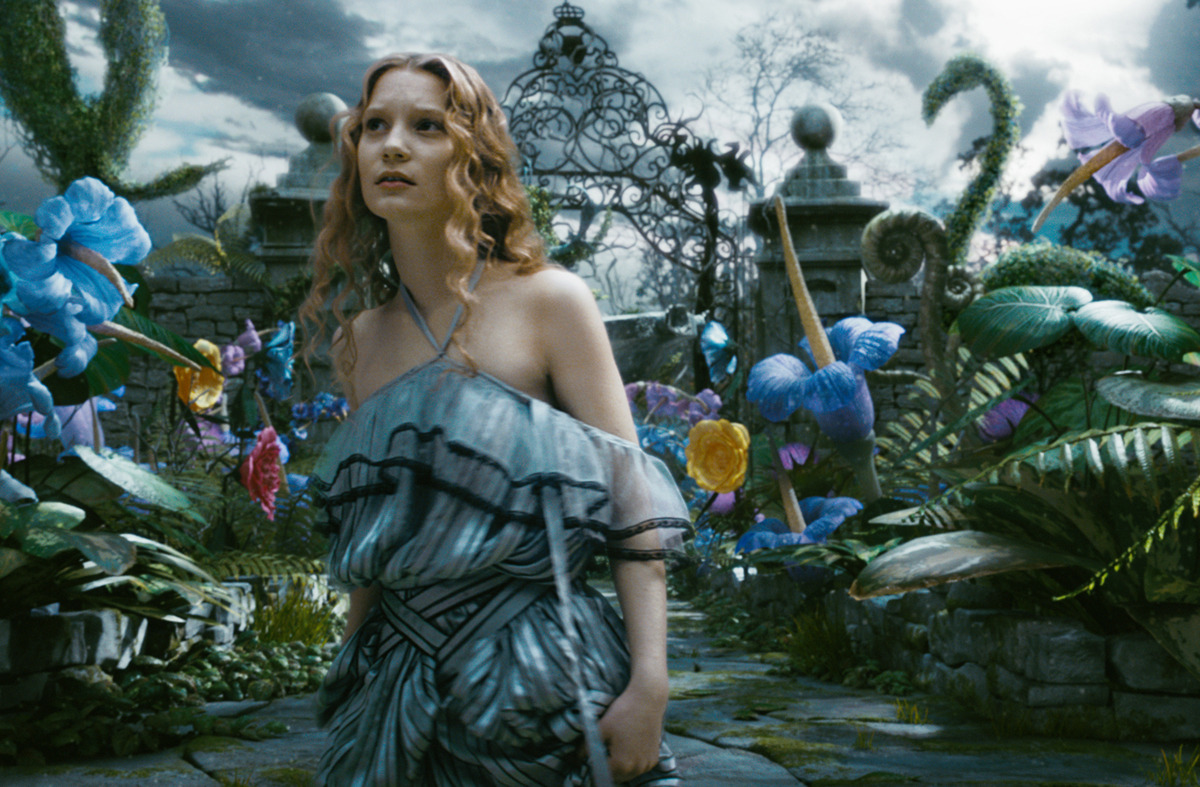 Alice in Wonderland. Mental note: refuse further invitations to see movies for kids. (See also). Too bad, because I like the cast in this one. Anne Hathaway is particularly amusing.
Barry White Gets Pissed at the Copywriter During a Recording Session - Adrants
In which Barry White “cordially invites yo ass” to something or other at Paul Quinn College. Archival outtakes ftw.
Barry White Gets Pissed at the Copywriter During a Recording Session - Adrants
Wired for Books : Author interviews on MP3
Amazing archive of interviews with authors from the 80s and 90s. A must-bookmark.
Woah.
March 4, 2010
The Cranes Are Flying
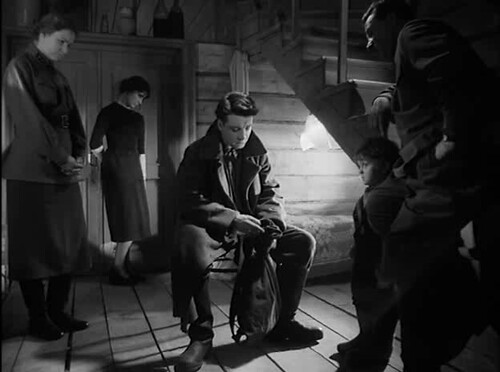
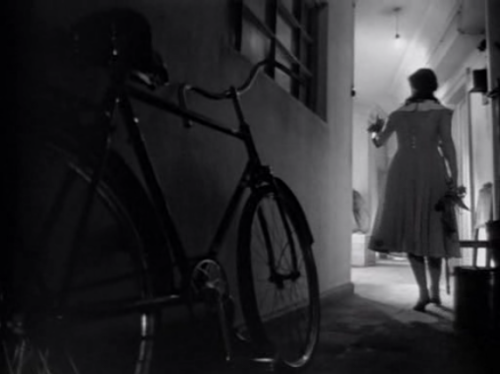
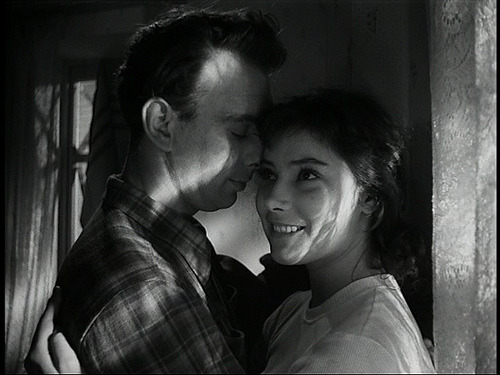 Летят журавли (The Cranes Are Flying). Here’s a good Criterion essay. It’s odd watching something like this the night after I watched Die Hard–which is a great movie, sure, but the camerawork is a bit more… utilitarian. This one is a treat for the eyes. It was directed by Mikhail Kalatozov and shot by Sergei Urusevsky, who is supposed to be a genius cinematographer. I think this is probably correct. Here are some more brilliant photos that don’t do it justice, because they’re not moving. There’s several dramatic long shots outdoors that are awesome, and many of the indoor takes have some clever tracking and repositioning. All in rich, purposefully-lit black and white. Looks like someone has put The Cranes Are Flying on YouTube so you can investigate. As for the story, it’s lovers-separated-by-war stuff. But if you’re going to get stuck watching a WWII romance that’s not Casablanca, it’s probably best take charge and pick something that’s visually awesome. And I should mention that the actors are great.



Jeff Buckley Live at KCRW on Morning Becomes Eclectic, July 28, 1994
March 3, 2010
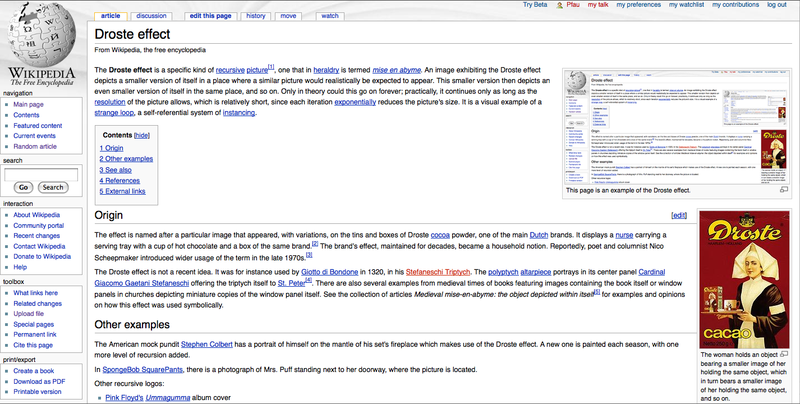
The Droste effect. Clever Wikipedians. “The effect is named after a particular image that appeared, with variations, on the tins and boxes of Droste cocoa powder, one of the main Dutch brands.”
Why you've never really heard the "Moonlight" Sonata. - By Jan Swafford - Slate Magazine
The audio examples are really fascinating. (via).
When composers wrote for these instruments they sometimes loved them and sometimes chafed at their limitations, but in any case they wrote for those sounds, that touch, those bells and whistles. From old instruments, performers on modern pianos can get important insights into the sound image that Mozart, Schubert, et al., were aiming for. But music from the 18th and 19th centuries doesn’t just sound different now than on the original instruments; some of it can’t even be played as written on modern pianos.
Why you've never really heard the "Moonlight" Sonata. - By Jan Swafford - Slate Magazine
Die Hard
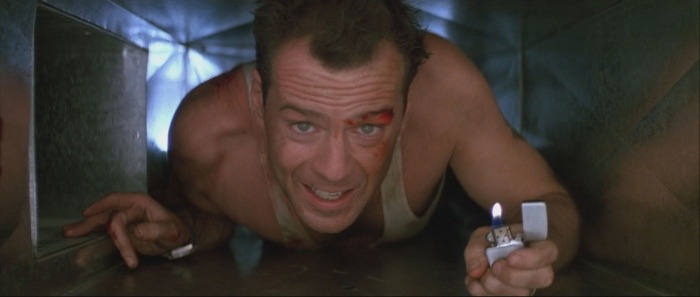 Die Hard. Excessive law enforcement buffoonery aside, it’s fun fun fun. Great movie. I got inspired to watch it after BLDGBLOG’s post on Die Hard as an architectural film.
March 1, 2010
Out of the West: Clint Eastwood’s shifting landscape by David Denby for The New Yorker. My relatively new Eastwood obsession means of course I dropped everything to read it. Lots of good stuff in this article.
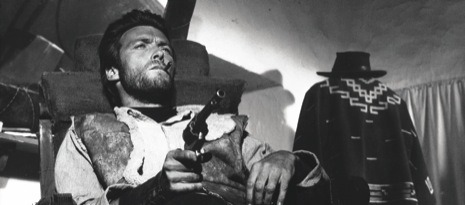
For a Few Dollars More
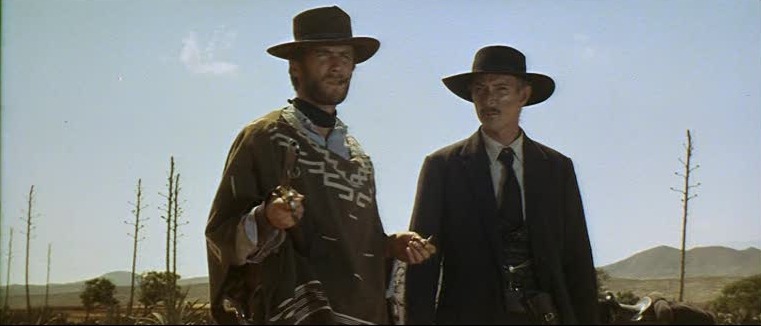 For a Few Dollars More. I’ve finally finished the Dollars Trilogy. This one is great. I found it much better than A Fistful of Dollars and almost up there with The Good, The Bad and the Ugly. The first duel in this movie is either the first or second best in the whole trilogy. I love the way Leone builds from silence to melodramatic swells of music and back to silence and only then gives you resolution. And nice little details like in the delightful hat duel where every time Eastwood shoots the hat it lands in a pool of light. And the repeated appearance of the safe during the bank robbery scene. You know something is going to happen with/to/near/around it, but you gotta wait for the moment. Sweet, sweet suspense.