Personally and emotionally it surprised me that I could actually stay committed to something so consuming without ruining my life. It’s almost axiomatic that people in the arts have to be willing to jettison their friends, marriages, loves, in order to really push through and break out. That is a hefty quantity of bullshit, and is an excuse for not living a full life and integrating work into it. This more than anything was the most positive outcome for me.
The Unlikely Disciple (review: 4/5)
 The Unlikely Disciple chronicles Kevin Roose's semester "abroad"--he transfers colleges for a semester, from Brown University to Jerry Falwell's Liberty University. This is exactly the kind of nonfiction I like: adventurous, curious, open-minded, respectful. You get a sense of his attitude in the Acknowledgements section, where Roose's final thank-you is to the students, faculty and administration at Liberty: "By experiencing your warmth, your vigorous generosity of spirit, and your deep complexity, I was ultimately convinced---not that you were right, necessarily, but that I had been wrong." I love that attitude. LOVE.
Why did he do it? Unfamiliarity, mostly:
One recent study showed that 51 percent of Americans don't know any evangelical Christians, even casually. And until I visited Thomas Road, that was me. My social circle at Brown included atheists, agnostics, lapsed Catholics, Buddhists, Wiccans, and more non-observant Jews than you can shake a shofar at, but exactly zero born-again Christians. The evangelical world, in my mind, was a cloistered, slightly frightening community whose values and customs I wasn't supposed to understand. So I ignored it.
I'm in the half that knows quite a few evangelicals, so it was really refreshing to see them treated sympathetically. It is so easy to dismiss crowds you might not agree with, or that you only know by association with FOX News (shudder). Roose offers a bunch of anthropological observations, which I found to be the best part, because many of them ring so true:
Outside of Jane Austen novels, nowhere is marriage a more frequent topic of conversation than at Christian college.
He also talks a bit about how, even at an evangelical college, everybody doubts... There's a sort of paranoia about yourself and a concern for others that animates social life. What he first perceives as prying ("Are you saved?") is actually an expression of genuine concern. And at the same time, this paranoia is balanced with a kind of self-help/empowerment vibe. Sin and salvation are two sides of the same coin:
Of all the people I expected to have a moral awakening this semester, Joey was at the bottom of the list. Liberty does this to you, though. It tempts you with the constant possibility of personal realignment.
Later in the book he joins a group for a spring break evangelism trip, down at the wild, sinful beaches of Florida. No success. Part of what cripples this crowd is a language barrier:
Claire's other problem is total linguistic isolation. She, like many other Liberty students, speaks in long, flowery strings of opaque Christian speak. When a twenty-something guy named Rick tells Claire he doesn't believe in God, Claire sighs and says, "Listen, Rick. There's a man named Jesus Christ, and he came into my heart and changed me radically. And there is a God who loves you, and who sent his son to die on the cross for you, to take away your sins and my sins, and God shows himself to me every day. When I don't have hope for tomorrow, Jesus never fails. His love is never ending."
It's no surprise that language is one thing that separates particular communities, but I'd never thought about it in a religious context before. Later in the book, when he's talking about conversion, he echoes the bit about language and community:
Maybe the transition isn't so smooth when the foreign experiences deal with God. The anthropologist Susan Harding defines a religious conversion as the acquisition of a form of religious language, which happens the same way we acquire any other language--through exposure and repetition. In other words, we don't necessarily know when we've crossed the line into belief.
If there's a weakness in this book, it's that I would have liked to read more about the culture that is Liberty University. He says he peppers other people about their history, beliefs, reasons for being at Liberty, etc. (sometimes to the point of raising suspicions of his true purpose there), but it's mostly about his own experience. This is a fair approach, but there's still a voyeuristic side of me that would like to dig more into the sociology of the college itself. Anyway, great book. Recommended.
Finishing books vs. finishing movies
Over these past few months I've been watching more movies than ever before, and Peter's tweet got me thinking about movie-patience. I DNF books all the time. Movies, I almost always finish. Why is this? A couple theories:
- Movies last a specific amount of time. Knowing that I will be done with a mediocre movie in 86 minutes makes it easier to bear. Ambiguity around the time investment works against books.
- Movies require less attention, so I can do other things while I (kinda sorta) watch. Eating, light conversation, light internetting, intermittent texting, etc.
- Because there are fewer produced, movies make better conversation topics. They have better cultural currency. More people are more likely to have seen or at least be familiar with a given movie. So there's a higher social cost for not being familiar with it.
- Movies have a better entertainment/time ratio.
- My priorities are out of whack.
- I am subconsciously addressing an innate human need for stories. Most of my reading is nonfiction, so I'm using cinema-fiction to make up for the lack of text-fiction.
- Eye candy.
- Movies involve more people, more money, more compromises, more constraints on time and budget, and thus they are less likely to have nonessential bloat. Though I can easily see this argument going the other way, too.
Other possibilities?
Isogloss - Wikipedia, the free encyclopedia
“An isogloss (sometimes called heterogloss) is the geographical boundary of a certain linguistic feature, such as the pronunciation of a vowel, the meaning of a word, or use of some syntactic feature.” (via)
March 22, 2010
The public does not like bad literature. The public likes a certain kind of literature and likes that kind of literature even when it is bad better than another kind of literature even when it is good. Nor is this unreasonable; for the line between different types of literature is as real as the line between tears and laughter; and to tell people who can only get bad comedy that you have some first-class tragedy is as irrational as to offer a man who is shivering over weak warm coffee a really superior sort of ice.
G.K. Chesterton. Quote of the Day « The Gentlemen’s Society for the Advancement of Mental Cultivation, Erudition, and Letters.
The Cameraman
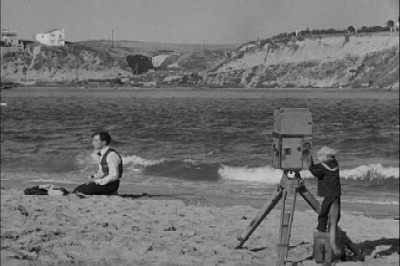 The Cameraman. Keaton’s first film with MGM, whereupon he lost creative control and began his decline. In other words, the last of the good ones. Generally, if your movie introduces a monkey companion part of the way through, you are probably not in top form. That said, the best parts are very good: the dressing room scene and the scene at Yankee stadium (love his pitcher’s mannerisms, also check out the base-running and perfectly-timed slide into home at 2:35). It’s fun at times, but doesn’t compare with The General, Sherlock, Jr., or Our Hospitality.
Why books on the iPad just might work « Snarkmarket
“If you’re playing along at home, with the exception of the first, none of these criticisms are really iPad-specific.”
The Enthusiast - The Atlantic
“Bill Simmons has set a new and unbeatable standard by writing like a fan—just far better.”
Il Posto (The Job)
Il Posto (The Job). I loved this movie and recommend it very, very highly. I would probably put this in my top 5. Here’s a Criterion essay. Basically, a young Italian goes interviewing for his first job at a faceless corporation, and there meets a lovely young woman in the same situation. A few things I loved: 1) The story centers on a reluctant hero you can relate to. He’s tentative, intimidated. You find yourself rooting for him not because there’s some obvious evil to triumph over, but because he seems like a decent guy with decent aspirations. 2) The central love interest is done so well. The tension is really amazing, mostly created with pure body language: fleeting eye contact, reflexive shifting and posture perking up, trying to suppress that rush of exhilaration when they sense potential, (not-so-)subtle ways of giving the other an opening. 3) It’s beautiful. It’s got a feeling of being both very precise and very casual. I found myself thinking “what a beautiful moment” instead of “what a beautiful shot”.
Wehr in the World: The best uses of my time
One of the things I wish more people (anyone) would blog about is not just the books, movies, blog posts, or magazine articles they liked, but rather what in their estimation were the best uses of their time. Was it a chapter of a book or a particular article from the New York Times? Beyond just the content they consumed, was it maybe a conversation with a friend?
March 17, 2010
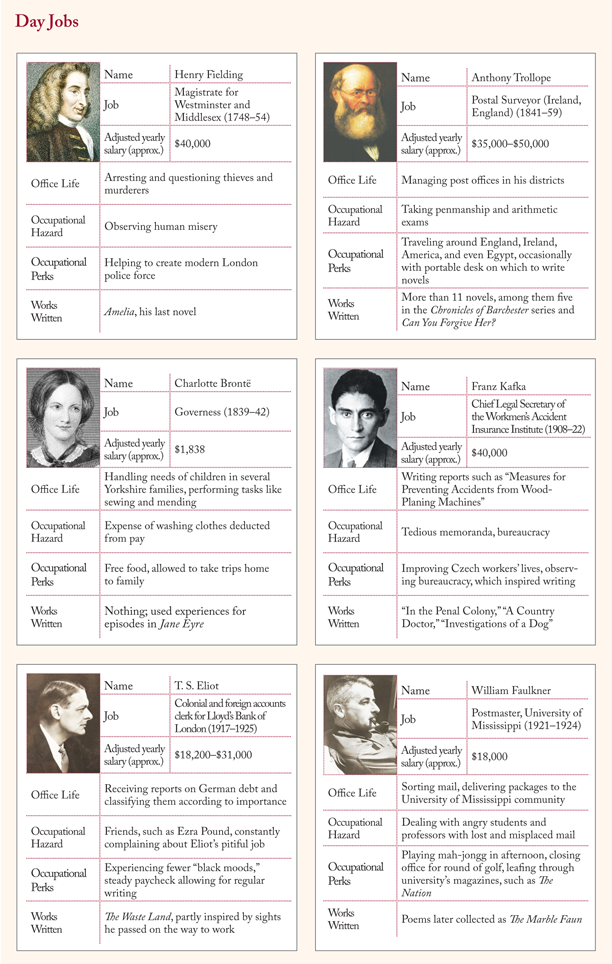
A Funkaoshi Production :: India 2010
I really loving Ramanan’s posts about his trip to India. Wonderful photos + in-the-moment notes on the iPhone. Great combo.
When the last recording studio goes, what will go with it? | Word Magazine
Up in the Air (review: 3/5)
 I saw the movie, liked it a lot, heard good things about the book and figured I might as well. I liked this one just fine. I don't think it's quite great enough to recommend, but most good fiction has some oh-yes-that's-just-like-real-life moments and general snippets of good writing worth sharing. Surely everyone knows a couple like this:
Her husband makes it all possible, a software writer flush with some of the fastest money ever generated by our economy. He hangs pleasantly in the background of Kara's life, demanding nothing, offering everything. They're a bountiful, gracious people, here to help, who seem to have sealed some deal with the Creator to spread his balm in return for perfect sanity.
A nice bit of airline paranoia:
I turn on my HandStar and dial up Great West's customer information site, according to which our flight is still on time. How do they keep their lies straight in this business? They must use deception software, some suite of programs that synchronizes their falsehoods system-wide.
After a disagreement with his sister during a road-side stop, she walks away and he philosophizes on male-female argument dynamics:
My sister is dwindling. It's flat and vast here and it takes time to dwindle, but she's managing to and soon I'll have to catch her. There are rules for when women desert your car and walk. The man should allow them to dwindle, as is their right, but not beyond the point where if they turn the car is just a speck to them.
On childish yet important body-language politics during a business lunch:
He chooses a two-setting table on a platform and takes the wall seat. From his perspective, I'll blend with the lunch crowd behind me, but from mine he's all there is, a looming individual. Fine, I'll play jujitsu. I angle my chair so as to show him the slimmest, one-eyed profile. The look in my other eye he'll have to guess at.
On Denver and arts scenes:
I've been told my old city possesses a "thriving arts scene," whatever that is; personally, I think artists should lie low and stick to their work, not line-dance through the parks.
Notes from Los Angeles
 My first-ever trip to L.A. I liked it a lot. I had a feeling I would. I might even like it more than New York, but that's still to be determined. The weather was perfect. 70° down to 45-50°. Sunny sunny sunny. Great neighborhoods. Some observations not necessarily about Los Angeles:
- The pleasing effect of variety in terrain is not to be underestimated. One thing I love about Los Angeles, San Francisco, Reykjavik (and to a lesser extent Portland and some spots in Nicaragua) is the quick changes from coast to city to mountain. It's nice to feel that even if where you are is cool, something very different is nearby.
- There is a certain joy in seeing stereotypes/archetypes in real life: Homosexual guy walking back from a gym in West Hollywood. Asian tourists with cameras and fanny packs. California girl finishing a coffee on the way to yoga. I think archetype-spotting is a subconscious expectation of travel.
- I am tired of carrying a camera. I'm getting to the point where a crummy cameraphone snap is near-infinitely superior to toting a separate camera. Speaking of me tending to pack light...
- If I am going somewhere with multiple others (esp. females, sorry), transitions always take longer than I expect. I tend to be a quick packer and get-ready-er. But for other folks, there is clothing, hair, makeup to deal with; keys, phones, sunglasses and odds and ends to gather. So I twiddle my thumbs and keep the conversation going while the sartorial I's are dotted and T's crossed. I wonder how much time, over the course of my life, I will spend waiting for people to get ready, and if there is a better way to use it.

- Traffic wasn't as bad as I expected. I think this is partly because I wasn't doing a morning or evening commute, and partly because I'm used to trafficky Atlanta. Even so, not that bad.
- Los Angeles looks bigger on a map than it feels in real life. I get the opposite feeling in Manhattan.
- The Getty is really great. That said, here's a tangent: When I'm in a museum, I prefer to stroll on the quicker side. I'll glance at everything, but usually while in motion. The ones I like, I'll linger for a few minutes. This is most definitely a museum burnout-avoidance technique, but also simply could be a way to avoid boredom, the pressure to feel edified. Would I enjoy more the ones I tend skip in a different context? Setting up high filters the way I do, what kind of art has an easier time getting through? What do I like more when I'm alert vs. when I'm tired? Hmm.

Marginal Revolution: Why do people ask questions at public events?
It matters a great deal if people have to write out questions in advance, or during the talk, and a moderator then reads out the question. That mechanism improves question quality and cuts down on the first three motives cited. Yet it is rarely used. In part we wish to experience the contrast between the speaker and the erratic questioners and the resulting drama.
I like the second commenter’s suggestion: “Take multiple questions at once. The moderator will take say three questions from three audience members before giving the presenter a chance to answer them one-by-one.”
Marginal Revolution: Why do people ask questions at public events?
March 10, 2010
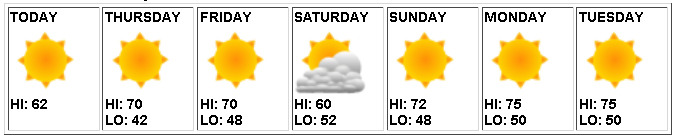
Forecast for Los Angeles. Hell yeah.
March 9, 2010
What you have to find is your own niche that will allow you to keep feeding and clothing and sheltering yourself without getting downtown. (Laughs.) Because that’s death. That’s really where death is.
Interview with Nora Watson in Studs Terkel’s Working.
Working: The Graphic Novel - Bryan Caplan | EconLog
Interesting. There’s a graphically-novelized version of Studs Terkel’s book from 1974, Working: People Talk About What They Do All Day and How They Feel About What They Do. Graphic novelizations make me cringe a little, but Harvey Pekar is behind it, so who knows.
March 9, 2010
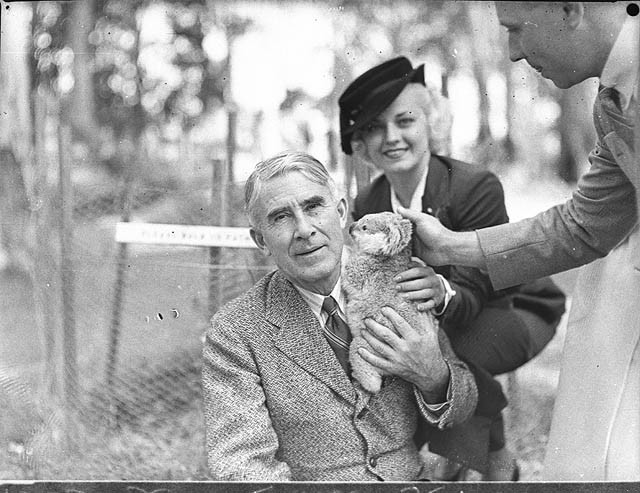
Zane Grey holds a koala during a visit to Australia. I just started reading Riders of the Purple Sage.