This week’s issue has been pretty darn good so far. “The goal: to walk from the Empire State Building, on West Thirty-third Street, to Rockefeller Center, on West Forty-eighth, without ever setting foot on Fifth or Sixth Avenue.”
September 8, 2010
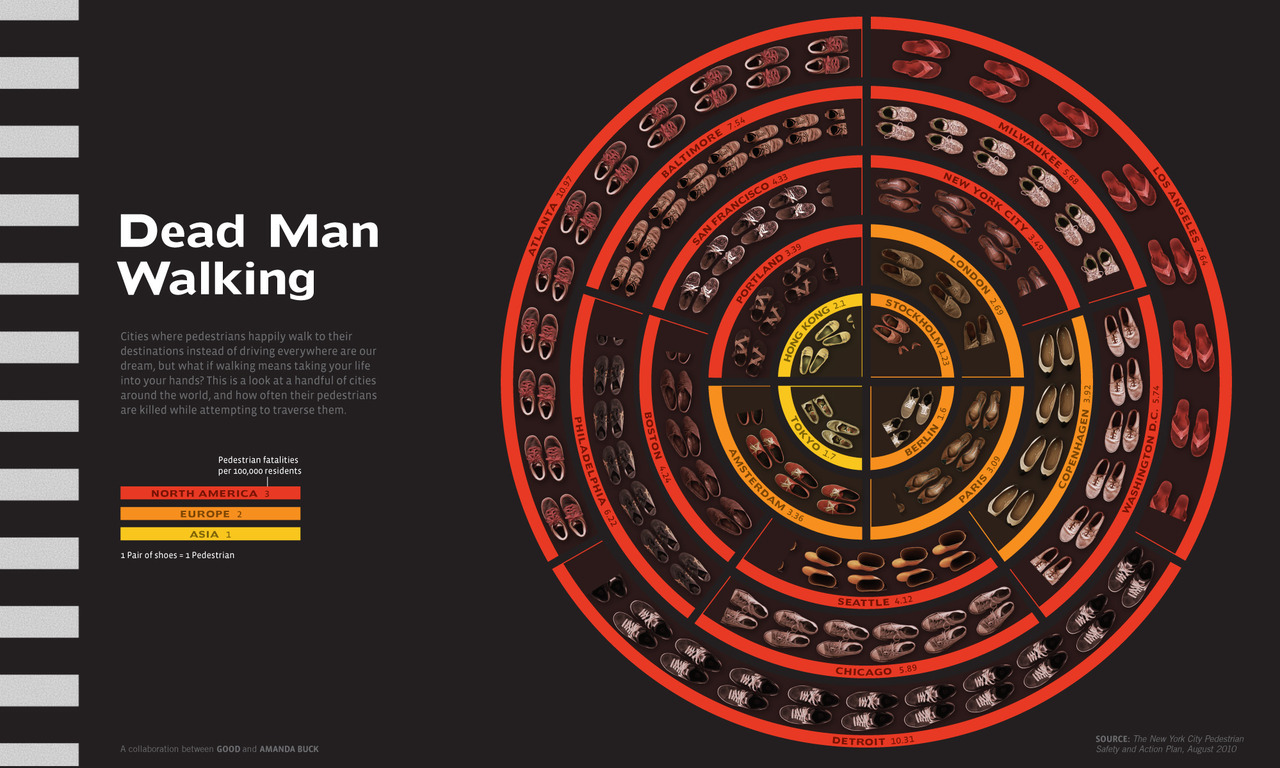
Dead Man Walking - Pedestrian fatalities per 100,000 residents. Atlanta wins! (via)
Vanity sizing for men < PopMatters
On the recent Esquire pants-size exposé:
Retailers’ facilitating the illusion that we are thinner than we are is a by-product of their chief goal, which is to force us to try on every item of clothing we are considering buying and let the endowment effect work its behavioral magic. Trying something on invests us in completing the purchase to a much greater degree—we’ve gone to all that trouble already and want something to show for our effort—and it also habituates us to the idea that we already own the thing we put on, and to not buy it feels as though we have lost something or had something taken away from us. So the sizes are just very vague guidelines to help us know which items to take to the fitting rooms.
Come to think of it, the endowment effect is probably another reason smart parents tell kids not to touch anything when they go in the store.
Vanity sizing for men < PopMatters
September 8, 2010

September 7, 2010

On Wikipedia, Cultural Patrimony, and Historiography | booktwo.org. (via)
This particular book—or rather, set of books—is every edit made to a single Wikipedia article, The Iraq War, during the five years between the article’s inception in December 2004 and November 2009, a total of 12,000 changes and almost 7,000 pages.
September 7, 2010

Chocolate and tahini make a delicious goeey cake | La Tartine Gourmande. A friend made this last week. And it was good.
La Baie des Anges (Bay of Angels)
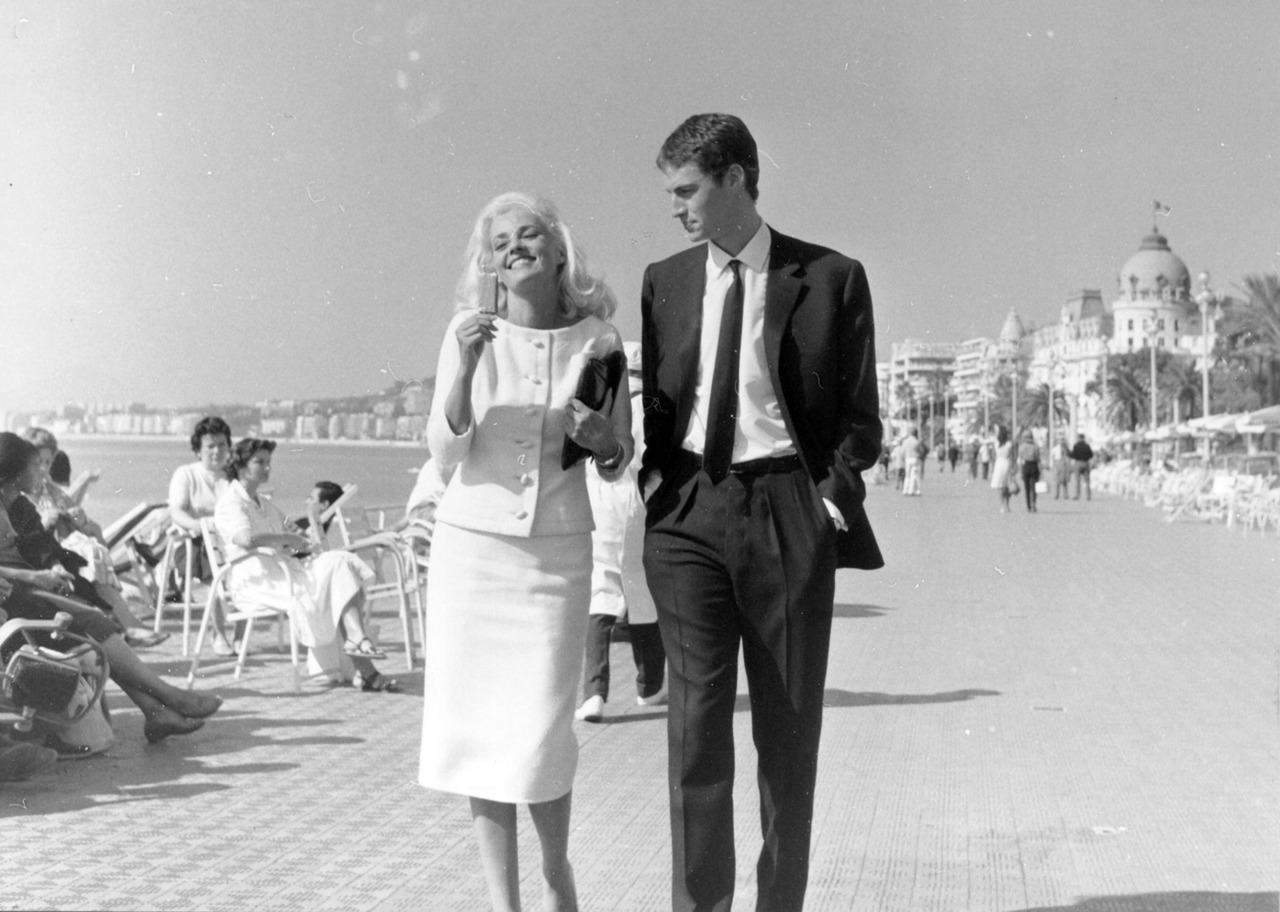 La Baie des Anges (Bay of Angels). A man, new to the casino world, falls in love with an older, compulsive-gambling veteran. A simple story well-told. I have no idea if he’s seen it or not, but I think some of Woody Allen’s DNA comes from this strand. Also, given the up and down nature of gambler’s luck, you can’t help but wonder if the ending would be different if the credits rolled a little later. Such is love. Recommended!
September 6, 2010
The story behind James Carr’s “At The Dark End Of The Street”:
It amazes me that THIS is the story behind one of the best soul songs ever recorded:
It was the Summer of ‘66, and Memphis was chock full of DJs in town for a convention. Songwriter Dan Penn and session guitarist Chip Moman were taking advantage of the situation, cheating Florida DJ Don Schroeder out of his money in a card game.
They wrote the song about two lovers in an illicit affair while on break from the game. ”We were always wanting to come up with the best cheatin’ song ever,” Penn explained.
They went to Quentin Claunch, partner in Goldwax Records and a fellow alumnus of the Muscle Shoals music scene, and asked to borrow his hotel room for a half hour. He agreed, on the condition that whatever song they wrote, they give it to Claunch for his singer, James Carr. A deal was struck and the rest is history.
Terrific song. A Youtube search will show you all the cover versions out there.
One of my favorite new-to-me songs from earlier this summer.
(Source: https://www.youtube.com/)
September 6, 2010
Adam and I visited the wonderful public radio program (and podcast) The Marketplace of Ideas, and they’ve just posted the show. A lot of in-depth talk both about our philosophies of dress and about the behind-the-scenes of Put This On.
My favorite idea from this interview: style qua semiotics.
Adam Phillips on the happiness myth | Books | The Guardian
Happiness and the right to pursue it are sometimes wildly unrealistic as ideals; and, because wildly unrealistic, unconsciously self-destructive.
Interesting essay with some good tidbits. This bit on pathologies could also apply, more mildly, to how we react to differing opinions:
We tend to pathologise the forms of happiness we cannot bear.
And on education:
There are, for example, only two reasons for children to go to school – apart, that is, from acquiring the werewithal to earn a living: to make friends, and to see if they can find something of absorbing interest to themselves.
September 6, 2010
Happy endings in life, and in fiction too perhaps, are really about where you decide to roll the credits.
Interview with William Gibson - Viceland Today
What we call terrorism is always asymmetric warfare. You’re a small group with no reputation, and you start covertly blowing up or murdering the people of a big group, like a government or a nation-state or a whole race. And you can’t just do it and then go and do the next one. You have to do it, and then go and do your PR. “We just bombed your mall. It was us.” And then maybe you do it, and some other guys, these upstart assholes across town, are calling up the news and saying, “We did it! We bombed the mall!” So then you have to get your PR guy on the phone and say, “No, they’re full of shit. WE bombed the mall.” So it’s about branding to that extent.
Urban Legends - By Joel Kotkin | Foreign Policy
Why cities grow and why urban planning as we now practice it won’t really help the millions who are moving to mega-cities (read: slums) in other parts of the world.
Slaughterhouse 90210: Where high meets low | Jacket Copy | Los Angeles Times
September 2, 2010

Apres Garde is one of my favorite tumblogs.
September 2, 2010
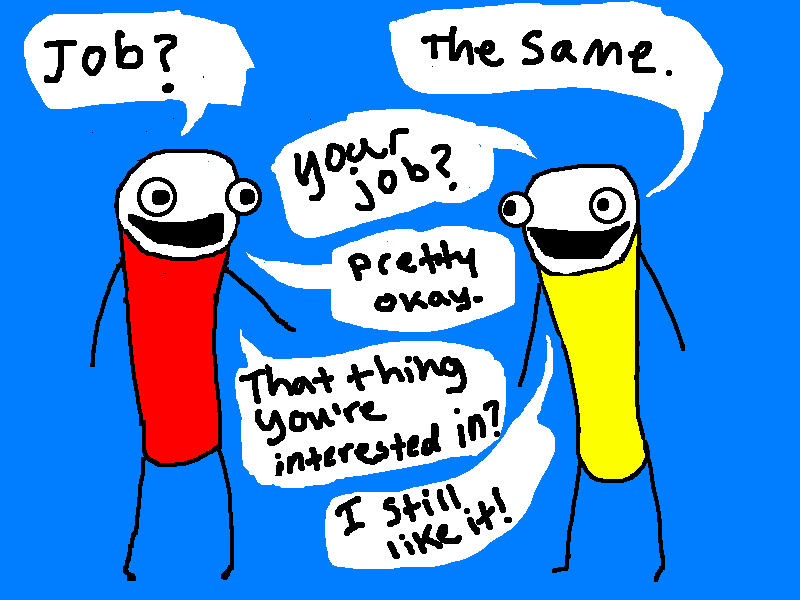
Hyperbole and a Half: The Four Levels of Social Entrapment. “There is a special kind of awkwardness between two people who don’t know each other well enough to interact effectively, but are familiar enough that ignoring each other’s presence isn’t really an option.”
September 2, 2010
Ars longa, vita brevis, occasio praeceps, experimentum periculosum, iudicium difficile.
Hippocrates. We know it best as the phrase “life is short”, but I didn’t know that was shortened from a longer, more interesting line: “Life is short, the art long, opportunity fleeting, experiment fallible, judgment difficult.” Ars longa, vita brevis - Wikipedia, the free encyclopedia.
How To Raise A Superstar | Wired Science | Wired.com
Single-minded focus too soon can be a hindrance. Better to branch out and learn how to practice and fail well.
September 2, 2010
September 2, 2010
The real risk is in not changing. I have to feel that I’m after something. If I make money, fine. But I’d rather be striving. It’s the striving, man, it’s that I want.
John Coltrane, quoted in Paul D. Zimmerman’s “Death of a Jazz Man”, Newsweek, July 31, 1967.