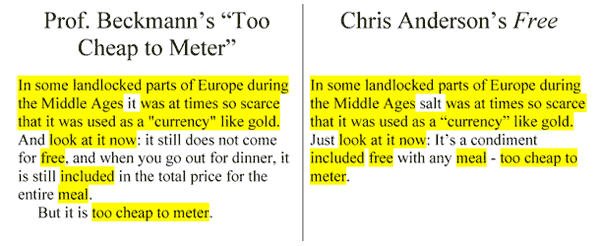
Chris Anderson’s Free Contains Apparent Plagiarism. Not sure what to make of the copying, but I like the presentation from the folks at VQR. Side-by-side comparison FTW!
Chris Anderson’s Free Contains Apparent Plagiarism. Not sure what to make of the copying, but I like the presentation from the folks at VQR. Side-by-side comparison FTW!
Tyler Cowen summarizes some of the contents of his new book. Some bits I’m curious about:
2. A new vision for how “autistic cognitive strengths” are a major dynamic element in human history and that includes a revisionist view of the autism spectrum.
3. New ways of thinking about what you’re really good at (and not so good at).
4. A view of why education is much more than just signaling, but why you should be cynical about most education nonetheless.
7. Why the Sherlock Holmes stories are a lot more interesting than most people think.
10. The importance of neurology for unpacking debates about aesthetics, especially when it comes to music.
I finished his Discover Your Inner Economist last week, which was wide-ranging and breezy and smart, just like the blog he co-writes. Looking forward to this new book.
Marginal Revolution: *Create Your Own Economy*, standing on one foot
An economy that is more entrepreneurial, less managerial, would be less subject to the kind of distortions that occur when corporate managers’ compensation is tied to the short-term profit of distant shareholders. For most entrepreneurs, profit is at once a more capacious and a more concrete thing than this. It is a calculation in which the intrinsic satisfactions of work count.
Matthew B. Crawford, The Case for Working With Your Hands. NYT Magazine, 5.24.09. That last sentence is such a winner. (via)
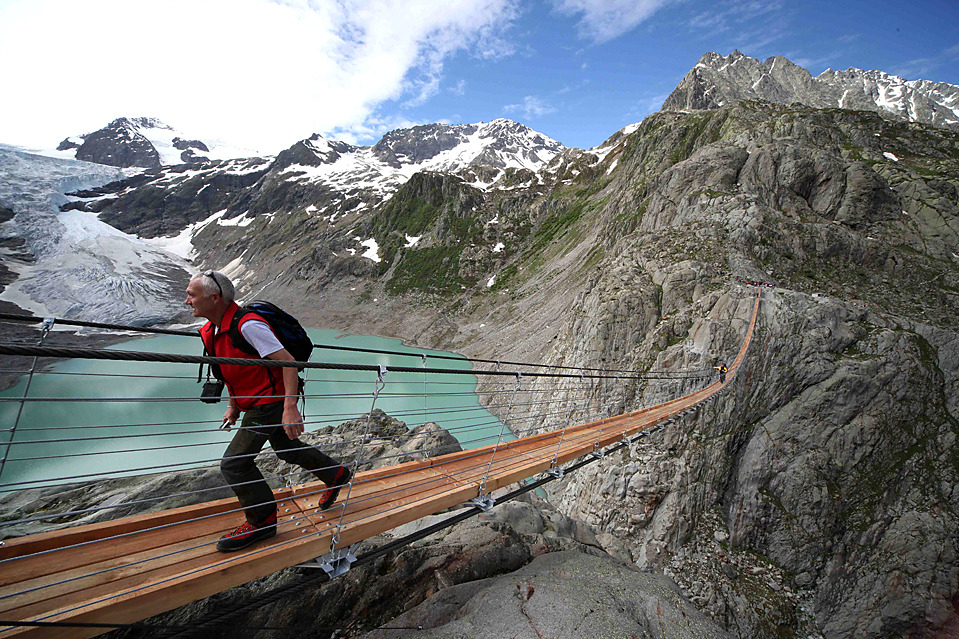
The Trift Bridge in Switzerland is the longest pedestrian suspension bridge in the world. 46°41'38"N 8°21'27"E. (via)
I’m not sure how big it got, but I know I missed this growing up in rural north Georgia. Apparently, for a time in the late ‘80s and early '90s (as LPs and 45s were fading but before CDs made a big splash, way before our idyllic days of mp3 ubiquity), you could buy singles for $0.50-$1.50 or so, and have them recorded on a custom-labeled mixtape. (via retro thing)
(Source: https://www.youtube.com/)
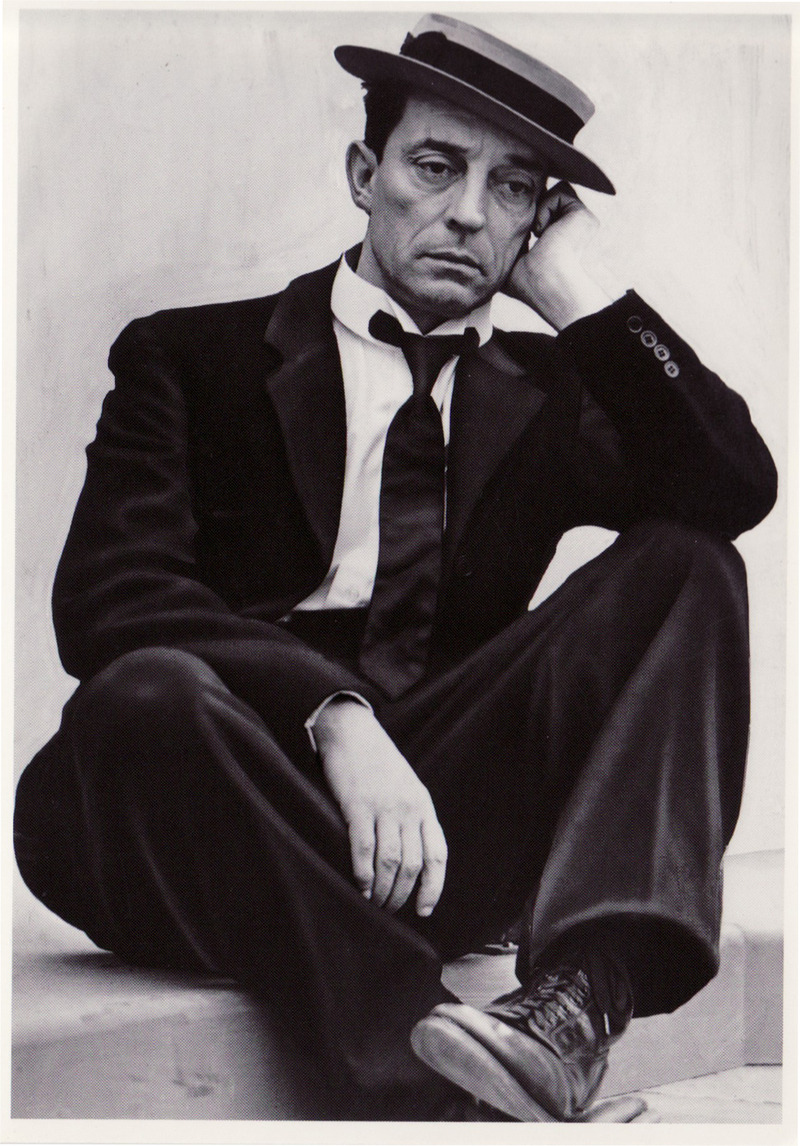
I really want to see some Buster Keaton films after reading about him in Walter Kerr’s essay “The Keaton Quiet”. I haven’t been able to find it online, but it’s in Kerr’s book The Silent Clowns and in the movie critic anthology I’ve been reading. Here’s Rogert Ebert on Buster Keaton.
As if lugging around a book the size of a 2 br. 1¼ bath apartment isn’t enough, you may want to carry a notebook as well. You won’t always have the requisite Oxford English Dictionary within arm’s reach, you know.
How to Read Infinite Jest. (via infinitetumblr).
I checked this out from the library a while ago. Unfortunately, some guy had it requested before I could break into triple-digit pages. Now that I’m armed with my very own shiny new copy, I’m ready to dive back in.
Just learned a new word: “Walla is a sound effect imitating the murmur of a crowd in the background.”
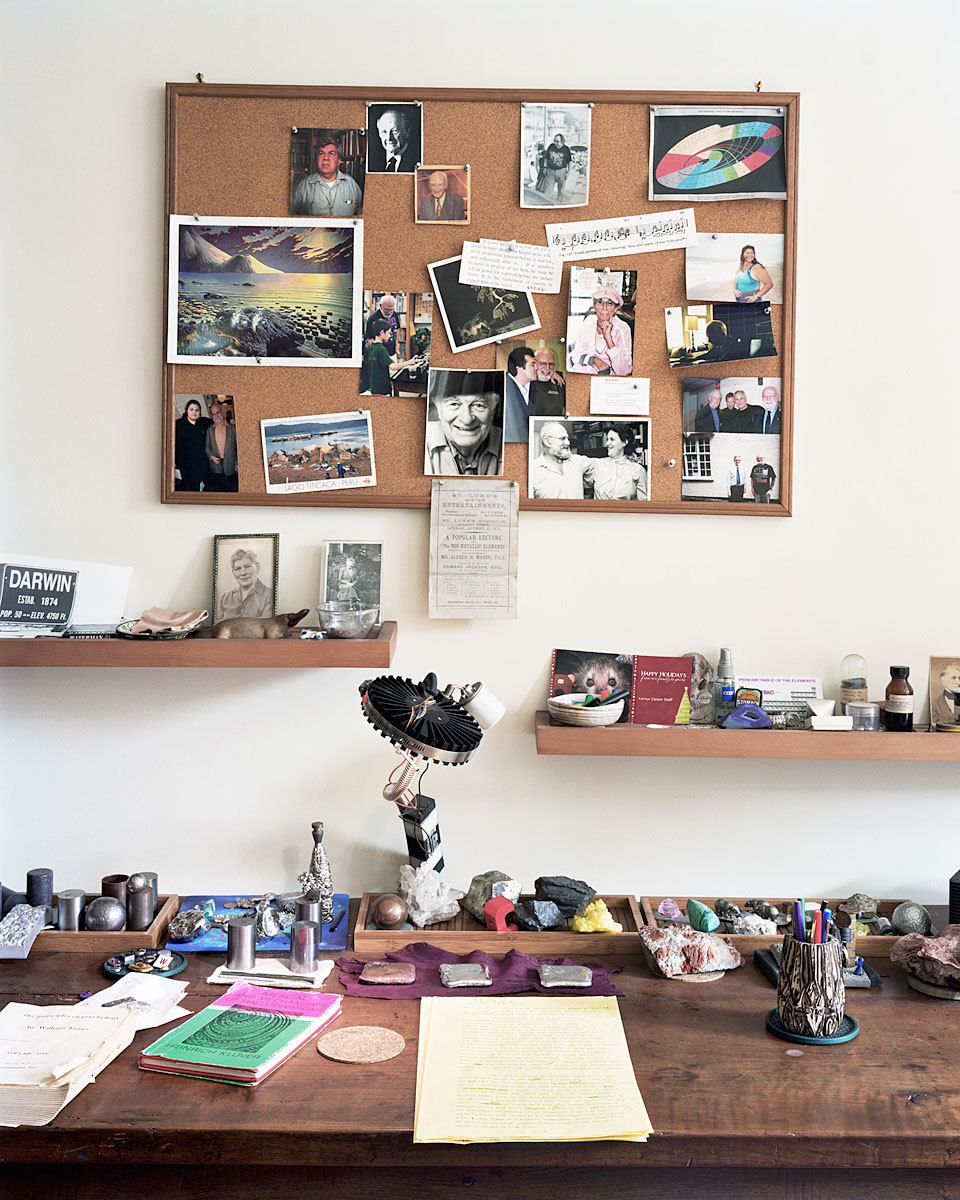
Oliver Sacks’ desk. I like this workspace: a few books, paper, pencil, some raw metals, and a few photos of friends. [via @thebookslut]
One of the tasks of the film critic of tomorrow - perhaps he will even be called a “television critic” - will be to rid the world of the comic figure the average film critic and film theorist of today represents: he lives from the glory of his memories like the seventy-year-old ex-court actresses, rummages about as they do in yellowing photographs, speaks of names that are long gone. He discusses films no one has been able to see for ten years or more (and about which they can therefore say everything and nothing) with people of his own ilk; he argues about montage like medieval scholars discussed the existence of God, believing all these things could still exist today. In the evening, he sits with rapt attention in the cinema, a critical art lover, as though we still lived in the days of Griffith, Stroheim, Murnau, and Eisenstein. He thinks he is seeing bad films instead of understanding that what he sees is no longer film at all.
The Film Critic of Tomorrow. Rudolf Arnheim, 1935. Ah, the troubles of understanding and reconciling The New with the vast collection of Things We Already Love.
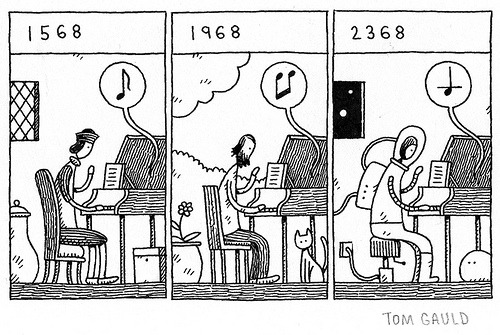
97. Harpsichord. Plus ça change…

Found this in the Metropolis parking deck in a handicap spot of all places. plate says “11MPG”.
Shaq vs. Bynum. The little tussle at the end is stupid; but you gotta love seeing Shaq embarrass someone with a huge dunk, and then seeing him get shown up seconds later. I don’t even care about basketball, but Bynum’s rebuttal got me fired up.
Your required reading of the week: Trash, Art, and the Movies. This piece from Pauline Kael appeared in Harper’s, February 1969. I found it in the American Movie Critics anthology and couldn’t put it down. It’s a fantastic essay about high art and low art, what makes movies fun and what makes them tedious. Some good bits…
On connecting with like-minded people (It’s more fun to meet someone who also likes Footloose than to meet someone who also likes, I don’t know, Lawrence of Arabia.):
The romance of movies is not just in those stories and those people on the screen but in the adolescent dream of meeting others who feel as you do about what you’ve seen. You do meet them, of course, and you know each other at once because you talk less about good movies than about what you love in bad movies.
On schooling and aesthetic development (being taught vs. learning to discern):
Perhaps the single most intense pleasure of moviegoing is this non-aesthetic one of escaping from the responsibilities of having the proper responses required of us in our official (school) culture. And yet this is probably the best and most common basis for developing an aesthetic sense because responsibility to pay attention and to appreciate is anti-art, it makes us too anxious for pleasure, too bored for response. Far from supervision and official culture, in the darkness at the movies where nothing is asked of us and we are left alone, the liberation from duty and constraint allows us to develop our own aesthetic responses. Unsupervised enjoyment is probably not the only kind there is but it may feel like the only kind. Irresponsibility is part of the pleasure of all art; it is the part the schools cannot recognize.
On “redeeming” pop trash with academic jargon (just enjoy it, folks!):
We shouldn’t convert what we enjoy it for into false terms derived from our study of the other arts. That’s being false to what we enjoy. If it was priggish for an older generation of reviewers to be ashamed of what they enjoyed and to feel they had to be contemptuous of popular entertainment, it’s even more priggish for a new movie generation to be so proud of what they enjoy that they use their education to try to place trash within the acceptable academic tradition. […] We are now told in respectable museum publications that in 1932 a movie like Shanghai Express “was completely misunderstood as a mindless adventure” when indeed it was completely understood as a mindless adventure. And enjoyed as a mindless adventure. It’s a peculiar form of movie madness crossed with academicism, this lowbrowism masquerading as highbrowism, eating a candy bar and cleaning an “allegorical problem of human faith” out of your teeth.
 Last weekend was a little road trip out to Birmingham. So nice to catch up with a friend that I hadn't seen for an absurd amount of time, and also make some new ones. I ate at Cantina, where the fishburgers and garlic fries get my hearty recommendation. Also saw Bon Iver (good performance) and Elvis Perkins (really, really good performance) in concert at Workplay. Workplay is a nice open venue that'll fit a couple hundred comfortably. Wallflowers and concert snobs will enjoy the options: an elevated perimeter of tables that surrounds the main floor and the stage, and then above that there's an upper deck with more tables and chairs and waiters at your beck and call. Nice. We also stumbled upon the McWane Science Center downtown whilst in search of a bathroom. Looked like there was a "Night at the Imax" sort of event going on for the kids.

DesignNotes by Michael Surtees » Walking on Top of the High Line. Jealous! I wish we had something like that in Atlanta. That’s going to be a cool spot.

via alex ross
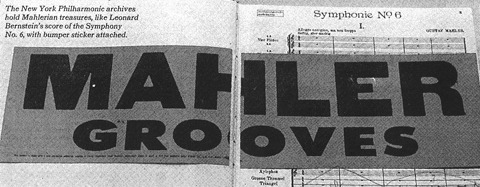
Mahler Grooves [via alex ross]