October 13, 2010

Ten Ragas to a Disco Beat - Charanjit Singh.

Performed on the synths that would later define Acid House, the Roland TB-303 and TR-808, the album sounds light years ahead of its time with its repetitive beats and hypnotic electronic melodies. Its maker, Bollywood session musician Charanjit Singh, set out to translate ancient Indian classical Ragas to the modern synthesizer and in doing so seems to have invented House music along the way.

More on the album and the culture of ‘80s Indian synthesizer stuff here and here.


October 12, 2010

http://www.eonline.com/videos/swf/CEGDynamicPlayer.swf

Eric Stoltz was the first Marty McFly. So weird to see the wrong actor in those scenes.

Here’s a movie idea: two 45-minute films, as identical as possible in setting, costume, lighting, framing, tone, etc. but with a different set of lead actors. Not too many, maybe 1-5 switched out. Film them as contemporaneously as possible. Screen'em back-to-back. Anyone ever done this?

(Source: http://www.eonline.com/)


Permanent style: When style becomes costume

Men who are very interested in their clothes are part geeky, petty academic and part creative, artistic aesthete. Everyone needs the former to drive them into reading and investigation, to be interested by the history and traditions of men’s attire. But everyone also needs the latter, to have the kind of mind that created these traditions in the first place.

Of course, this applies to more than just fashion.

Permanent style: When style becomes costume


October 12, 2010

It was at a concert of lovely old music. After two or three notes of the piano the door was opened of a sudden to the other world. I sped through heaven and saw God at work. I suffered holy pains. I dropped all my defenses and was afraid of nothing in the world. I accepted all things and to all things I gave up my heart. It did not last very long, a quarter of an hour perhaps; but it returned to me in a dream at night, and since, through all the barren days, I caught a glimpse of it now and then.

Herman Hesse’s Steppenwolf on musical ecstasy.


Metropolis

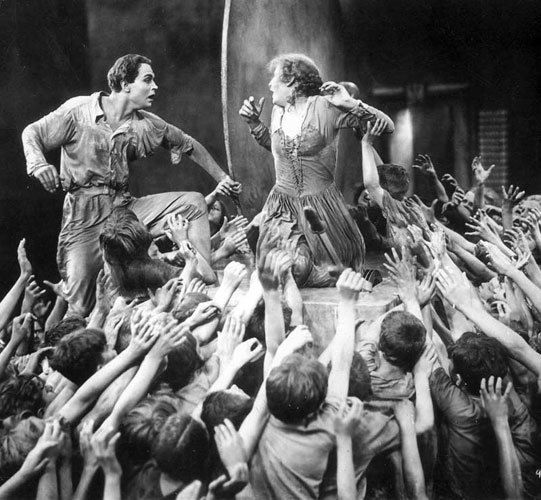
Metropolis. Amazing. I was pumped-up to see this latest restoration and it did not disappoint. Fritz Lang went big with this one. So good. So many themes. Solid, archetypal characters (tycoon/forbidding father, sketchy henchman, mad scientist, romantic hero, maiden/whore/messiah, trusty sidekick, etc.) all with their own clear relationships to each other. A pretty amazing soundtrack (with cameos of the Dies Irae and La Marseillaise). Many of the sets would still look incredible today. It’s old enough to bring out some unintended laughter here and there, but I thought it was pretty gripping most of the way.


Vertigo

Vertigo. The first hour was really fun, there’s emotional anguish in the conclusion that I wasn’t expecting from Hitchcock, and several twists along the way that I totally didn’t see coming. James Stewart rules. The soundtrack was very good and the audio in general–engines, footsteps, city life–seemed really, really sharp. I’d rank it among the better Hitchcock films I’ve seen, but I think I’d put it in third place behind Rear Window and To Catch a Thief.


Dickens in Lagos - Lapham’s Quarterly

George Packer argues that “in vast, impoverished cities like Bombay, Cairo, Jakarta, Rio, or Lagos, the plot lines of the nineteenth century proliferate.” And thus, the readers of the developing world can more easily relate.

The concerns of that literature [late 19th-century novels]—the individual caught in an encompassing social web, the sensitive young mind trapped inside an indifferent world, the beguiling journey from countryside to metropolis, the dismal inventiveness with which people survive, the permanent gap between imagination and opportunity, the big families whose problems are lived out in the street, the tragic pregnancies, the ubiquity of corruption, the earnest efforts at self-education, the preciousness of books, the squalid factories and debtor’s prisons, the valuable garbage, the complex rules of patronage and extortion, the sudden turns of fortune, the sidewalk con men and legless beggars, the slum as theater of the grotesque: long after these things dropped out of Western literature, they became the stuff of ordinary life elsewhere, in places where modernity is arriving but hasn’t begun to solve the problems of people thrown together in the urban cauldron.

Dickens in Lagos - Lapham’s Quarterly


October 8, 2010

When I was young, I read The Richest Man in Babylon, which said to under-spend your income and invest the difference. Lo and behold, I did this and it worked. I got the idea to add a mental compound interest too, so I decided I would sell myself the best hour of the day to improving my own mind, and the world could buy the rest of the time. It sounds selfish, but it worked.

Charlie Munger on investing in your brain. The Richest Man in Babylon looks pretty sensible.


Mirrored Las Vegas hotel turns into parabolic solar cooker

The tall, sleek, curving Vdara Hotel at CityCenter on the Strip is a thing of beauty. But the south-facing tower is also a collector and bouncer of sun rays, which – if you’re at the hotel’s swimming pool at the wrong time of day and season – can singe your hair and melt your plastic drink cups and shopping bags.

I work next to a building like this, except the death rays shine right on the sidewalk. (via)
Mirrored Las Vegas hotel turns into parabolic solar cooker