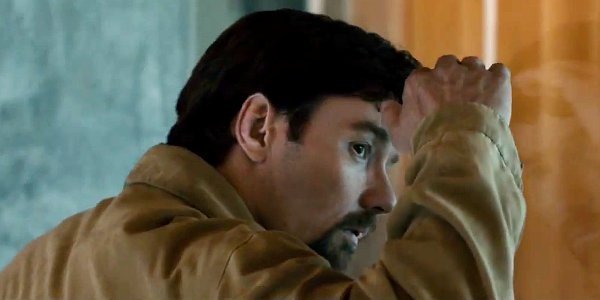
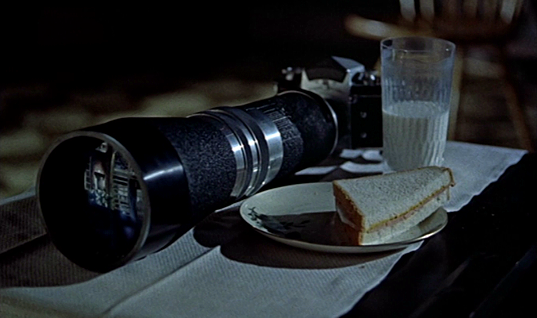
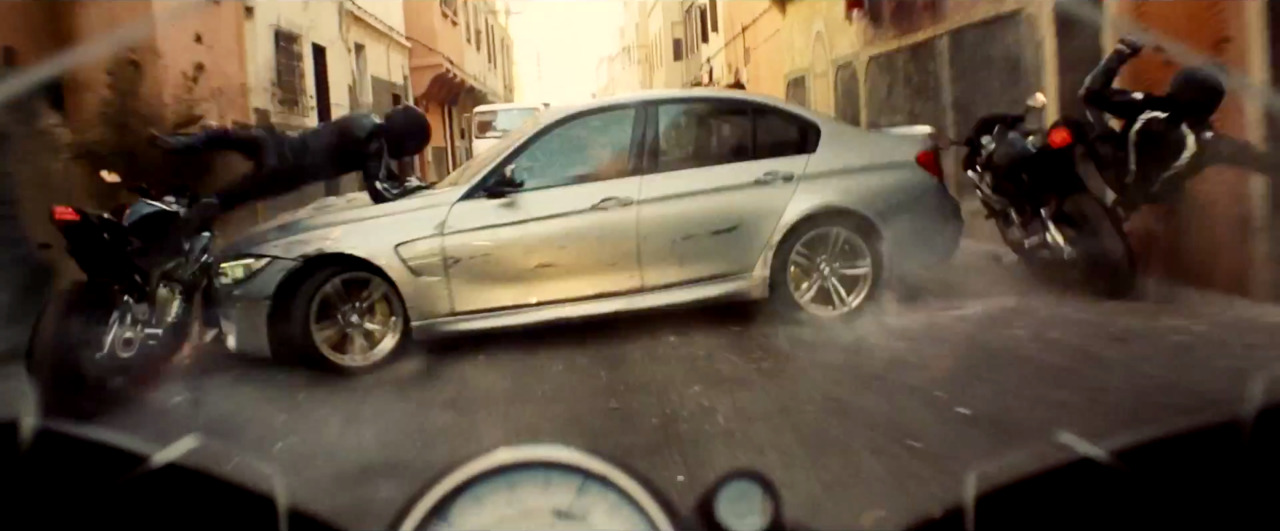
Borges’s fictional universe is relentlessly, oppressively male. He wrote very few female characters, and there is a vision of masculinity—violent, fearless, austere—that exists in his work as a counterpoint to its obsessive bookishness, and neither ideal has much room for the presence of women, writers or otherwise. His abstraction meant, among other things, a removal from the heat and chaos of human relationships. There is very little love in his work, very little emotional intensity; its richness and complexity is that of philosophical problems, of theology and ontology, not of human relationships.
Each of us is born with a series of built-in confusions
Each of us is born with a series of built-in confusions that are probably somehow Darwinian. These are: (1) we’re central to the universe (that is, our personal story is the main and most interesting story, the only story, really); (2) we’re separate from the universe (there’s US and then, out there, all that other junk – dogs and swing-sets, and the State of Nebraska and low-hanging clouds and, you know, other people), and (3) we’re permanent (death is real, o.k., sure – for you, but not for me).
Doubles
The Passenger, 1975
The Master, 2012
Roz Chast, Man reads the obituaries, 1993
Borges and the Sharknado Problem
Borges:
The composition of vast books is a laborious and impoverishing extravagance. To go on for five hundred pages developing an idea whose perfect oral exposition is possible in a few minutes! A better course of procedure is to pretend that these books already exist, and then to offer a resume, a commentary … More reasonable, more inept, more indolent, I have preferred to write notes upon imaginary books.
Some books better left unwritten! Oh, but here again I will recommend Imaginary Magnitude, which I shortlisted last year:
A collection of introductions to fictional books covering, among other things, x-ray pornograms, computer-generated literature, and a biography of a sentient, moody super-computer. If you like the Borges above [Dreamtigers], or Borges in general, or strange science fiction, or strange conceptual writing in general, this is absolutely a book for you.
ATL Urbanist: Friendship Baptist and the Atlanta Falcons
A very clever person named Kyle Kessler put together this chart, helpfully comparing Friendship Baptist Church and the Atlanta Falcons.
One of two possible sites for the construction of the new Atlanta Falcons stadium would require the purchase and demolition of this 1873 church building.
Emily Nussbaum: How “Sex and the City” Lost its Good Name : The New Yorker
High-feminine instead of fetishistically masculine, glittery rather than gritty, and daring in its conception of character, “Sex and the City” was a brilliant and, in certain ways, radical show. It also originated the unacknowledged first female anti-hero on television: ladies and gentlemen, Carrie Bradshaw.
Also:
Why is the show so often portrayed as a set of empty, static cartoons, an embarrassment to womankind? It’s a classic misunderstanding, I think, stemming from an unexamined hierarchy: the assumption that anything stylized (or formulaic, or pleasurable, or funny, or feminine, or explicit about sex rather than about violence, or made collaboratively) must be inferior.
Emily Nussbaum: How “Sex and the City” Lost its Good Name : The New Yorker
In Climbing Income Ladder, Location Matters - NYTimes.com

In Climbing Income Ladder, Location Matters - NYTimes.com.
All else being equal, upward mobility tended to be higher in metropolitan areas where poor families were more dispersed among mixed-income neighborhoods. Income mobility was also higher in areas with more two-parent households, better elementary schools and high schools, and more civic engagement, including membership in religious and community groups.
Hey wait that cuts across party lines what should I believe?! Cf. The Geography of Stuck.
Mills Baker's review of Upstream Color (2013 movie) - Quora
Read it! Watch it! I have to get this in the re-watch queue. It lingers.
Heroism is often some seriously boring stuff
Heroism is often some seriously boring stuff.
Around Alone - Laphams’ Quarterly
Drift Compatible - Geek Empire

Drift Compatible - Geek Empire. In which L. Rhodes uses Pacific Rim as a pivot to talk about kaiju films as manifestations of urban anxiety, and issues that come out of genre and fandom in general. Good reminder that I can learn from bad movies, too.
When a fanboy defends Pacific Rim to those audience members by saying, “What did you expect?” the underlying issue is genre. An astute viewer will learn to expect certain things from movies that fall into certain genres. A clever filmmaker will learn how to use those expectations to advantage. A fair-minded critic will keep those expectations in mind when judging a genre film. Things are rarely so simple. For one thing, genres carry their own history implicitly, and that often makes it difficult to understand just what’s at stake…
A Synopsis of Tim Burton's Batman Based Only on the Prince Soundtrack
The 1989 Batman is the first time I remember hearing Prince’s music. So many good things in this movie. “Gentlemen! Let’s broaden our minds!”
A Synopsis of Tim Burton's Batman Based Only on the Prince Soundtrack
Pacific Rim
Pacific Rim. It’s a pretty mediocre-to-bad movie that I had a lot of fun watching. The dialogue is merely serviceable when it isn’t just blatant crib notes for the audience. It borrows from many good sources (Japanese montster/mecha/anime traditions, Top Gun, Star Wars, Star Trek, Transformers, Aliens, and more…), but doesn’t rise to their level. It trades in some really terrible international typing. The comic-relief duo is cringe-worthy. It also got caught in a weird zone where it was too long, they edited it down so there are strange gaps and emotional undertones that aren’t prepared well. And it’s still too long. And yet… I had fun. Guess I lucked out with good company and a good attitude that afternoon. The fights are good corny spectacles that activated my brain’s primitive comic fanboy region. It’s not good, but you might have a good time.
jomc.links: This mesmerizing image contains all of LeBron James’ scores in Game 7...
jomc:
This mesmerizing image contains all of LeBron James’ scores in Game 7 of the NBA Finals. It lasts only four seconds, but one could gaze at it for quite some time. It almost seems to contain the entire history of the game, evoking a sense of data, like a visual stats card. It has information inside of it, but we can only understand the data by repetition. By definition, you have to watch The Loop again and again to understand its depth.
Loops are not short films. Loops are more like spreadsheets: data, but with a fourth dimension, time. Without the repetition, you would not see the data.
http://tribecafilm.com/future-of-film/trapped-in-the-loop-edward-snowden-gifs-vine-instagram
jomc.links: This mesmerizing image contains all of LeBron James’ scores in Game 7...
Dance floor at Burt’s Place, a short-lived ATL restaurant/nightclub

Dance floor at Burt’s Place, a short-lived ATL restaurant/nightclub.
Study Hacks » The Need for a Deeper Vocabulary of Career Aspiration
Students tend to place too much importance on the specifics of a job, as if there was a specific knowledge work pursuit hardwired in their genes.
Study Hacks » The Need for a Deeper Vocabulary of Career Aspiration
bookforum talks with karl ove knausgaard - bookforum.com / interviews
Good interview. My Struggle sounds so strange. Here’s Knausgaard talking about the magic that happened when he stopped filtering and perfecting his writing, and just started going for sheer volume:
When I was nineteen, I went to a yearlong course in creative writing. There, some simple rules dominated, and the most important one dealt with quality: if a sentence was bad, you removed it. If a scene was bad, you removed it. The critical reading of the texts always resulted in parts being deleted. So that was what I did. My writing became more and more minimalist. In the end, I couldn’t write at all. For seven or eight years, I hardly wrote. But then I had a revelation. What if I did the opposite? What if, when a sentence or a scene was bad, I expanded it, and poured in more and more? After I started to do that, I became free in my writing. Fuck quality, fuck perfection, fuck minimalism. My world isn’t minimalist; my world isn’t perfect, so why on earth should my writing be? I then did the same thing with every other rule. Show, don’t tell? What happens if you do tell, really try to tell EVERYTHING, and don’t give a damn about subtext? Something else happens, something you can’t control. No matter how explicitly you describe a person or a scene, there is always a shadow in the text, a kind of tone or sound, and that tone or sound is the important thing. When I freed myself from these restrictions and started to insist on quantity instead of quality, my texts started to get long. Not necessarily good, but long!
Reminds me of Borges on the baroque style: “The Baroque is that style which deliberately exhausts (or tries to exhaust) its possibilities and borders on its own caricature.” In a similar section of the interview I liked, he talks about the balance of family and ambition, and how he started being easier on himself, in a way:
Karen Blixen, the Danish writer, said something like “you can’t go hunting the Grail with a pram.” And she’s right. When I started to write this book, I was deeply frustrated and alienated. We had three kids in four years, and the dominant feeling for both my wife and me was that of living on the edge of chaos. There was a lot of quarreling going on, and at the same time, I was not able to write anything. So at one point I decided to let go of all ambition whatsoever and just write about that: The domestic world, the banality and tristesse of everyday life. I really hated the idea, because I didn’t want trivialities, I wanted the Grail, and when I started to do this, I was ashamed of my writing. The struggle was really to overcome the shame. But taking care of kids and writing do not exclude each other—I would start to write at 4am, then either my wife or I would take them to Kindergarten at 8, and then I would write until 3 pm and spend the rest of the day with them. It’s not Hemingway’s way—as I understand, he wrote from 6 till 12, then started to drink—but it is a way, if not to reach the Grail, then at least to finish some pages every day.
bookforum talks with karl ove knausgaard - bookforum.com / interviews
Sports let you commune with trepidation and panic without consequences
One of the things I love about sports is that they let you spend time communing with trepidation and panic without making you face any consequences.
An interview with Rick Rubin

On not-knowing:
I never decide if an idea is good or bad until I try it. So much of what gets in the way of things being good is thinking that we know. And the more that we can remove any baggage we’re carrying with us, and just be in the moment, use our ears, and pay attention to what’s happening, and just listen to the inner voice that directs us, the better. But it’s not the voice in your head. It’s a different voice. It’s not intellect. It’s not a brain function. It’s a body function, like running from a tiger.
On producing:
So how would you describe your role as a producer, in general?
Just as fan. Making music that I want to hear. You’re so close to something when you write it that it’s hard to have any perspective on how it hits someone else. My job is to be a professional version of the outside world—a listener who is not attached to any of it, who doesn’t know the story of how it was written, who doesn’t know how it works, who doesn’t know why this is important to you.
On stripping things down:
There’s a tremendous power in using the least amount of information to get a point across.
Wonderful interview.
So great. That part about being a “professional version of the outside world” reminded me of Jeremy Denk’s New Yorker essay about recording, and how hard it is to get perspective. A favorite quote:
In the moment of playing, the logistics of just hitting the notes distract you somewhat from the continuous choices you are making. In the edit you have nothing but choice. And yet you feel helpless, since everything has already been played.
And since he talked about Kanye, remember the rules: No hipster hats. No acoustic guitar in the studio.