It sometimes feels like there’s not a ton of synergy between the persona and the (generally really good!) songs — I put on the music and enjoy it a lot, but I’m nagged by the feeling that I could engage with Gaga-world a lot more fully by turning the stereo off and logging on to the internet.
"The Greatest Love Story of the 20th Century"
Sarah Vowell on June Carter’s “Ring of Fire,”
In this song, to compare love to fire isn’t just the music sexy/heat cliche like you give me fever, or, hunka-hunka burnin’ love, or, it’s gettin’ hot in here. This is fire as in brimstone. Old time religion. Written by the daughter of a people who believe in the eternal flames of hell. June Carter was coveting her neighbor’s spouse, which meant she was breaking one of the Ten Commandments. Loving Johnny Cash was a sin. And for her, the wages of sin were death. A death in which the sinner spent all eternity as nothing more than kindling. When June Carter admitted to herself that she loved Johnny Cash, it is, in a small country and western love song way, not unlike the moment Huck Finn resolves to help the slave Jim escape, even though he’s been told that doing so would be wrong. Alright then, he says, I’ll go to hell.
Act Three of This American Life #247, about 47 minutes into the show.
A Hard Day's Night
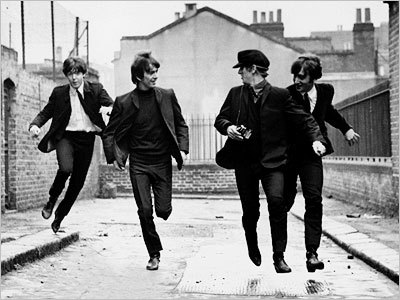 A Hard Day’s Night. It’s good, harmless fun. And you get to see the crowds go totally nuts.
February 17, 2010
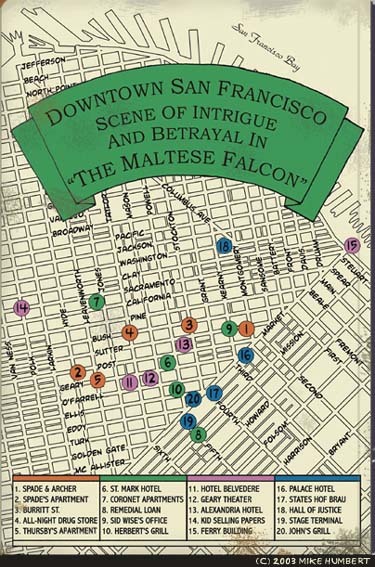
Watching The Maltese Falcon last month inspired me to read the original. It’s cool to see the names of streets and places I recognize. When I visited SF last year, my hotel was right in the thick of it.
Ben Casnocha: The Blog: Why Have I Not Done Drugs? And Should I?
February 16, 2010
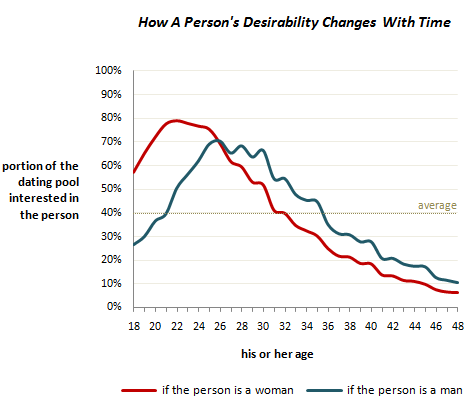
The Case For An Older Woman « OkTrends. And there’s data to back it up, it seems. I thought this was interesting: “Because men’s dating preferences skew so young, and women’s are age-equitable, men peak later, and have a longer plateau of desirability, than women.” The OkTrends blog is of the most consistently interesting out there.
The Limits of Bioethics: Where the profession ends and politics begins
“What are we to make of their willingness to issue life-and-death pronouncements involving other people?”
The Limits of Bioethics: Where the profession ends and politics begins
Music = dye
I’ve been listening to more Indian classical music lately, so I was reading about ragas, these traditional musical forms that guide how you play and develop a piece. Instructions for creating a mood, if I can semi-ignorantly generalize. And take a look at the etymology…
Raga. 1788, from Sanskrit raga-s “harmony, melody, mode in music,” literally “color, mood,” related to rajyati “it is dyed.”
I like this idea of music as a “dye” for the mind.
February 16, 2010
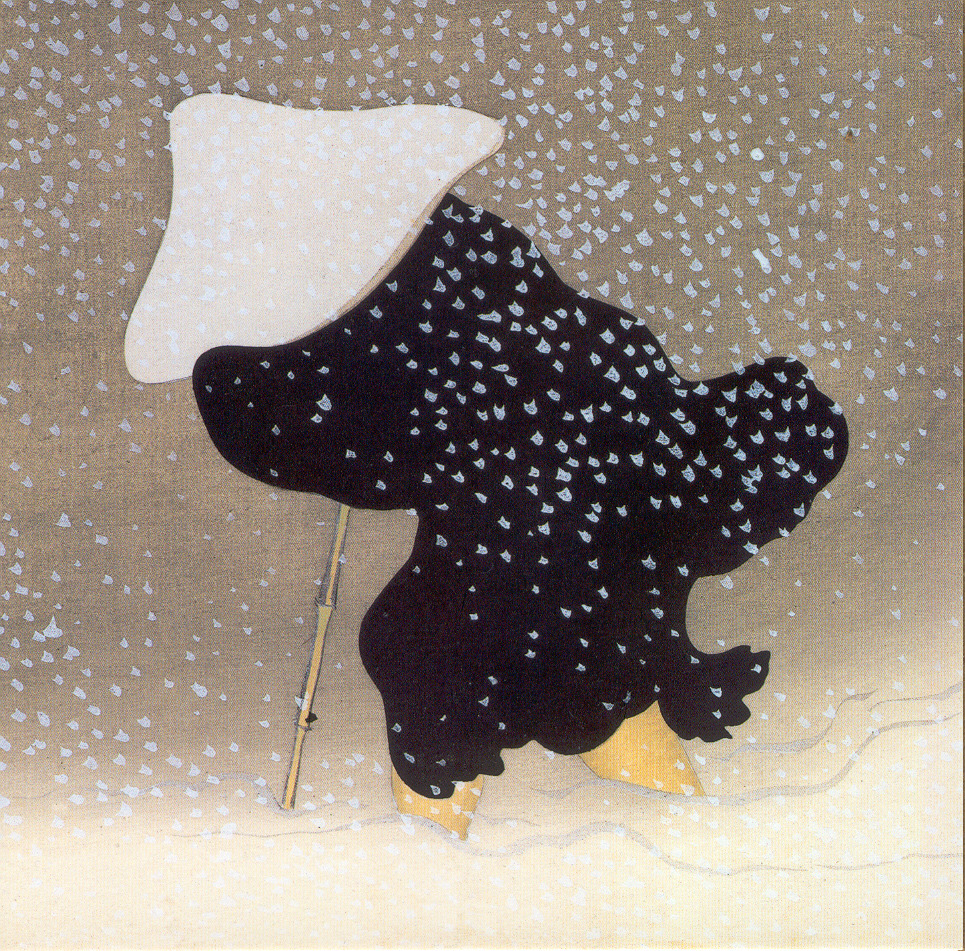
Detail from “Snow in the Countryside” (1909), a woodblock print by Kamisaka Sekka.
Roger Ebert: The Essential Man
“When I am writing my problems become invisible and I am the same person I always was. All is well. I am as I should be.”
Bernstein on the Blues - The New York Times
Video of Leonard Bernstein finding iambic pentameter in blues lyrics, then inventing a brief tune out of an excerpt from Macbeth.
February 14, 2010
Oscar Levant daydreams a total performance of Gershwin’s Concerto in F. From the film “An American in Paris”.
An American in Paris
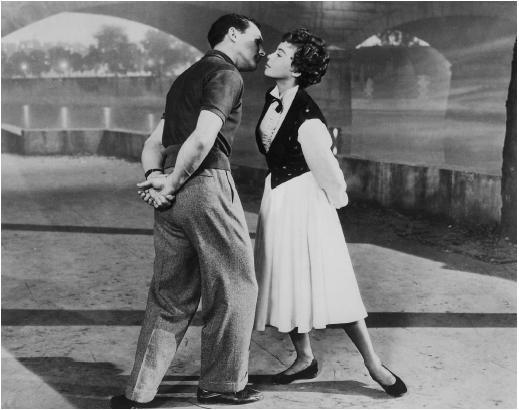 An American in Paris. I didn’t enjoy this every much. Far and away my favorite part was the interlude where the layabout pianist Oscar Levant daydreams playing Gershwin’s Concerto in F… and conducting it, and backing himself up on violins and timpani and xylophone. Haven’t we all been there?
February 12, 2010
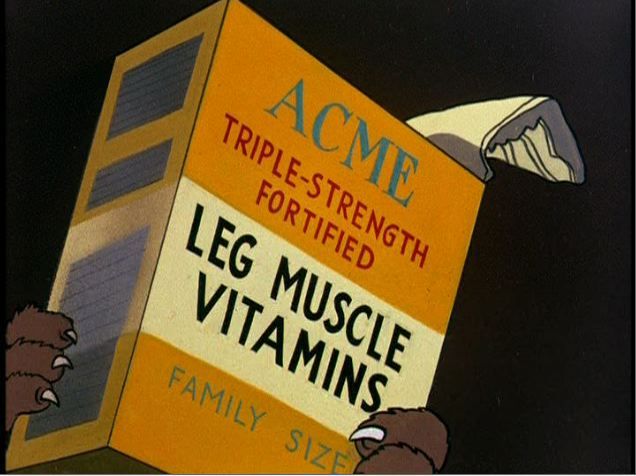
Acme Triple-Strength Fortified Leg Muscle Vitamins. From Stop, Look and Hasten (dir. Charles M. Jones, 1954). I love the use of the Acme Corporation as a go-to, generic component of Looney Tunes. Surely someone’s written a dissertation about this.
What I've been reading
Just like it says on the label. I'm going to say a few things about what I read more often. I'll keep the longer book reviews for the ones I have a bit more to share from or say about. 1. Too Big to Fail. This a great, great book that offers a minute-to-minute, blow-by-blow account of the financial crisis: meetings, phone calls, petty rivalries, bullying, groveling, panic. It's to be expected that the people at highest levels of any industry will be fairly well-connected to each other. It's also a little terrifying.
2. We'll Always Have Paris. I think I need to give up on Ray Bradbury. I really liked Something Wicked This Way Comes and loved The Illustrated Man back in the day. Dandelion Wine and The Martian Chronicles were good, too. But nothing has hit the spot since.
3. Pride and Prejudice. Quite simply one of the best books I've ever read. One thing I appreciated was the characterization. When a new character comes in, they usually get some description, a good bit of dialogue to get the shape of their personality, and then the rest of the story assumes you remember that. Like that windbag Mr. Collins. You see his flowery speeches early, but later it's summarized that Collins praised this and commended that. For all the 19th-century wordiness, it's a pretty efficient little story. And it's got all that suspense and miscommunication and false assumptions.
4. The Big Sleep. I expected to enjoy this one a lot, and I did indeed. I didn't expect Chandler to be such a colorful writer. But there didn't seem to be many wasted words. It's all of a certain mood, a certain tone, a certain tightness. Great story.
5. Self-Made Man. Author Norah Vincent spent a year dressing as a man--dating, working, socializing, etc.--and reports on here experience. It's pretty insightful. Here's a great bit from when she meets some new guys, on the awesomeness of handshakes:
As he extended his arm to shake my hand, I extended mine, too, in a sweeping motion. Our palms met with a soft pop, and I squeezed assertively the way I'd seen men do at parties when they gathered in someone's living room to watch a football game. From outside, this ritual had always seemed overdone to me. Why all the macho ceremony? But from the inside it was completely different. There was something so warm and bonded in this handshake. Receiving it was a rush, an instant inclusion in a camaraderie that felt very old and practiced.
Though some of her chosen research venues (bowling team, strip joints, monastery, high-pressure sales team, male retreat) are a little fringe, it's a pretty sensitive account.
- "If women are trapped by the whore/Madonna complex, men are equally trapped by this warrior/minstrel complex."
- "Every man's armor is borrowed and ten sizes too big, and beneath it, he's naked and insecure and hoping you won't see."
- "After he told me the raw story, I said, 'Ivan, how many women have you slept with?' 'Seventy-four,' he said without hesitation. Again, probably a giant lie, but who knew? Ivan also claimed to have an IQ of 180 and a nine-inch dick. But don't they all, at least to each other."
And she's still plenty aware of the issues of sympathizing with The Man. Very thoughtful.
Atlanta Food Carts
The ATL Pecha Kucha pleading for ATL food carts was well-received. It’s great to see a local culturo-political movement take shape in front of your eyes.
The September Issue
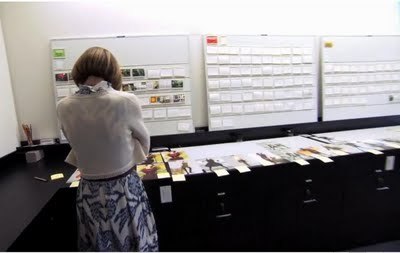 The September Issue. This was mostly interesting for the visual spectacle. As a “story” it falls flat. It’s more a series of snapshots. The goal is to produce the Biggest Magazine Ever in the history of anything, but there’s no strong sense of beginnings, endings, middles, challenges. Perhaps there’s no proper place to begin watching a process that happens 12 times a year every year, but you still want some kind of narrative handhold. As for the people… of Vogue editor-in-chief Anna Wintour, you don’t learn much directly, but watch her meet and quietly decree. It is pretty amazing how everyone just folds around her. Well, almost everyone. The magazine’s creative director, Grace Coddington is presented as the warmer, romantic foil to Wintour’s frosty business demeanor. Perhaps the most interesting bit of process was seeing the storyboarding of the magazine. There’s a separate room where they’d lay out potential photoshoots on a table, then select and sort the miniature 2-page spreads on a big wall, shuffling and reshuffling pages until press time.
February 11, 2010
February 10, 2010
I simply want to celebrate the fact that right near your home, year in and year out, a community college is quietly — and with very little financial encouragement — saving lives and minds. I can’t think of a more efficient, hopeful or egalitarian machine, with the possible exception of the bicycle.
Kay Ryan (via austinkleon)