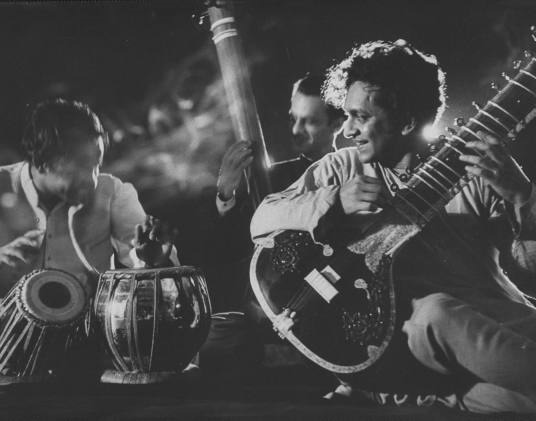
Nice birthday blowout over at NPR, including Indian Classical Music 101. (via)
April 7, 2010
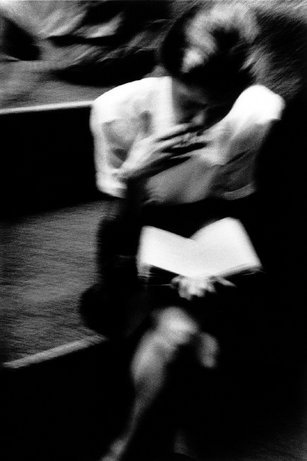
SYDNEY, Australia—An office worker on Pitt Street Mall reads a book during lunch hour, 1999.
April 7, 2010
Vocabulary and the reading diet
Justin Wehr's recent post about vocabulary highlighted four reasons why vocabulary matters. The final reason:
Linguistic vocabulary is synonymous with thinking vocabulary.
Sort of obvious and also sort of mind-blowing. It also reminded me of a couple things:
1. Some of the funniest/best storytellers I know are funny because, in part, they employ their vocabulary really well. Maybe I just respond well to wordplay because I am a word nerd, but still, I think there's relationship between knowing how to describe things well, and making the sometimes oddball verbal connections and metaphors, that's essential to the funny.
2. That fourth reason also reminded me of one of my favorite Phrases To Live By:
If you write like porridge you will think like it, and the other way around.
That's from Don Watson in his book, Death Sentences. I read it a few years ago and haven't forgotten that little bit. It's also an important reminder about the words (read: ideas) I consume.
I had the---honestly, pretty disturbing---realization the other day that too much of my reading lately has been a bit content-thin. Not enough for my brain to chew on. My reading diet needs more raw, organic roughage, less HFCS. So to speak. I don't mean it in a snobby way, or to fetishize difficulty for difficulty's sake, but I could do a lot better. And it's not that the stuff I'm reading isn't interesting---just that sometimes entertaining ≠ illuminating, delightful ≠ insightful in a long-lasting way. It goes beyond books, too. I'm trying to be more picky about the magazines, essays, blog posts I invest my time in as well.
Some final reminders to myself:
- Primary sources are often awesome.
- The classic texts stick around because they are often awesome.
- The author's iconic essay is often better than the subsequent book.
- I live minutes away from a kick-ass academic library.
- More intentional book-choosing is good. Aimless browsing for serendipitous library finds doesn't always work.
- I would do well to curate from like-minded people more often than I do. Ignore recommendations from smart people at my own peril.
April 5, 2010
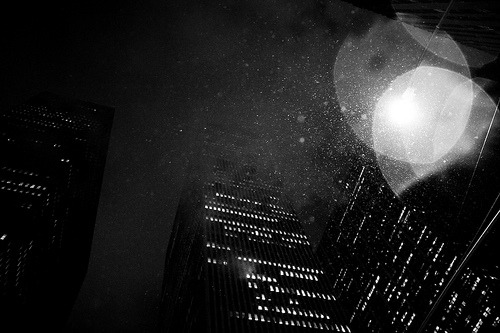
Untitled by James Dodd
This frame looks like the opening shot of a movie I want to watch.
Amen.
April 5, 2010
Each time he took a walk, he felt as though he were leaving himself behind, and by giving himself up to the movement of the streets, by reducing himself to a seeing eye, he was able to escape the obligation to think, and this, more than anything else, brought him a measure of peace, a salutary emptiness within… By wandering aimlessly, all places became equal and it no longer mattered where he was. On his best walks he was able to feel that he was nowhere.
Paul Auster on Identity and Urban Spaces | A Piece of Monologue. Excerpt from City of Glass.
April 5, 2010
You can afford to expose yourself to uncertainties in art that you wouldn’t allow yourself in real life. You can allow yourself to get into situations where you are completely lost, and where you are disoriented. You don’t know what’s going on, and you can actually not only allow yourself to do that, you can enjoy it.
From a Punk interview with Brian Eno circa 1976, via A Piece of Monologue.
April 5, 2010
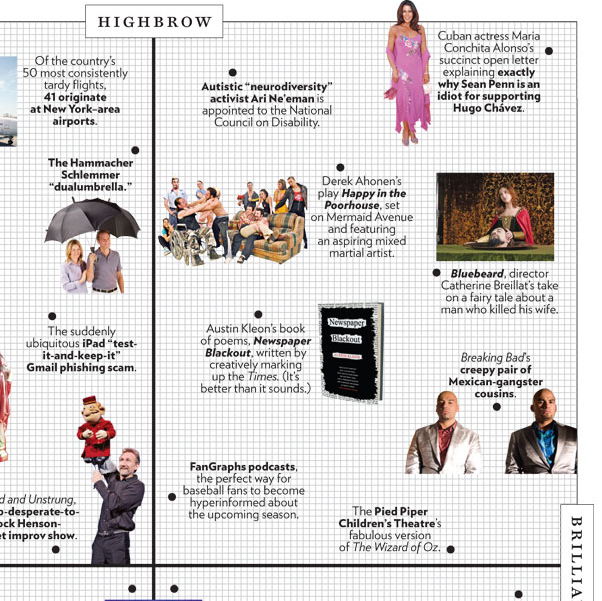
Austin Kleon’s new book of poems, Newspaper Blackout, makes New York Magazine’s Approval Matrix somewhere between Highbrow and Brilliant.
Last week we released Austin’s fourth edition on 20x200, The Travelogue.
Hurrah!
April 5, 2010
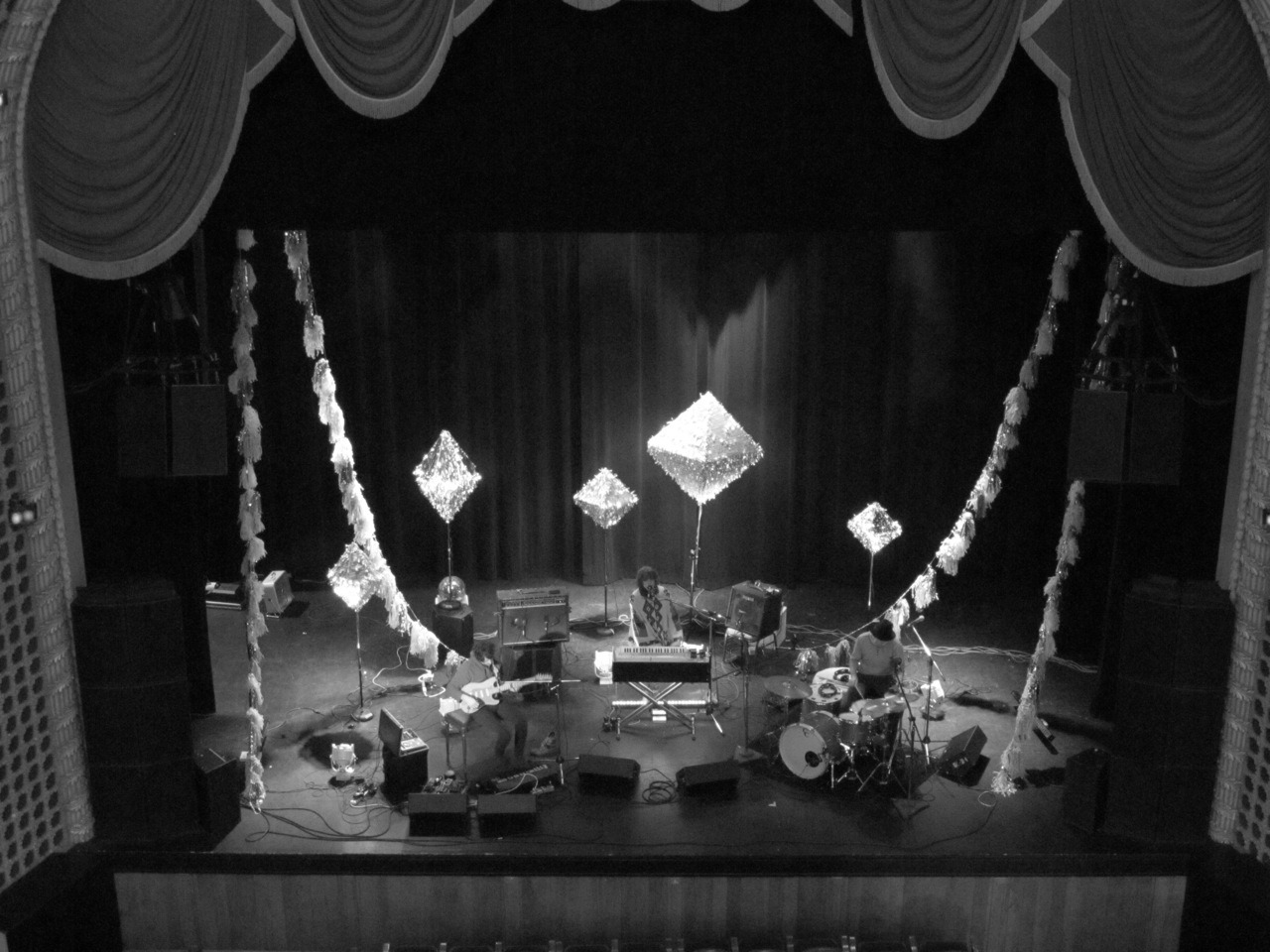
Beach House soundchecking at the Pabst Theatre in Milwaukee
I see them live in ATL in 24 days. Can’t wait.
April 5, 2010
L.A. is the apocalypse: it’s you and a bunch of parking lots. No one’s going to save you; no one’s looking out for you. It’s the only city I know where that’s the explicit premise of living there – that’s the deal you make when you move to L.A.
The city, ironically, is emotionally authentic.
It says: no one loves you; you’re the least important person in the room; get over it.
Geoff Manaugh, Greater Los Angeles | bldgblog (via christmasgorilla)
April 5, 2010
Bing Crosby sings “Moonlight Becomes You” from the Road to Morocco.
(Source: https://www.youtube.com/)
Plein Soleil (Purple Noon)
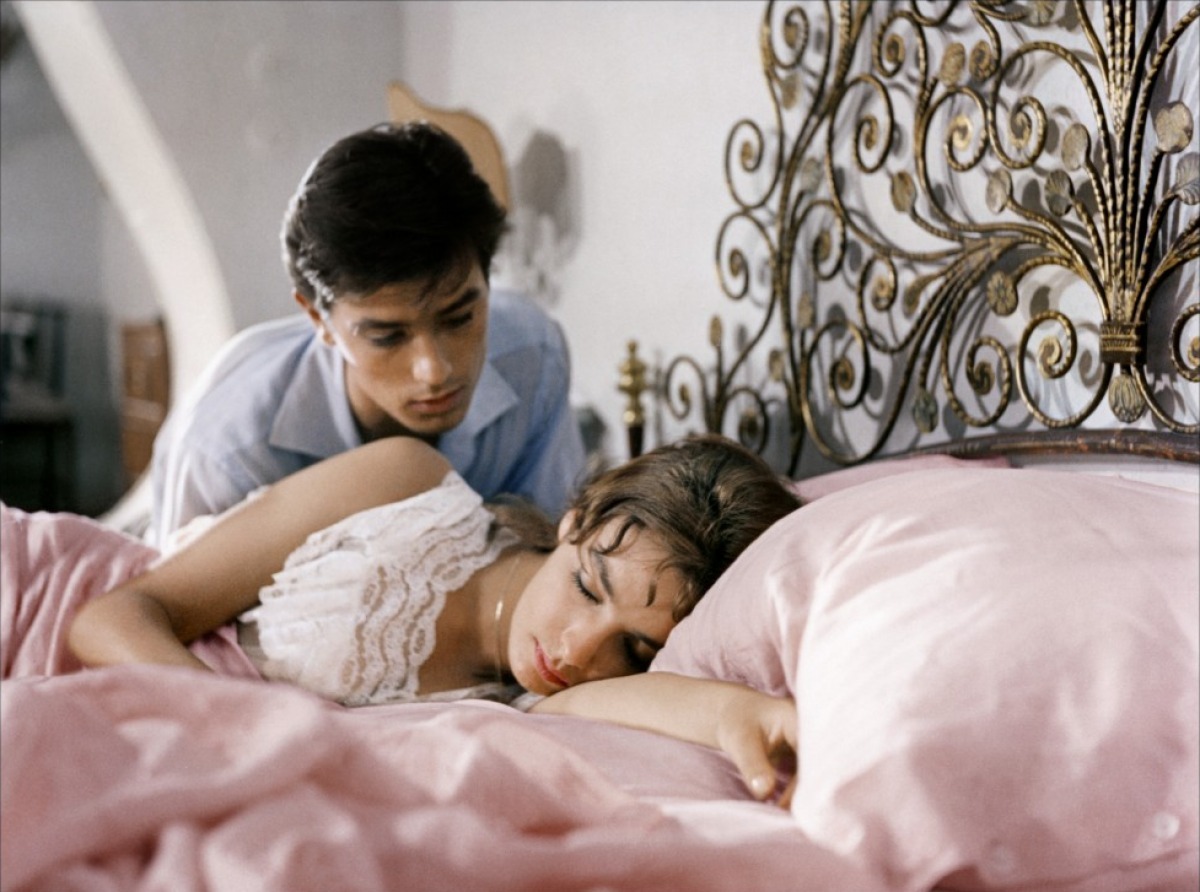 Plein Soleil (Purple Noon). This movie is wonderful. From 1960, it was the first adaptation of Patricia Highsmith’s 1955 book, The Talented Mr. Ripley. I really liked the 1999 version with Damon, Law, Paltrow, etc., and I’d say this one is even a smidge better. Compared to what I remember of the newer one, it seemed like there were fewer vignettes–the thread of the story spools out a bit more naturally. There’s a bit less prologue and a bit more watching the anti-hero trying to save his own ass. Fascinating stuff. In addition, some camerawork that winks its eye at the viewer, some of the best fashion on film and an excellent, unobtrusive soundtrack from Nino Rota. Recommended.
April 2, 2010
A History of the Sky. A grid of 126 time-lapse movies, each showing the sky on a different day. (via)
(Source: https://www.youtube.com/)
The Catorialist
April 1, 2010
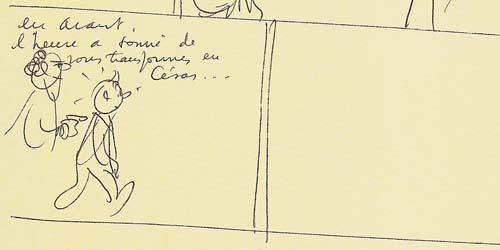
Tintin means, literally, “Nothing”. His face, round as an O with two pinpricks for eyes, is what Hergé himself described as “the degree zero of typeage” - a typographic vanishing point. Tintin is also the degree zero of personage. He has no past, no sexual identity, no complexities. Like Cocteau’s Orphée, who spends much of the film in the negative space or dead world on the far side of the mirror, he is a writer who does not write.
— Tom McCarthy, Tintin and the Secret of Literature (excerpted in the Guardian)
April 1, 2010
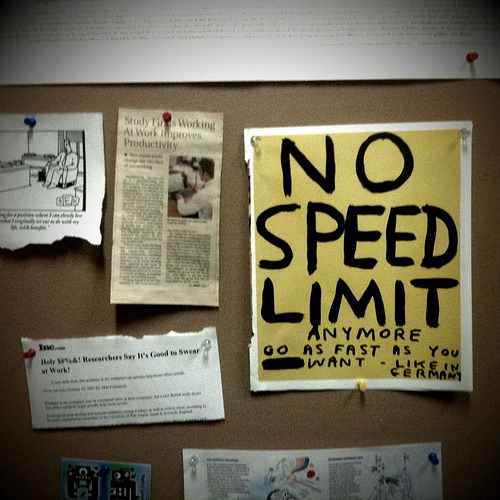
“No Speed Limit anymore. Go as fast as you want - like in Germany.” - David Shrigley
(Hanging in my cubicle at work.)
April 1, 2010
What writers have is a license and also the freedom to sit—to sit, clench their fists, and make themselves be excruciatingly aware of the stuff that we’re mostly aware of only on a certain level. And if the writer does his job right, what he basically does is remind the reader of how smart the reader is. Wake the reader up to stuff that the reader’s been aware of all the time.
David Foster Wallace quoted in The Howling Fantods Q&A with David Lipsky. Like I said, I wish Wallace had done stand-up comedy, too, because this attitude seems perfect for it. Isn’t that what many great comedians do? A voice in the wilderness kind of thing, standing apart or going deep and observing and noticing more than you, and pointing out these things in a way that makes you happy.
Monster
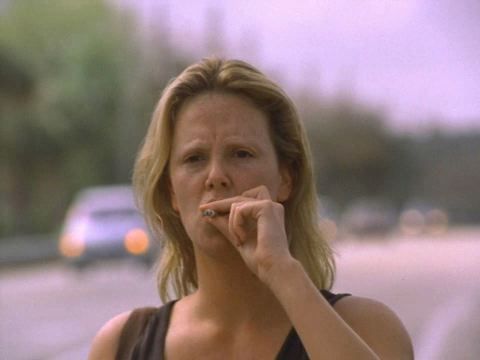 Monster. Charlize Theron is amazing in this movie. But the story is weak. Great craftsman, shoddy materials. It’s worth watching at least a little bit though. On a side note, the use of some pop songs (by Journey, The Searchers, REO Speedwagon, etc.) struck me as kind of weird. I understand their use as a sort of shorthand emotional signifier, but lately I find that a little more jarring. I think I might prefer a made-for-the-occasion original soundtrack.