May 24, 2010

The better the singer’s voice the harder it is to believe what they are singing.

David Byrne (via ). I heartily disagree, although it is good food for thought and I don’t necessarily think the opposite is more accurate. What’s more interesting is how/why these kinds of aesthetic details become/remain valuable to us.


For Movie Watching, Pairing a DVD and a Drink Takes Care - NYTimes.com

I’ve been matching my drinks to my movies for at least 15 years. I’ve done it with my wife, in groups, or (and I’m not ashamed to say this) alone. It adds a new dimension — Alc-O-Vision? — to the plot, the photography and, especially, the sense of immersion if the film takes place in the same country from which the drink in my hand originated.

Yes and yes. The article also includes a shout-out to Out of the Past, which I rewatched the other night, and which might be my favorite movie of all time. OF ALL TIME!

For Movie Watching, Pairing a DVD and a Drink Takes Care - NYTimes.com


How do you talk yourself into something? | Psychology Today

It seems that when we talk to ourselves or others forcefully about the future, we create an expectation that we now feel that we have to live up to. If we fail to live up to our expectations, then we will feel guilty. So, the forceful “I will” statement motivates use out of guilt. When we ask ourselves a question about the future, “Will I,” then the activity itself becomes the focus. As we commit to this future activity, it becomes intrinsically interesting, and so we are more likely to want to do it.

How do you talk yourself into something? | Psychology Today


Why Do Harvard Kids Head to Wall Street? « The Baseline Scenario

Very interesting article. One good bit:

The typical Harvard undergraduate is someone who: (a) is very good at school; (b) has been very successful by conventional standards for his entire life; © has little or no experience of the “real world” outside of school or school-like settings; (d) feels either the ambition or the duty to have a positive impact on the world (not well defined); and (e) is driven more by fear of not being a success than by a concrete desire to do anything in particular. (Yes, I know this is a stereotype; that’s why I said “typical.”) Their (our) decisions are motivated by two main decision rules: (1) close down as few options as possible; and (2) only do things that increase the possibility of future overachievement.

And another one:

You internalize the rationalizations for the work you are doing. It’s easier to think that underwriting new debt offerings really is saving the world than to think that you are underwriting new debt offerings, because of the money, instead of saving the world. And this goes for many walks of life. It’s easier for college professors to think that, by training the next generation of young minds (or, even more improbably, writing papers on esoteric subjects), they are changing the world than to think that they are teaching and researching instead of changing the world.

Why Do Harvard Kids Head to Wall Street? « The Baseline Scenario


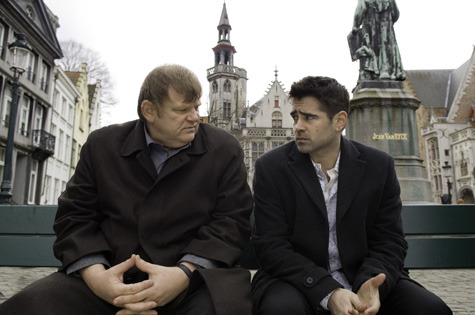
In Bruges

In Bruges. Plenty of dark humor presented in a carefree manner. You’re never too far from a laugh, but the pace isn’t manic. There’s a willingness to draw a scene out, let a situation linger. I liked it a lot.


May 8, 2010

It seems to me that making escapist films might be a better service to people than making intellectual ones and making films that deal with issues. It might be better to just make escapist comedies that don’t touch on any issues. The people just get a cool lemonade, and then they go out refreshed, they enjoy themselves, they forget how awful things are and it helps them—it strengthens them to get through the day. So I feel humor is important for those two reasons: that it is a little bit of refreshment like music, and that women have told me over the years that it is very, very important to them.

Woody Allen.