It’s fine to go through life happy, in other words, but I suspect we also want to go through life without becoming big fat self-absorbed jackasses. Children really help in that regard.
June 25, 2010
The World’s Reaction to Landon Donovan’s Game Winning Goal. Awesome. That was such a good moment. Goosebumps over and over.
(Source: https://www.youtube.com/)
The best vacation ever - The Boston Globe
Lots of good ideas here. Positive psychology seems cooler and cooler every day.
How long we take off probably counts for less than we think, and in the aggregate, taking more short trips leaves us happier than taking a few long ones. We’re often happier planning a trip than actually taking it. And interrupting a vacation — far from being a nuisance — can make us enjoy it more. How a trip ends matters more than how it begins, who you’re with matters as much as where you go, and if you want to remember a vacation vividly, do something during it that you’ve never done before. And though it may feel unnecessary, it’s important to force yourself to actually take the time off in the first place — people, it turns out, are as prone to procrastinate when it comes to pleasurable things like vacations as unpleasant ones like paperwork and visits to the dentist.
June 23, 2010
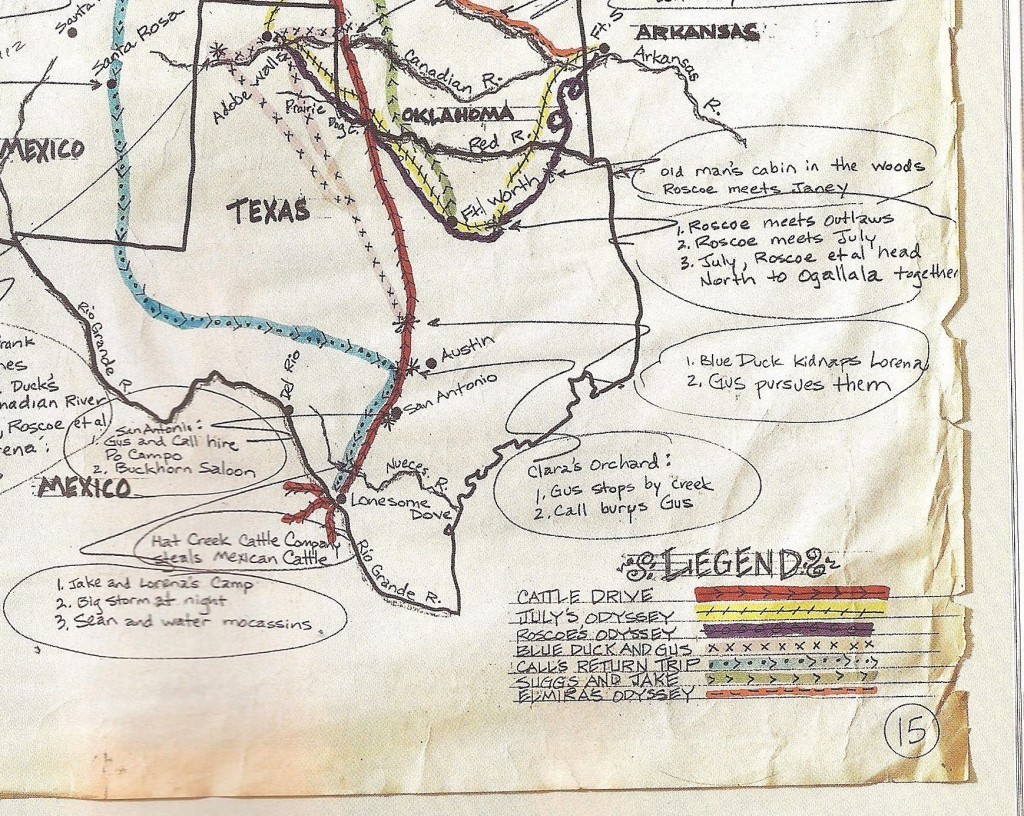
Here is portion of a very cool map of the path of the main characters in Larry McMurtry’s Lonesome Dove. It’s in the July 2010 edition of Texas Monthly magazine.
One of my favorite books ever. Usually my first recommendation for people looking for something, anything to read.
June 23, 2010

June 22, 2010
The first strong external revelation of the Dry Rot in men, is a tendency to lurk and lounge; to be at street-corners without intelligible reason; to be going anywhere when met; to be about many places rather than at any; to do nothing tangible, but to have an intention of performing a variety of intangible duties to-morrow or the day after.
"Night Walks" by Charles Dickens
For a while there, Charles Dickens was suffering from insomnia, so he took up walking “houseless” around London until the sun came up. A great portrait of a city and state of mind:
The restlessness of a great city, and the way in which it tumbles and tosses before it can get to sleep, formed one of the first entertainments offered to the contemplation of us houseless people. It lasted about two hours. We lost a great deal of companionship when the late public-houses turned their lamps out, and when the potmen thrust the last brawling drunkards into the street; but stray vehicles and stray people were left us, after that. If we were very lucky, a policeman’s rattle sprang and a fray turned up; but, in general, surprisingly little of this diversion was provided. […]
At length these flickering sparks would die away, worn out–the last veritable sparks of waking life trailed from some late pieman or hot-potato man–and London would sink to rest. And then the yearning of the houseless mind would be for any sign of company, any lighted place, any movement, anything suggestive of any one being up–nay, even so much as awake, for the houseless eye looked out for lights in windows.
To Invigorate Literary Mind, Start Moving Literary Feet
Through childhood I hiked, roamed, tirelessly explored the countryside: neighboring farms, a treasure trove of old barns, abandoned houses and forbidden properties of all kinds, some of them presumably dangerous, like cisterns and wells covered with loose boards.
These activities are intimately bound up with storytelling, for always there’s a ghost-self, a “fictitious” self, in such settings. For this reason I believe that any form of art is a species of exploration and transgression.
Interview with Joyce Carol Oates | Arch Literary Journal
Who knew Joyce Carol Oates was a runner? On how running and dreaming are alike:
I think that when we’re stationary, we have a somewhat thickened sense of the ego or the “I,” and we’re just sort of self-conscious and aware of ourselves. But when we’re in motion, or when we’re in a dream, the “I” entity starts to dissolve. Some people, including myself, and possibly you, are capable of having dreams in which your own personality is really almost dissolved. You know, way, way down in the depths of the ocean there are creatures that are transparent. They’re like jellyfish, a lot of very transparent creatures. And I was thinking it’s almost analogous to the human experience of sleep, where when you’re really, really deep into sleep, your own physical self is often not even there. It’s like you’re transparent. And, it may be a process that we just will never understand, descending somehow deep into the primitive brain - like the brain almost at the brain stem - and away from the consciousness. And, somehow running replicates that, I think. I would think that if you were running very fast, if you were in an instinctive situation where you were terrified - say you were being pursued, and your life was in danger - you would be flooded with adrenaline. I would think probably the “I” or ego was almost gone, that you’re just running like a physical entity, the way a soldier might just start [running], or a boxer, or someone like that. But when you’re writing, there’s … as I say, we have this more thickened or more solid sense of the self, because it’s usually in some stationary situation with social definitions.
June 21, 2010
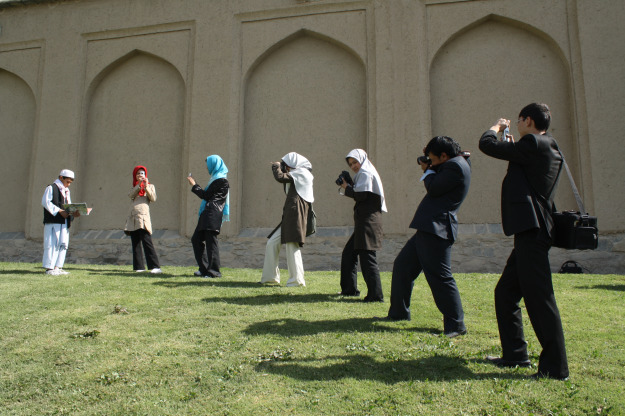
Afghanistan Through Teenagers’ Eyes | Foreign Policy. “Last year, a group of teenagers at Afghanistan’s Marefat School were given cameras as part of a photography project with teens at Philadelphia’s Constitution High School. The students snapped away, and what emerged from the Afghan side were images of culture, friends, and daily life.” (via)
Kids Think Food Tastes Better From Cartoon-Decorated Packages
Marginal Revolution: Berlin is ugly
I like that it’s ugly, because it keeps the city empty and cheap and it keeps away the non-serious. There are not many (any?) splashy major sights. Even the Wall is mostly gone. The way to see and experience Berlin is to do things. The ugliness selects for people who want to enjoy the city’s musical, theatrical, museum, and literary treasures.
Berlin is evidence that most tourists don’t actually care so much about history, culture, and museums, as it is not for most people a major tourist destination, despite having world-class offerings in each of those areas. Mostly tourists like large, visually spectacular sites, or family activities, combined with the feeling that they are taking in culture or seeing something important.
June 21, 2010

June 21, 2010
Stay focused, and stay away from unknown females.
Wisdom from Ron Artest, profiled in Say Queensbridge: Ron Artest Is An NBA Champion, And It All Makes Sense Now.
June 19, 2010
The purpose is to give yourself an opportunity to get your best performance. It’s not about winning. There’s a difference. You want your best performance. You want your teammates’ best performance. And if you provide your best performance chances are you will win. But in order to have your best performance, you have to be relaxed.
LA Lakers assistant coach Jim Cleamons on using meditation before games. The Lakers’ mental preparation for Game 7 - TrueHoop Blog - ESPN.
"Somewhere a Dog Barked" - By Rosecrans Baldwin - Slate Magazine
“Pick up just about any novel and you’ll find a throwaway reference to a dog, barking in the distance.” (via)
"Somewhere a Dog Barked" - By Rosecrans Baldwin - Slate Magazine
June 17, 2010

A World Cup Mentality - Opinionator Blog - NYTimes.com
Soccer is a sport perfectly designed to reinforce a tragic view of the universe, because basically it is a long series of frustrations leading up to near certain heartbreak.
An exercise in empathy « Snarkmarket
An interesting mental experiment. “The core of the exercise, I think, is that you see yourself as just another person in the space—an opaque bag of bones—instead of as, you know, the movie camera. The privileged POV.”
June 16, 2010
Guardian - Football training. Soccer players working on their dives. (via)
(Source: https://www.youtube.com/)